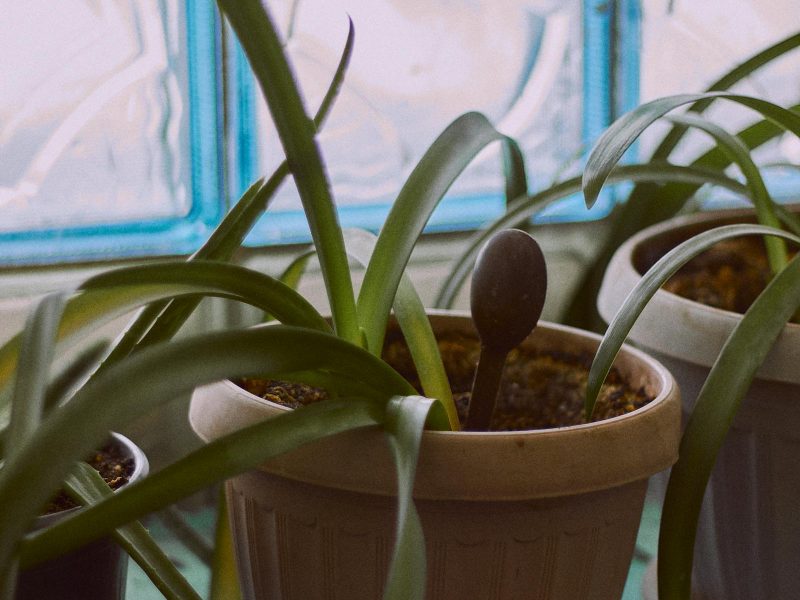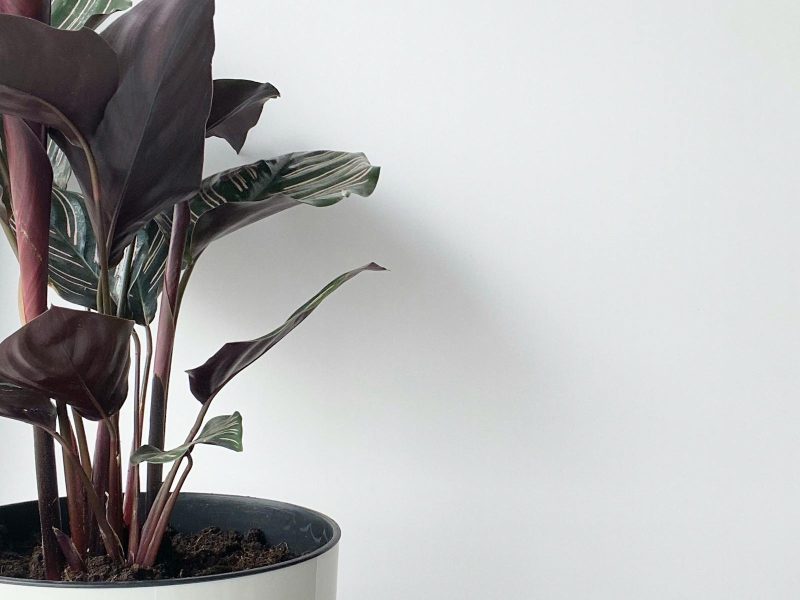
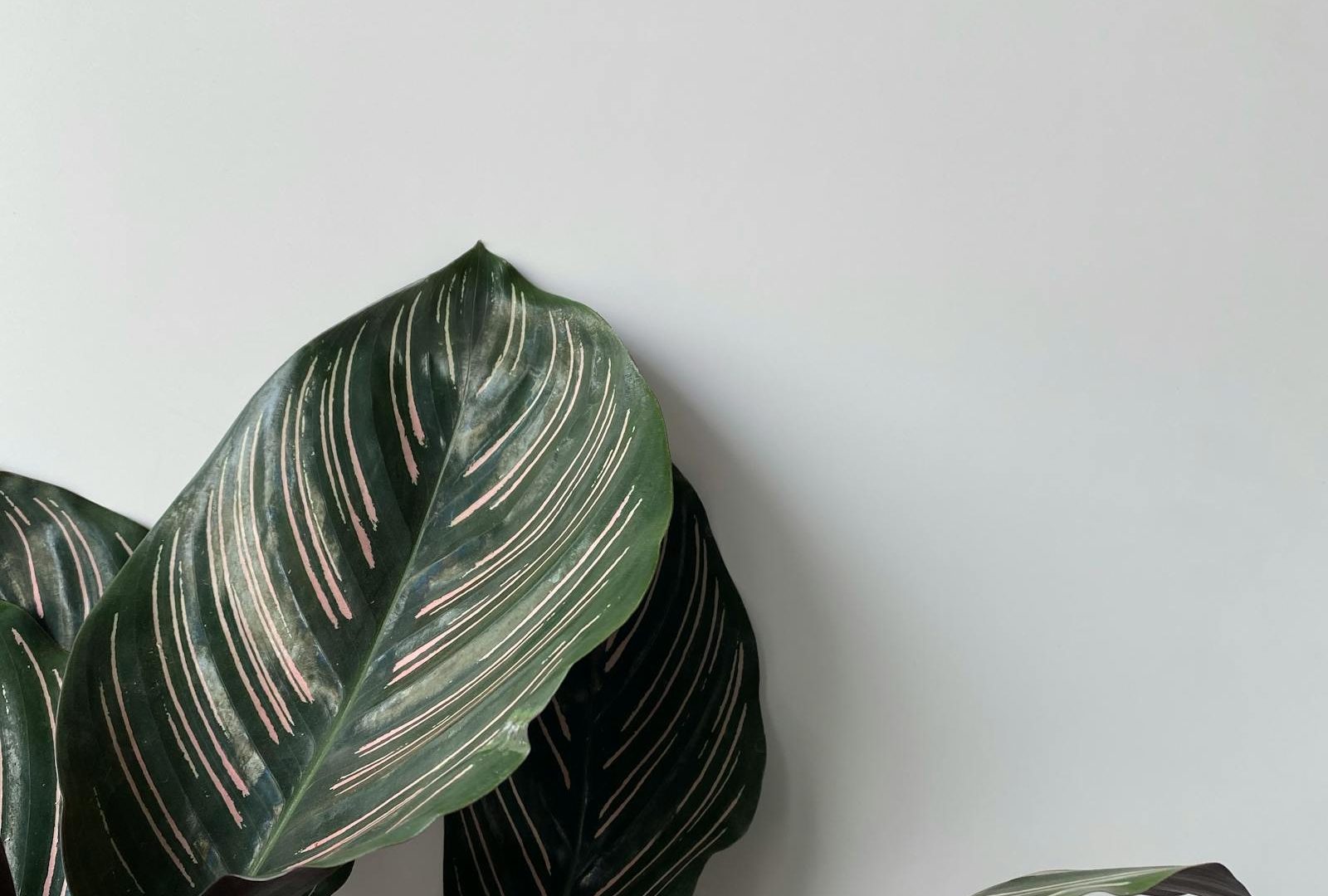
My best growing year came the season I gave away seventeen plants in a single Saturday. What remained was a windowsill of eight, a philodendron on a moss pole in the hallway, and a calathea I had almost thrown out. Within two months every one of them looked better than anything on my shelves had looked in the previous three years. Nothing had changed about my skills. I had simply stopped asking my apartment to be a nursery.
This is an argument for smaller collections, written by someone who used to own a much larger one. It is not about aesthetics or minimalism as a lifestyle brand. It is about the very concrete horticultural fact that a plant kept at the edge of your attention is a plant that quietly declines, and that most home growers, myself included, cross that edge somewhere between forty and sixty plants without noticing.
Why crowded collections quietly fail
A healthy houseplant is a small negotiation between light, water, humidity, airflow, and your patience. Each new plant multiplies that negotiation, and the multiplier is not linear. Ten plants in one room compete for the same three good light positions. Twenty plants share the same afternoon watering window, which is really about fifteen minutes on a weekday. Forty plants mean at least one of them is being watered on autopilot while you think about something else, which is how root rot enters a collection that was, on paper, healthy.
The University of Maryland Extension puts overwatering at the top of the list of houseplant killers, and in my experience the underlying cause is almost never a bad watering technique. It is volume. You cannot check the moisture of sixty pots individually before work, so you develop a rhythm, and the rhythm is wrong for at least six of them.
The threshold nobody talks about
I have kept notes on my collection since 2019, and there is a clear inflection point in the data. Below roughly twenty-five plants, I remembered each one’s individual quirks: the anthurium that sulks below 55 percent humidity, the alocasia that pushes a new leaf every 38 days on average, the peperomia that only needed water every 14 days in winter. Above thirty-five plants, that specificity collapsed into rough categories, and my loss rate roughly tripled.
The threshold is different for everyone. It depends on how much of your day is genuinely available for observation, not just for watering. A useful rough test: can you, right now, without walking into the room, name the last leaf each of your plants pushed and roughly when? If not, you probably have more plants than you have attention.
A room-by-room audit I actually use
Twice a year, in early March and again in late September, I run the same audit. It takes about two hours and it is uncomfortable the first time. Here is the exact sequence.
- Photograph every plant against a plain background. Phone camera is fine. This forces you to look at each one individually rather than as part of a display.
- For each plant, write one sentence in a notebook describing its condition and one sentence describing the last new growth you can date.
- Sort the photos into three piles: thriving, holding steady, quietly declining. Be honest. A plant that has pushed no new leaf in four months is not holding steady.
- For every plant in the declining pile, name the specific environmental factor it is missing. If you cannot name one, or if the answer is “more attention than I give it,” that plant needs to leave.
- Rehome the declining plants within two weeks. Local plant swap groups, coworkers, a friend with a bright bathroom.
- For the thriving group, identify what is working and protect it. This usually means not moving the plant, not repotting it, and not experimenting.
The first audit I ever ran cost me the seventeen plants I mentioned at the top. The second one, six months later, cost me four more. Every audit since has been in the single digits, because the collection has stabilized around what my apartment can actually support.
What “kept better” looks like in practice
Editing down is only half the argument. The other half is what you do with the time and resources you get back. A collection of twelve to twenty plants, in my experience, unlocks care behaviors that a larger collection makes impossible.
- You can actually clean every leaf, both sides, every four to six weeks. Dust reduces photosynthesis measurably, and clean leaves also let you spot spider mites before they establish.
- You can afford proper equipment for each plant that needs it. A single 40 watt full-spectrum LED over one anthurium is transformative. Spread across sixty plants, the same budget buys nothing meaningful.
- You can quarantine new arrivals for the full four weeks the RHS recommends, because you have the physical space to isolate them.
- You can repot on the plant’s schedule, not on a batch schedule you invented to make Saturday possible.
- You can observe. This is the one that matters most, and the one no product will sell you.
The decisions that keep coming back
Certain judgment calls repeat themselves every audit. I have started keeping a small internal reference for how I think about them, because otherwise I talk myself into keeping plants I should not.
| Situation | Question I ask | Default answer |
|---|---|---|
| A rare plant that has struggled for 6+ months | Is my environment wrong, or is my care wrong? | If environment, rehome. If care, one more season. |
| A common plant I no longer find interesting | Would a beginner in my building love this? | Give it away this week. |
| A gifted plant I never wanted | Is the guilt about the plant or the person? | Rehome the plant, keep the relationship. |
| A plant with sentimental history | Am I keeping it alive or keeping it in a corner? | Move it to a good spot or let it go. |
| A plant I bought impulsively last month | Do I have a spot with the right light, right now? | If no, return or rehome within 30 days. |
What restraint has actually changed
Two things surprised me after committing to a smaller collection. The first is that my plants started behaving like plants in botanical garden greenhouses, which is to say they entered predictable growth cycles. The anthurium veitchii I nearly gave up on now pushes a new leaf every 45 to 55 days, reliably, because it lives in one spot with 65 percent humidity and 200 PPFD of light and I have stopped fussing with it. This kind of consistency is only possible when you are not also managing 40 other pots.
The second surprise is quieter. I enjoy the hobby again. When you have twelve plants, walking into the room in the morning is a small ceremony. When you have sixty, it is a chore list. The Royal Horticultural Society has written thoughtfully about the mental health benefits of gardening as a wellbeing practice, and my honest experience is that those benefits scale inversely with collection size past a certain point. The plants become work instead of practice.
Objections I have heard, and answered
People push back on this argument in predictable ways, so let me address the two most common. First, “but I love all my plants.” I believe you. I loved all mine too. Love is not the operative variable; capacity is. You can love thirty plants and still be actively harming eight of them. Rehoming is not a failure of love, it is an act of it.
Second, “won’t I get bored?” This one confused me for a long time, because the answer in my experience is the opposite. A smaller collection lets you go deeper. You can research a single genus properly, try three substrate mixes on comparable plants, keep meaningful notes. My philodendron gloriosum has taught me more about aroid roots in two years than my previous forty-plant collection taught me in five. For further reading on how professional growers think about scale and observation, the University of Florida IFAS Extension maintains a useful houseplant resource library.
How to start, if you are convinced
Do not do what I did and rehome seventeen plants in a weekend. It works, but it hurts, and it makes the process feel punitive. A gentler path: run one audit this month using the six-step method above, and only commit to rehoming plants in the clearly declining pile. Give yourself six months before the next audit. By the third cycle, the collection will have found its natural size, which is almost always smaller than you expected and larger than you feared.
Keep a short list of plants you have rehomed and where they went. I do this partly for accountability and partly because it is genuinely satisfying to know that the marble queen pothos I could not keep alive is thriving in a friend’s north-facing kitchen where the light is exactly right for it. Fewer plants, kept better, in more homes.
Frequently asked questions
How many houseplants is too many?
There is no universal number. The practical ceiling is the point at which you can no longer name each plant’s individual care needs and last new growth from memory. For most home growers with a full-time job, that threshold sits somewhere between 25 and 40 plants. Cabinet growers and people who work from home can often handle more because they observe more.
Is it wrong to give away a healthy plant just because I have too many?
No, and framing it as wrong is part of what keeps collections bloated. A healthy plant given to someone who has the right spot for it will grow better than a healthy plant kept in a mediocre spot by someone overwhelmed. Rehoming is a horticultural decision, not a moral one.
What is the fastest way to reduce a collection humanely?
Local plant swap groups on Facebook or Reddit will absorb almost any healthy plant within 48 hours if you offer free pickup. Workplaces are the second best channel; a small “free plants” table by the coffee machine clears remarkably fast. Avoid shipping unless the plant is rare enough to justify it.
Should I stop buying new plants entirely?
Not necessarily. A useful rule I borrowed from a book collector: one in, one out. If you add a new plant, another one has to leave, either through rehoming or because it was already declining. This keeps the collection at a size you have proven you can support without freezing it in place.
Will my remaining plants really improve, or is that confirmation bias?
Measure it. Photograph every plant on the day of your audit and again 90 days later. In my notes, plants moved into better light after an audit averaged one additional new leaf per quarter compared to the previous year. That is not confirmation bias, that is more light and more attention doing their job.
]]>Frequently asked questions
What is slow plant living?
It is the practice of caring for plants on their own terms — not forcing growth or optimizing for maximum output, but accepting their natural pace and developing consistent attention.
How is this different from regular plant care?
Regular plant care is often task-oriented and outcome-focused. Slow plant living is practice-oriented and relationship-focused. Both can produce healthy plants, but the experience and meaning differ.
Will this approach mean my plants grow slower?
Not necessarily slower — but you stop trying to push beyond what plants want. The growth pace becomes the plant's natural pace, which is usually fine and sustainable.
Can I combine slow plant living with serious collecting?
Yes. The two are compatible. Serious collectors often practice slow plant living because it produces better outcomes than aggressive optimization.