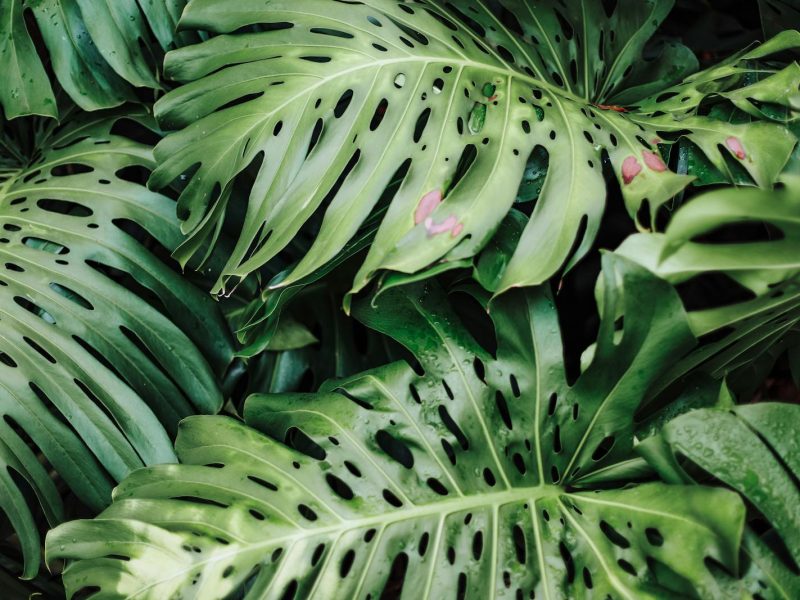
My oldest Monstera deliciosa is taller than I am, and every one of its aerial roots has grown inside a flat I do not own. That single fact shapes almost every decision I make about the plant, from how I stake it to whether I dare drill a hook into the plaster above the radiator. Living with a big climbing aroid in a rented home is a quiet negotiation between what the plant wants and what the tenancy agreement will forgive, and after five moves with the same specimen I have opinions about how to keep both sides happy.
This is not a beginner care guide. If you are looking for the standard “bright indirect light, water when the top inch is dry” summary, the Missouri Botanical Garden entry is a good starting point. What follows is what I actually do with a mature plant in around 45 square metres of rented space with limited light and even less permission to modify anything.
Why a large monstera behaves differently in a flat
A young monstera is a houseplant. A large one, once the internodes stretch and the leaves start fenestrating deeply, is essentially a vine that has decided your ceiling is a tree canopy. Mine puts out a new leaf roughly every 5 to 6 weeks in summer and one, if I am lucky, across the whole of December to February. Each new leaf is bigger, heavier and further out from the pot than the last, and the whole plant slowly tips forward toward the brightest window.
In a house with high ceilings and a sunroom, this is charming. In a rented flat with 2.4 metre ceilings, painted magnolia walls I am not allowed to mark, and a north-east-facing lounge that gets about 4 hours of usable light in winter, it becomes a design problem. I stopped fighting that and started planning around it.
Choosing a spot without ruining the light for anything else
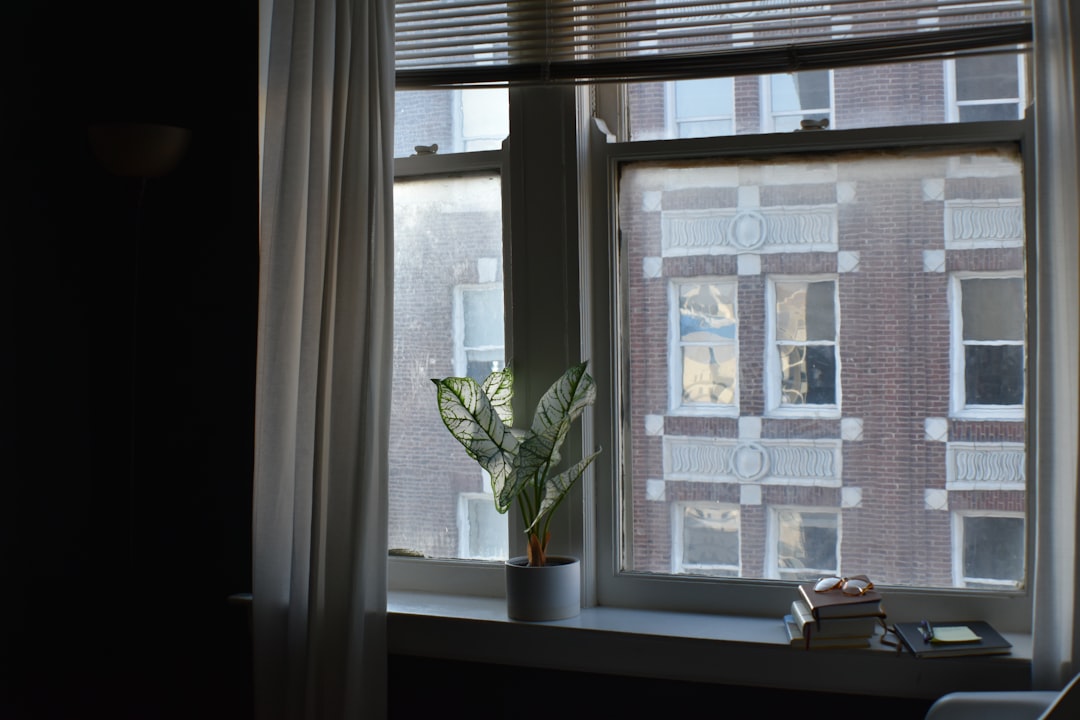
My current plant lives about 1.2 metres back from a large east-facing window, on a low plant trolley with locking wheels. That distance is deliberate. Directly against the glass in summer, the leaves on the sunny side scorched to papery brown patches within a fortnight; measured with a cheap lux meter, that spot was hitting around 25,000 lux at midday in July and dropping under 400 lux in January, which is a punishing range for a single plant to live through.
At 1.2 metres back, the summer peak drops to roughly 8,000 to 12,000 lux, and I supplement the winter with a full-spectrum LED bar (about 30 watts, around 20 cm above the top of the plant, on a timer from 07:00 to 17:00). Monsteras are famously tolerant, but “tolerant” is not the same as “growing”, and I would rather my plant push a real leaf every couple of months than sulk elegantly for the entire cold season.
A few things I check before committing to a location:
- Radiator distance. Any leaf within 40 cm of a hot radiator crisped for me. I keep the pot at least 80 cm from any heat source.
- Draught path. Front doors, kitchen extractor fans and single-glazed sash windows all create cold streams that cause edge yellowing over a few weeks.
- Floor load. A 40 cm terracotta pot full of wet substrate on a plant trolley is around 25 kg. On an old floorboard by a bay window, that is a real number to think about.
- Access. Can I get behind the plant with a watering can without moving furniture? If the answer is no, I will water it less often than I should.
Supports that do not damage the walls
The single biggest question I get from other renters is how to keep a heavy monstera upright without drilling. I have tried most of the options and settled on a combination that has now survived two house moves.
| Support option | Wall damage | Max plant size I trust it with | Notes |
|---|---|---|---|
| Moss pole in pot (coir wrapped bamboo) | None | Up to about 1.5 m tall | Needs a heavy pot for counterweight |
| Extendable tension pole (floor to ceiling) | None if felt pads used | Up to about 2.4 m | Check ceiling is plaster, not polystyrene tile |
| Command style adhesive hooks | Minimal if removed correctly | Light training only, not weight-bearing | Rated up to about 3.5 kg per hook |
| Freestanding trellis behind pot | None | Up to about 1.8 m | Anchor to pot, not to wall |
| Screws into wall | Significant, requires filling | Any | Only with landlord permission and rawl plugs |
My current setup is a 1.9 metre extendable tension pole braced between floor and ceiling directly behind the pot, with the main growing tip loosely tied to it using soft plant tape. Along the pole I have added a coir wrap for the top 60 cm so the aerial roots have something to grip. The whole thing comes down in about 4 minutes and leaves two small felt-pad marks on the ceiling that a damp cloth removes.
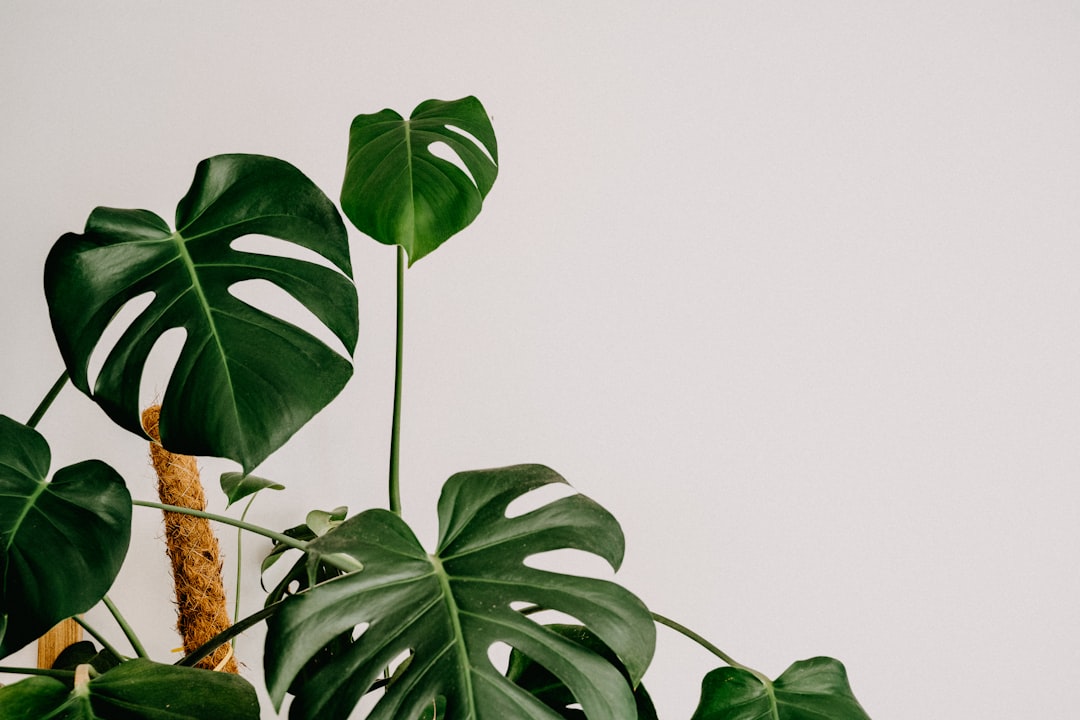
Watering, humidity and the reality of shared bathrooms
I water on feel, not schedule. In practice that means checking with a wooden skewer every 4 to 5 days in summer and every 10 to 14 days in winter. When the skewer comes out with damp substrate clinging past the top third of the pot, I wait. When it comes out clean and dry to the bottom, I water until roughly 15% of the volume runs out of the drainage holes, then tip the saucer within 20 minutes so no root sits in standing water.
Humidity is where rentals get interesting. My flat sits at around 38 to 45% relative humidity in winter, which is fine for a monstera but not luxurious. I do not run a humidifier for one plant, because the electricity cost and the constant refills annoyed me more than the crispy leaf tips did. Instead I do three things: I group the monstera with two ferns and a calathea so they share transpired moisture, I mist the moss pole (not the leaves) every other morning, and I move the plant into the bathroom for a two-hour “spa” after any long hot shower. It is a small ritual and it noticeably reduces edge browning between October and March. The University of Minnesota Extension is realistic about how limited misting alone is, which matches what I have seen.
Repotting when you cannot make a mess
Repotting a large monstera in a flat with a shared hallway carpet is the least glamorous part of the hobby. I now do the whole operation on a builder’s dust sheet laid across the bath, with the plunger removed from the drain and a colander catching stray substrate. It takes about 45 minutes and produces almost no mess.
My substrate is a chunky aroid mix I blend myself, roughly:
- 40% orchid bark, medium grade
- 25% coco coir, rinsed
- 20% perlite, large grade
- 10% worm castings
- 5% horticultural charcoal
I pot up by one size only, usually going from a 30 cm to a 35 cm pot, and only when roots are visibly circling the drainage holes. Fresh substrate in a pot that is too large stays wet, and wet chunky substrate in a cool flat is how I gave a previous monstera root rot in 2019. I have not repeated that mistake.
Moving flats without breaking the plant
Two of my five moves involved this monstera, and both taught me something. Before the van arrives I water lightly two days ahead so the substrate is damp but not sodden, then I wrap the entire canopy loosely in a large cotton bedsheet tied at the base of the stem. Cotton, not plastic, because a plastic bag on a warm plant for six hours in a van cooks the leaves; I learned that with an alocasia and I will not do it again.
The pot travels upright, wedged between two soft bags, ideally in the footwell of a car rather than the back of a van where it can tip. On arrival, I unwrap immediately, put the plant in its planned spot, and do not water for at least 5 to 7 days. New leaves may pause for a month; that is normal, not a crisis.
Frequently asked questions
Will a large monstera damage rented walls or floors?
Aerial roots do not attach to painted plaster with anything like the grip they have on tree bark, so the plant itself rarely marks walls. The bigger risks are water rings on wooden floors from saucers and dents in carpet from a heavy pot on a small base. I use a wide cork mat under the pot and a shallow ceramic saucer, and I check underneath monthly for damp patches.
How much does it cost to keep a large monstera happy in a flat?
My rough running costs are around 12 to 18 pounds a year for substrate refreshes, 25 to 40 pounds for a decent LED grow bar amortised over 3 years, and negligible water and electricity. The biggest one-off costs were a 40 cm frost-proof pot at about 45 pounds and the tension pole at 30 pounds. Compared to almost any other hobby I have, it is a bargain.
Can I keep a big monstera in a north-facing flat with no direct sun?
Yes, but growth will be slow and leaves will fenestrate less. I kept one in a purely north-facing bedroom for 18 months and it stayed alive and attractive but pushed only 3 new leaves in that time. Supplementing with a 20 to 30 watt full-spectrum LED for 8 to 10 hours a day changed that dramatically within one growing season.
What do I do with a monstera that is outgrowing the ceiling?
You have three honest options: chop and propagate the top, let it arch and cascade sideways along a horizontal support, or give it away to someone with more headroom. I have done all three. A well-taken top cutting with 2 leaves and an aerial root roots in water within 4 to 6 weeks and gives you a fresh compact plant, plus the original stem will usually push new growth from a dormant node below the cut.
Is a monstera safe around pets in a small flat?
Monstera deliciosa contains insoluble calcium oxalates and is listed as toxic to cats and dogs by the ASPCA. Chewed leaves cause oral irritation and drooling rather than fatal poisoning, but in a small flat where a cat can easily reach a low leaf, I keep the plant on a raised trolley and prune off any leaf that hangs below shoulder height. That has been enough with two curious cats over six years.
Frequently asked questions
What is slow plant living?
It is the practice of caring for plants on their own terms — not forcing growth or optimizing for maximum output, but accepting their natural pace and developing consistent attention.
How is this different from regular plant care?
Regular plant care is often task-oriented and outcome-focused. Slow plant living is practice-oriented and relationship-focused. Both can produce healthy plants, but the experience and meaning differ.
Will this approach mean my plants grow slower?
Not necessarily slower — but you stop trying to push beyond what plants want. The growth pace becomes the plant's natural pace, which is usually fine and sustainable.
Can I combine slow plant living with serious collecting?
Yes. The two are compatible. Serious collectors often practice slow plant living because it produces better outcomes than aggressive optimization.