My first cutting swap was a small affair in the back room of a garden centre, about eleven people crowded around a folding table with damp paper towels and a nervous energy that felt closer to a poker night than a plant club. I brought three cuttings of a variegated Monstera adansonii that I had been rooting for months, and I left with a rooted Philodendron gloriosum pup, a mislabelled Hoya that turned out to be something quite special, and a lingering sense that I had committed at least two small social crimes without realising it. Nobody said anything at the time, which is precisely the problem with unwritten rules.
Since then I have hosted, attended, moderated, and quietly walked away from a fair number of exchanges, both in person and online. The core lesson is that plant swaps run on trust, and trust runs on tiny consistent behaviours: honest labelling, sensible pest checks, generous cut sizes, and prompt replies. When those slip, the community frays. When they hold, it becomes one of the most rewarding corners of this hobby.
What a good swap actually looks like
A healthy exchange is not just a marketplace with the money removed. It is a slower, more relational thing, closer to a potluck than a transaction. People bring what they have surplus of, they bring it in good condition, and they take home something they will actually care for. The best swaps I have been to had roughly equal energy going in both directions, a clear format announced beforehand, and someone quietly making sure the shy first-timers left with something too.
The etiquette below is what I wish someone had handed me on a laminated card at that first swap. None of it is complicated. Most of it is just visible respect for the plants and the people who grew them.

Before you arrive: the pre-swap checklist
Roughly seventy percent of swap etiquette happens at home, before you ever wrap a cutting. If you get this stage right, almost nothing can go badly wrong at the event itself.
- Quarantine and inspect for at least 14 days. Any plant that has entered your collection in the last two weeks should not leave it as a cutting. Pests need time to reveal themselves. Turn every leaf over, check nodes, look at soil surface with a torch.
- Take cuttings 3 to 5 days ahead, not the morning of. Fresh cuts weep sap, which invites rot in transit. Let the wound callus overnight for aroids, longer for succulents and Hoyas.
- Label with the full accepted name. Genus, species, cultivar or variegation pattern if relevant. “Pink one” is not a label, it is a future argument.
- Wrap for the journey, not the shelf. Damp (not wet) sphagnum or paper towel around the node, loose plastic around that, air holes, upright orientation marked clearly.
- Bring more than you plan to take. A useful rule of thumb is 1.5 offerings for every plant you hope to receive.
That last point catches people out. It is easy to imagine a swap as a straight one-for-one trade, but in practice tastes never line up perfectly and you want your generosity to move first.
The honest labelling problem
This is the single biggest source of quiet resentment in the swap world. A mislabelled plant is not a small thing. Someone will build a care routine around the wrong species, potentially propagate and pass it on, and eventually discover the truth in a way that embarrasses everyone up the chain. I have received a “Philodendron White Princess” that was clearly a reverted White Knight, and I know the person who gave it to me believed the label completely. That is the charitable case. The uncharitable case is deliberate misidentification for social credit, and it happens more than the hobby likes to admit.
My rule now is simple. If I am not 90 percent sure of the identity, I write “possibly” on the label and say it out loud when handing the cutting over. If a plant came to me mislabelled and I later confirmed the true identity, I mention that lineage too. This costs nothing and prevents almost all downstream trouble.
What to write on a swap label
| Field | Example | Why it matters |
|---|---|---|
| Full name | Philodendron gloriosum ‘Dark Form’ | Prevents cultivar confusion |
| Cutting type | Rooted node, 2 leaves | Sets expectations for care |
| Rooted in | Sphagnum, 6 weeks | Guides transition medium |
| Grown by | Your first name or handle | Enables follow-up questions |
| Date taken | 3 days before swap | Signals cut freshness |
| Confidence | Confirmed / Possibly / Unknown | Honest ID lineage |
Pest hygiene is a moral question, not a technical one
Bringing thrips or spider mites to a swap is the plant-community equivalent of showing up to a dinner party with the flu. Every attendee then risks carrying it into their own collection, and from there into everyone they subsequently trade with. The University of Minnesota Extension notes that thrips populations can double in under a week under warm indoor conditions, which is exactly how one careless cutting seeds a months-long outbreak across a friend group.
My non-negotiable protocol before a swap is a bare-root inspection with a jeweller’s loupe, a rinse under lukewarm water, and a preventative wipe with 70 percent isopropyl on any suspect leaf axils. If I find anything, that plant stays home. Full stop. There is no cutting so rare that it justifies infecting six other collectors.
- Inspect undersides of every leaf under strong light
- Check nodes and petiole junctions with 10x magnification
- Look for stippling, silvering, webbing, or frass on soil
- Rinse bare roots in lukewarm water before wrapping
- Skip the swap entirely if anything looks suspicious
- Tell the organiser privately why you are not bringing that plant
Online swaps and postal exchanges
Postal swaps compress every etiquette question into a smaller window with fewer social cues to smooth things over. Response times become the primary signal of good faith. If you agree to a trade, you should ship within 5 to 7 days, provide tracking, and message the moment the parcel is dispatched. Silence reads as bad faith even when it is only busyness.
Photographs matter more than they do in person. Take clear images of the actual cutting you will send, ideally with a hand or ruler for scale, before you wrap it. This protects everyone if the plant arrives damaged, because damage in transit is a shipping question, not a character question, and the photos let you separate the two calmly.
A sensible packing standard
- Root ball or node wrapped in damp sphagnum, squeezed until no water drips
- Plastic wrap around the moss, taped closed but not airtight
- Newspaper or bubble wrap around leaves, taped only to itself never to the plant
- Rigid box slightly larger than the plant, marked “This Way Up” and “Live Plants”
- Heat pack in winter, ventilation holes in summer, tracked shipping always
The gift economy and its awkward edges
Plant swaps sit somewhere between friendship and commerce, and that ambiguity is where most conflicts live. Someone brings a rare Anthurium warocqueanum node worth several hundred dollars on resale sites and swaps it for a common Pothos cutting because that is what they wanted that day. Was that a fair trade? By strict market logic, no. By the internal logic of a gift economy, absolutely, because both parties left satisfied and the point was never the money.
Problems start when one person is playing the friendship game and the other is playing the market game without either saying so. I have watched a swap dissolve into a three-week group-chat argument because someone posted their “haul” to resell within a week. That behaviour is not illegal, but it violates the tacit contract of most swap circles, which is that things given at cost or free are meant to stay in the collector economy, not immediately flip into the retail one.
The single question that resolves most swap disputes: “What did each person think they were doing?” If those answers differ, you have a communication failure, not a moral failure.
Hosting your own swap: the practical layer
If you decide to organise, most of your work is logistical rather than horticultural. Pick a venue with good light and a wipeable surface. Cap attendance at 12 to 20 for a first event so nobody feels lost. Announce the format in writing before the day, whether that is open-table (put everything out, take what you want), structured trading (one-for-one negotiations), or auction-style (silent bids in tokens or favours).
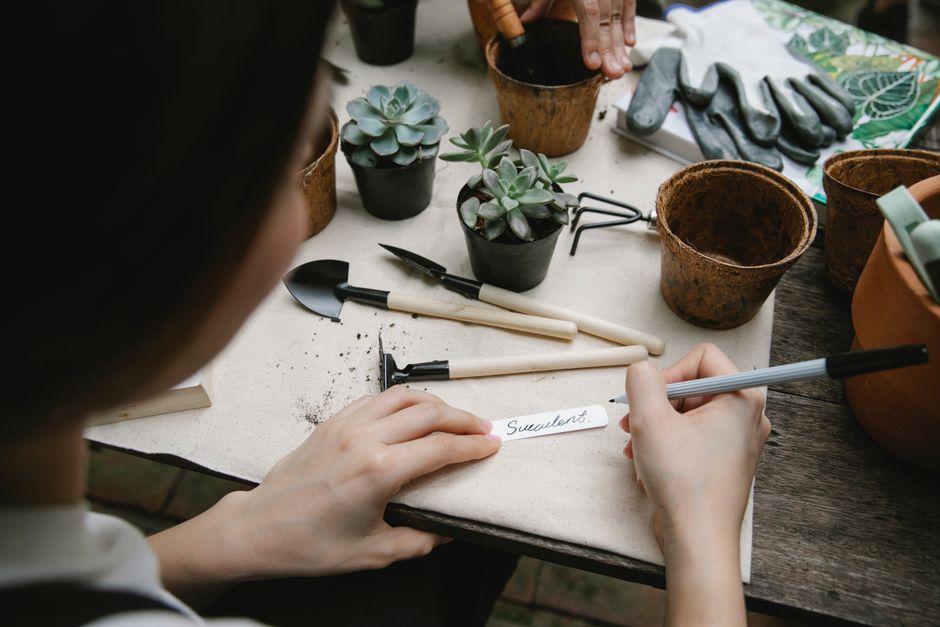
Ask every attendee to bring at least one beginner-friendly plant alongside anything rare. This keeps the entry point low for newer collectors, who otherwise feel priced out socially even when no money changes hands. A swap that only trades in Philodendron spiritus-sancti cuttings is not a community, it is a cartel with better lighting.
What to do when something goes wrong
Even careful people occasionally send a plant with an undetected pest, or realise months later that a cultivar was misidentified. The etiquette here is unambiguous. Message the recipient promptly, apologise plainly without over-explaining, and offer to replace the plant if that is feasible. Do not go quiet, do not gaslight, do not blame the postal service for something the plant clearly had before shipping.
On the receiving side, assume good faith first. Most mistakes are genuine. A private message solves 95 percent of these situations. A public post in a group chat solves zero of them and burns a relationship that took years to build.
Frequently asked questions
How much notice should I give before cancelling a swap commitment?
At least 48 hours for in-person events, and immediately for postal trades that have not yet shipped. Late cancellations leave the other person with wrapped cuttings drying out and no backup plan. If something genuinely urgent comes up, say so honestly and offer to make it right at the next opportunity.
Is it rude to decline a cutting someone brought for me?
Not if you do it kindly and privately. Say you already have a mature specimen, or your conditions are not right for that species. Accepting a plant you cannot house is worse than declining, because it usually dies in your care and the giver eventually finds out.
Can I sell plants I received in a swap?
Technically yes, socially it depends. If the swap was framed as friendship or gift economy, quick resale reads as extraction and will cost you invitations. If you swapped explicitly as a cost-basis trade with no strings, it is your plant to do with as you like. When in doubt, wait 6 to 12 months and grow the plant on before selling.
What if I suspect a plant I received is virused?
Isolate it immediately in a separate room, do not propagate, and message the person you got it from. Viruses like Dasheen mosaic virus can spread through cutting tools and sap contact, so treat the situation seriously without accusation. The giver may not have known.
Should children come to plant swaps?
Talk to the host first. Some swaps are quiet adult events with fragile cuttings on low tables, others are family-friendly by design. Either is fine, but assuming without asking is the problem.
The long view
What I have come to believe, after several years of this, is that swap etiquette is really just a specific dialect of the broader ethic of slow plant living. It rewards patience, honesty, and a willingness to be slightly more generous than the situation strictly requires. The collectors I most enjoy trading with are not the ones with the rarest shelves. They are the ones who label carefully, respond quickly, and remember which cutting came from where three years later. That kind of care compounds, and eventually you find yourself inside a small quiet network of people who all treat plants and each other with the same steady seriousness. It is worth every minute of the extra effort.