Every collector I know has done the same thing at least once: bought a beautiful plant, brought it home, set it on the console table where the light was decent, and then spent the next two weeks feeling faintly annoyed every time they walked past. The plant was healthy. The pot was fine. Nothing was wrong with it individually. But the room was quietly worse than it had been before. What broke, almost always, is visual weight. That is the invisible tonnage a plant carries against the furniture and walls around it, and once you learn to read it, half of your styling decisions get easier and cheaper.
I want to lay out how I actually think about this at home, because most of the styling advice I read treats plants like accessories: put a tall one in a corner, layer heights on a shelf, add greenery. That framing skips the part that matters. A 4 foot Ficus lyrata in a matte black planter and a 4 foot cane-supported Monstera in a woven basket occupy the same footprint but do wildly different things to the room. One anchors, one floats, and if you put the anchoring one where the floating one belongs, the space collapses.
What visual weight actually measures
Visual weight is the perceived heaviness of an object in a composition. It is not literal mass. A 30 lb terracotta pot with a small Peperomia in it can read lighter than a 6 lb plastic nursery pot holding a dense Aglaonema, because the plant matter itself is what your eye tracks. In interior contexts I score plants on roughly five variables. Leaf density, so how much light passes through the canopy. Leaf color value, meaning how dark or how saturated the foliage reads at a 10 foot distance. Silhouette compactness, whether the outline is tight like a Ficus elastica or diffuse like an asparagus fern. Pot contrast against the wall behind it. And the container’s own visual weight, driven by material and color.
I keep a rough 1 to 5 scale in my head for each and add them. A young variegated Monstera adansonii in a pale ceramic against a cream wall lands around 6 or 7. A mature Philodendron gloriosum in a dark stoneware planter against the same wall lands closer to 18. Those are not plants that can substitute for each other in a room, no matter how much you paid for either.
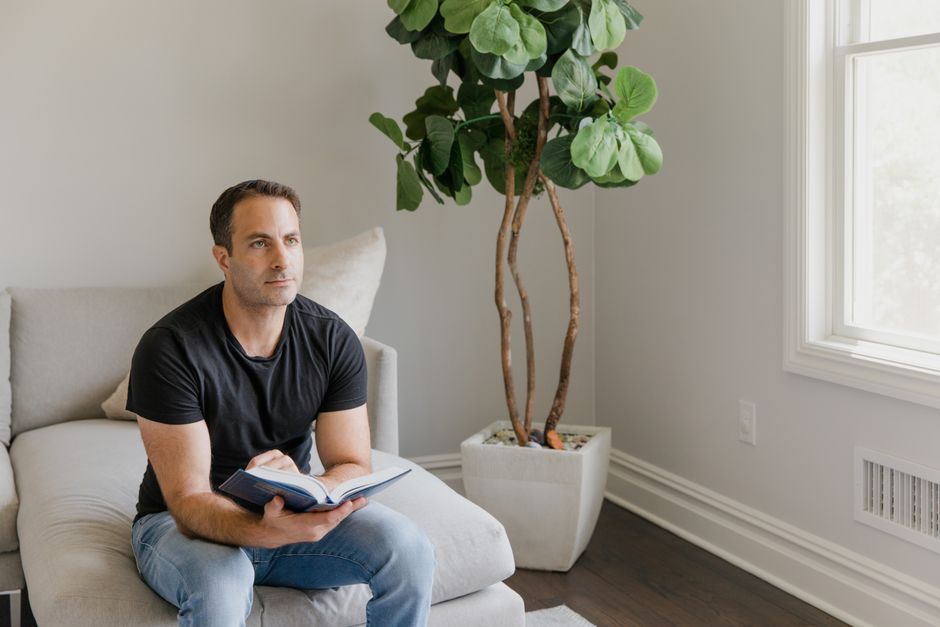
The mistake I made for years
For a long stretch I treated my collection like a plant shop treats its shelves: fill the space, then edit. That works in retail because turnover is the point. In a home it produces the specific kind of tiredness that no amount of watering fixes. My old living room had 14 plants in a space maybe 12 by 14 feet. Every one of them was interesting. Together they read as noise, because there was no dominant weight and no relief. I could not have told you where to look.
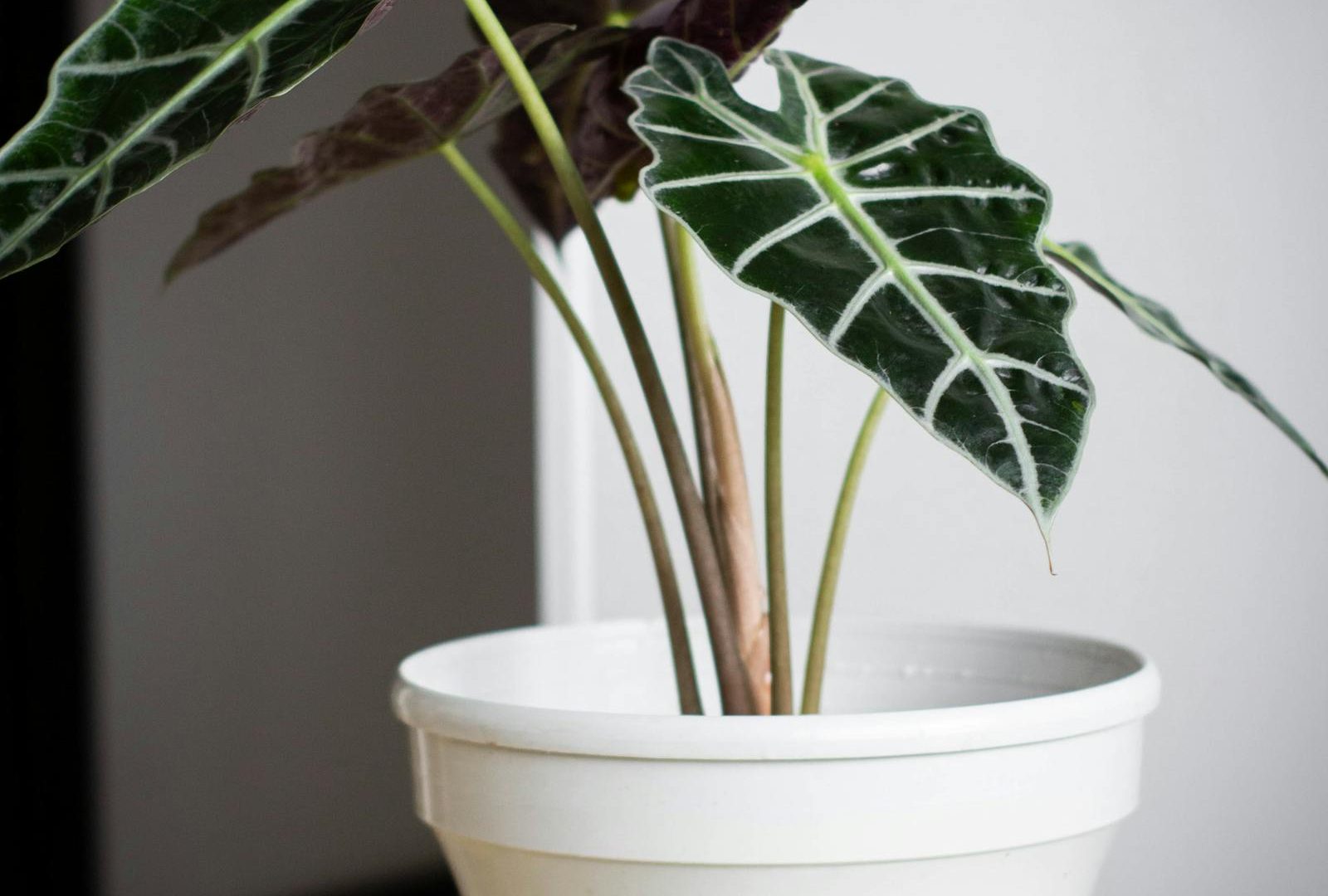
The fix was almost embarrassing. I moved 9 plants out, bought one large Alocasia zebrina in a deep charcoal planter, and put it 20 inches off the corner where the sofa meets the window. The remaining 4 plants suddenly had roles. The room read as considered instead of collected. Nothing about my care routine changed. What changed was the weight distribution.
The scoring pass I run before I move anything
Before I relocate a plant, or before I bring a new one home, I walk the room and do a quick pass. It takes maybe 3 minutes and it has saved me from a lot of returns and reshuffles.
- Stand at the entry point of the room, roughly 8 to 10 feet in, and squint. Squinting collapses detail and shows you where the actual weight sits in the composition. Note the 2 or 3 heaviest zones.
- Ask whether those heavy zones are load-bearing on purpose. A dark bookshelf under a window is intentional weight. A pile of laundry on a chair is not.
- Identify one or two under-weighted zones that feel thin or hollow. Empty corners, blank walls above low furniture, the dead space beside a doorway.
- Score the plant you are considering, and match it against the gap. A 15 point plant in a 5 point gap will crush the space. A 5 point plant in a 15 point gap will vanish.
- Check the sightline from your most-used seat. If the plant sits directly in your reading eyeline, its weight roughly doubles compared to a plant off to the side.
- Only then think about light and humidity. Care requirements are a hard filter after the composition works, not the starting point.
Point 6 is the one I get pushback on from collector friends, and I understand why. We are trained to lead with cultural conditions. But in a home context, if the plant is in the wrong visual spot, you will move it within a month regardless of how happy it was. Better to solve both problems at once.
How different species actually score
The values below are for mature or near-mature plants in neutral ceramic pots against a mid-tone wall. Adjust up 2 to 3 points for dark pots, down 1 to 2 for pale rattan or unglazed terracotta.
| Plant | Silhouette | Leaf density | Color value | Total weight | Best role |
|---|---|---|---|---|---|
| Ficus lyrata (5 ft) | Compact | High | Dark | 14 to 16 | Room anchor |
| Philodendron gloriosum | Compact | High | Dark, matte | 13 to 15 | Low table anchor |
| Alocasia zebrina | Sculptural | Low | Medium | 9 to 11 | Corner accent |
| Monstera deliciosa (mature) | Loose | Medium | Medium | 10 to 13 | Anchor if grouped |
| Rhaphidophora tetrasperma | Diffuse | Low | Light | 4 to 6 | Shelf filler |
| Asparagus setaceus | Very diffuse | Very low | Light, airy | 2 to 4 | Softener, edge |
| Sansevieria (3 ft) | Vertical, tight | Medium | Medium | 7 to 9 | Narrow gap, hallway |
Pots do about a third of the work
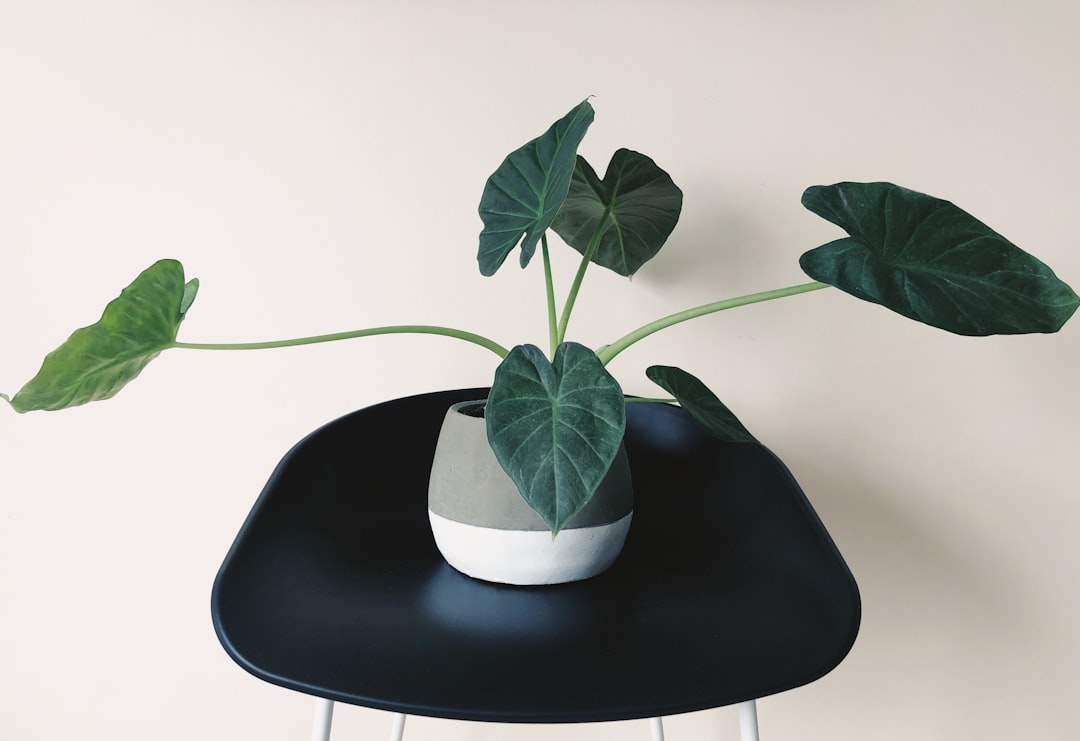
A container’s contribution to visual weight is larger than most people credit. I ran a small experiment last winter with a single Philodendron Birkin, swapping it between three pots against the same wall: a white matte ceramic, a raw grey stoneware, and a black glazed cylinder. The plant scored roughly 6, 9, and 12 respectively in the same spot, same light, same day. That is a two-times swing from the pot alone. If your room feels bottom-heavy, lighter pots almost always help before you touch the plant selection. If it feels adrift, one anchor pot in a saturated dark tone will usually settle it.
There is good general guidance on how container choice interacts with plant scale in the Penn State Extension houseplant materials, and the RHS houseplant guide is worth reading alongside for the horticultural side, since a pot that solves the styling problem but fails the drainage problem is not a solution.
Negative space is a design element, not leftover
The single hardest habit for me to build was leaving walls and shelves partially empty on purpose. Every empty surface felt like a place I had failed to put a plant. Once I started treating the empty portion as active, the plants I did have started reading properly. A useful rule I borrowed from a lighting designer I know: aim for roughly 40 percent of any horizontal surface to be visibly empty. Not covered by a book, not shaded by a leaf, actually empty and legible.
A quick checklist I use when a room feels off but I cannot name why:
- Is there a single dominant weight in the room, or is it a democracy of medium objects?
- Does every plant have at least 6 inches of visual breathing room from the next weighty object?
- Are the darkest foliage tones near eye level or near the floor? Dark low anchors a room; dark high compresses it.
- Is any pot fighting the wall behind it with high contrast that was not intentional?
- If I removed the smallest 2 plants, would the room read as more or less considered?
The last question is the one that has changed my collection the most. In most rooms, the answer is more considered. Small plants are wonderful on a plant shelf built for small plants. They rarely earn their keep as accents in a living space.
Working with what a room already gives you
Rooms come with existing weight before any plant enters. A stone fireplace, a leather sofa in cognac, a heavy wooden dining table, a large abstract painting in oxblood tones. These read as roughly 15 to 25 point weights on the same scale. Adding a similarly weighted plant in the same sightline creates a stalemate, which the eye reads as visual heaviness or, worse, competition. I usually pick plants that either clearly deferto the existing weight (loose, airy, pale) or clearly answer it from across the room (compact, dark, sculptural), never plants that tie with it.
My current living room has a heavy wool rug in charcoal, a mid-brown leather chair, and a pale plaster wall. The permanent plants are: one large Philodendron gloriosum on a low table by the chair (answers the rug), one tall Rhaphidophora tetrasperma on a slim plant stand near the window (defers to everything, softens the corner), and a small Peperomia obtusifolia on the console (relief, close to zero weight). That is it. Three plants doing three different jobs. There is space on the shelves and on the console for more, and I have resisted, because the composition works.
Frequently asked questions
How do I know if a plant is too small for a spot rather than just badly placed?
Stand at the room entry and squint. If the plant disappears into the background of the composition, it is too light for the spot regardless of placement. Try repotting it into a container two sizes up in a darker tone before assuming you need a different species. A pot upgrade often adds 3 to 5 weight points, which is frequently enough to make a small plant hold a mid-sized gap.
Can I use grouping to substitute for a single large anchor plant?
Sometimes. A cluster of 3 to 5 medium plants can act as one composite weight if they share a base surface, sit within about 18 inches of each other, and vary in height by at least 30 percent between shortest and tallest. If they are scattered across a wide surface at similar heights, the eye reads them separately and you get noise, not an anchor. Grouping also demands consistent pot tones, otherwise the container variety fragments the weight.
Does variegation change visual weight?
Yes, significantly. High variegation with large white or cream sectors reduces effective leaf density by 30 to 50 percent, because the eye reads those sectors as negative space inside the leaf. A half-moon variegated Monstera can score 3 to 4 points lighter than an all-green specimen of the same size. This is useful when you want the sculptural silhouette of a large plant without the mass, but it also means variegated plants make weaker anchors than collectors sometimes expect.
What if my room is genuinely tiny?
In a room under about 100 square feet, weight compresses fast. I stop scoring individual plants and start scoring the whole room as one composition. One clearly dominant plant, plus one relief plant, is usually the maximum before the space starts feeling crowded. Wall-mounted plants and hanging plants are useful here because they contribute weight without consuming floor or surface real estate, though they add complexity to watering routines.
How often should I re-score my rooms?
Seasonally, and after any significant purchase or rearrangement. Light changes across the year shift how foliage reads: dark leaves that anchored a corner in June can start feeling gloomy by November as ambient light drops. I do a proper squint-and-score pass roughly every 3 months, usually when I am already rotating plants for light. It takes 15 minutes for a whole apartment and it prevents the slow drift that produces the cluttered-collection feeling.
]]>Frequently asked questions
What is slow plant living?
It is the practice of caring for plants on their own terms — not forcing growth or optimizing for maximum output, but accepting their natural pace and developing consistent attention.
How is this different from regular plant care?
Regular plant care is often task-oriented and outcome-focused. Slow plant living is practice-oriented and relationship-focused. Both can produce healthy plants, but the experience and meaning differ.
Will this approach mean my plants grow slower?
Not necessarily slower — but you stop trying to push beyond what plants want. The growth pace becomes the plant's natural pace, which is usually fine and sustainable.
Can I combine slow plant living with serious collecting?
Yes. The two are compatible. Serious collectors often practice slow plant living because it produces better outcomes than aggressive optimization.