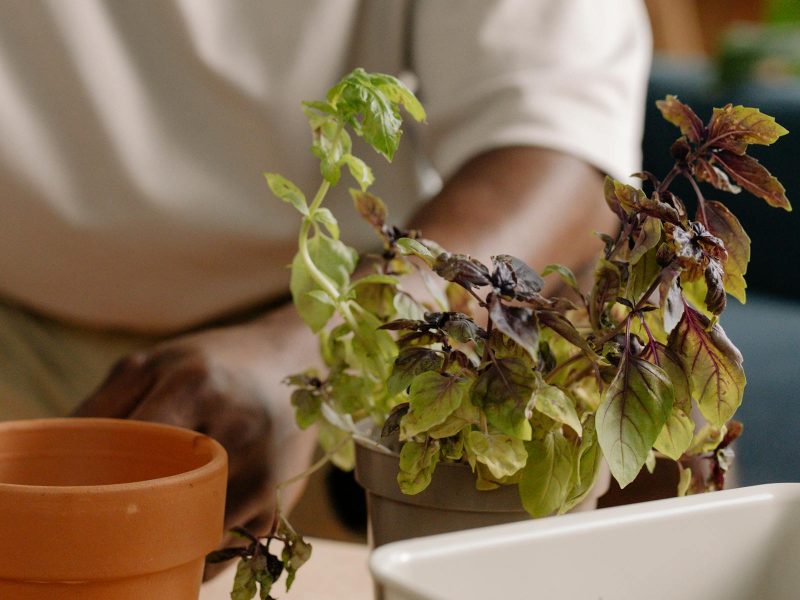

My apartment gets loud in a very particular way around 7 in the evening. Not loud with sound, exactly, but loud with residue: the tabs still open, the group chat still pinging, the sense that something somewhere is waiting on a reply. For years I answered that noise with more noise, usually a podcast on 1.3x speed while I made dinner. What finally quieted the room was, embarrassingly, a watering can and a small notebook. I want to talk about why quiet hobbies work, what makes a hobby actually quiet (as opposed to just solitary), and how a plant shelf became the anchor of a much calmer evening.
What I mean by a quiet hobby
A quiet hobby is not the same as a slow hobby, a solo hobby, or an analog hobby, though it often overlaps with all three. My working definition after a few years of trying different things: a quiet hobby holds your attention without demanding a performance. There is no score, no upload button, no streak counter. If you skip a day, the hobby does not text you about it. The reward is entirely inside the act itself, and usually inside the small physical adjustments the act asks for – a wrist turned, a leaf lifted, a bag of substrate opened slowly so the perlite does not skitter across the floor.
By that definition, running a Strava-tracked 10K is not a quiet hobby. Learning to identify five species of moss in the local park is. So is bread baking without posting the crumb shot, hand-copying a poem you like, and, most relevant here, keeping houseplants in a way that does not become a content pipeline.
Why the nervous system likes them
I am not going to pretend I understand the neuroscience in any depth, but the pattern in the research is consistent enough that I trust it. Repetitive, low-stakes, sensory tasks appear to nudge the autonomic nervous system toward the parasympathetic side – the “rest and digest” mode rather than “fight or flight.” A frequently cited randomized study out of Japan found that a brief indoor plant-repotting task produced measurably lower sympathetic nervous activity and lower blood pressure than a short computer task in the same young adults (Lee et al., 2015). The effect size in that one study is modest, but the direction lines up with a much larger literature on nature contact and stress recovery.
My own crude self-experiment: I wore a cheap heart-rate strap for two weeks, once during 20 minutes of scrolling news and once during 20 minutes of plant care. Resting HR during scrolling averaged around 74 bpm. During plant care it drifted down to about 66 bpm, and stayed lower for another 30 minutes afterward. Not a controlled trial. Just a hint that my body seems to agree with the literature.
Why plants specifically, and not, say, sudoku
Puzzles are quiet in the ambient-sound sense but they still activate the “solve this” circuitry. Plants are quiet in a different way: they take you out of problem-solving mode and into noticing mode. There is no correct answer to whether the new leaf on my Philodendron gloriosum has darkened by the right amount this week. There is only the fact that it has, or has not, changed since Sunday.
That shift from solving to noticing is, I think, the whole trick. It is also why plant care fits well alongside things like sketching, whittling, and slow cooking. The hands are busy in a low-precision way, and attention has room to spread out instead of narrowing to a target.
The evening routine that changed things
Here is what I actually do most weeknights between roughly 7:15 and 7:45. It is not sacred and it is not always complete, but it runs enough weeks per year that I count it as the ritual.
- Phone into the kitchen drawer. Not off, not face-down, physically out of the room. This single change did more for my attention than any app.
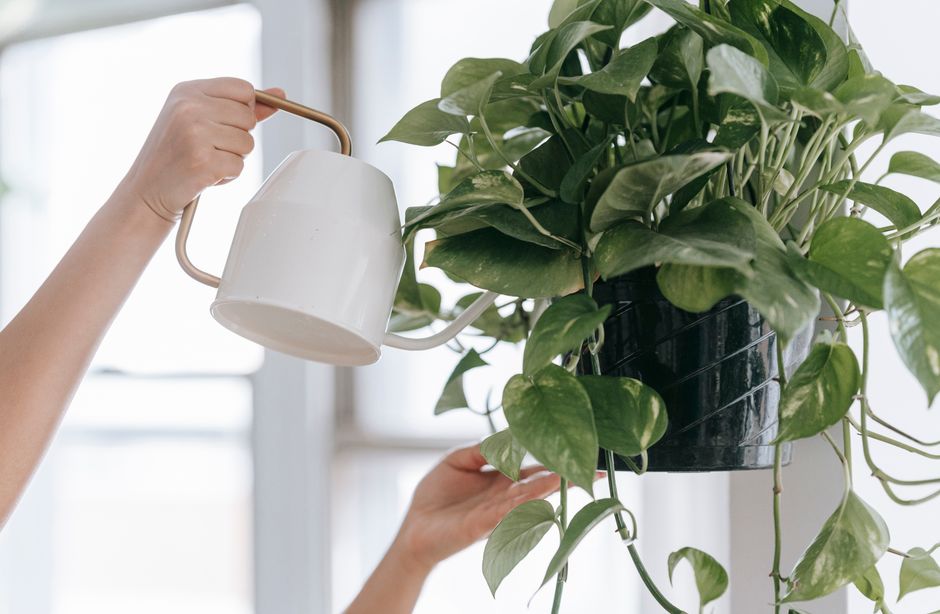
- Fill the watering can and let it sit for 20 minutes. Room-temperature water is easier on tropicals than 55 F tap water straight from the faucet, and the wait gives me a natural pause.
- Walk the shelves without touching anything. Two or three minutes. I look at the undersides of leaves for pests, at the substrate surface for gnat activity, at the tips of new growth on my anthuriums.
- Water only what needs it. I use a wooden skewer pushed 2 inches into the pot; if it comes out clean and dry, that plant drinks. If damp, I skip.
- Wipe two or three leaves. A soft cloth, plain water. This is the part that feels the most like meditation. It also raises the plant’s light capture noticeably over a few weeks.
- Write two lines in the notebook. Date, one observation, one intention for the week. That is it.
Total time: usually 25 to 30 minutes. On a bad day I do steps 1, 3, and 6 and call it a night.
How quiet hobbies compare in practice
Not every quiet hobby suits every apartment or every temperament. When friends ask what to try, I usually walk them through a short comparison based on what actually matters day to day – startup cost, how loud the hobby is when a partner is trying to sleep, and how well it survives being skipped for a week.
| Hobby | Startup cost | Noise level | Survives 1-week skip | Best time of day |
|---|---|---|---|---|
| Houseplant care | $40-$150 | Near silent | Yes, usually | Evening |
| Hand-copying poetry | Under $20 | Silent | Yes | Any |
| Bread baking | $60-$100 | Low, oven fan aside | No, starter suffers | Weekend morning |
| Sketching in ink | $25-$60 | Silent | Yes | Morning or evening |
| Vinyl listening | $200+ | Chosen | Yes | Evening |
| Whittling | $30-$80 | Very low | Yes | Weekend |
Houseplants win for me because they combine the lowest ongoing noise with a task that gently insists you show up. Miss two weeks with a thirsty Alocasia and you will absolutely notice. That mild accountability is, for me, a feature.
What a “quiet room” actually needs
The room part of “quiet hobbies, quiet rooms” gets treated as a decor question, but I think of it as an acoustics and light question first. A room that supports a quiet hobby has a few things in common across the collectors I have visited:
- Soft surfaces that absorb rather than reflect: a rug, curtains, upholstered seating, a shelf of books.
- Warm light after sunset, ideally under 3000 K, from at least two low sources rather than one overhead.
- A clear surface at working height where the hobby can live between sessions without being tidied away.
- A single plant grouping in the peripheral vision from the seated position – not center stage, just present.
- Nothing on the walls that is trying to sell you something, including your own to-do list.
You do not need to redecorate. You need to move three objects. In my case those objects were a floor lamp, a small side table, and the Anthurium clarinervium that had been quietly suffering in a north corner and is now much happier 4 feet from an east window.
Where slow plant living stops and clutter starts
There is a version of this hobby that stops being quiet. It happens around the point where you own more plants than you can actually notice individually in a week. For me that number turned out to be roughly 40, split across three rooms. Past that I was rushing, missing early signs of thrips, and starting to feel the shelf as an obligation rather than a place to rest my eyes.
I now cap the collection and pass propagations to friends instead of potting them up. If you want a rough guide: a slow collection is one where you can name every plant, remember roughly when each was last repotted, and greet each one during a normal watering round without setting a timer. The moment you need a spreadsheet, the room has gotten loud again. The RHS houseplant care guide is a decent sanity check on whether you are keeping plants you actually have conditions for, which is another quiet way to keep the collection honest.
What changed for me after a year
I slept better, which I did not expect. My evening cortisol, based on two saliva tests taken 11 months apart at the same lab, dropped from what my doctor described as “upper end of normal” to “middle of normal.” I read 14 more books than the year before, mostly because my post-dinner hour was no longer being eaten by half-attentive scrolling. I also, and this is the part I find quietly funny, became a slightly less anxious host. Guests would arrive, see the plants, and their own shoulders would drop about 3 inches before they had even taken off their coats. The room was doing some of the work I used to try to do with small talk.
None of this is a prescription. Your quiet hobby may be knitting, sea glass sorting, or restoring a single fountain pen over the course of six months. What matters is that the hobby is quiet in the specific sense I mean – low performance, high noticing – and that the room around it agrees to be quiet too.
Frequently asked questions
How many plants should I start with for a calming routine, not a chore?
Three to five, chosen for the light you actually have, not the light you wish you had. A pothos, a small philodendron, and a snake plant will forgive most beginners and take under 10 minutes total per week. Add plants only after you have run the routine for a full month without skipping more than two evenings.
Do I need a grow light to make this work in a dark apartment?
Not for the calming effect, but yes for the plants if your brightest window reads under about 100 foot-candles at noon. A single 20 to 30 watt full-spectrum LED on a timer, mounted 12 to 18 inches above the shelf and run 10 hours a day, is enough for most easy tropicals and will not turn the room into a greenhouse.
What if I travel a lot and the plants suffer?
Choose plants that tolerate 2 weeks of neglect: sansevierias, ZZ plants, hoyas, most succulents. Skip anything with the word “calathea” on the label until you are home more consistently. A cheap capillary mat under the pots buys you another 4 to 7 days on the trickier plants.
Is a plant journal really necessary?
Necessary, no. Useful, surprisingly yes. Two lines a week is enough to notice patterns – a plant that always yellows in November, a fertilizer that always seems to trigger new growth 10 days later. The journal is where the noticing turns into knowing, which is when the hobby stops feeling repetitive and starts feeling like a practice.
Can this work if I live with a loud family or roommates?
Yes, and it may help more, not less. Claim a 20-minute window and one small shelf. The quiet is portable; it lives in the task, not the square footage. Headphones with nothing playing are a socially acceptable “do not interrupt” signal in most households, and the plants will not mind the noise on the other side of the door.
Frequently asked questions
What is slow plant living?
It is the practice of caring for plants on their own terms — not forcing growth or optimizing for maximum output, but accepting their natural pace and developing consistent attention.
How is this different from regular plant care?
Regular plant care is often task-oriented and outcome-focused. Slow plant living is practice-oriented and relationship-focused. Both can produce healthy plants, but the experience and meaning differ.
Will this approach mean my plants grow slower?
Not necessarily slower — but you stop trying to push beyond what plants want. The growth pace becomes the plant's natural pace, which is usually fine and sustainable.
Can I combine slow plant living with serious collecting?
Yes. The two are compatible. Serious collectors often practice slow plant living because it produces better outcomes than aggressive optimization.