My first attempt at styling with hanging plants ended with two ceiling patches, a soaked rug, and a pothos that had grown into the curtain rod like it was trying to escape. I had hung five plants in a 12 by 14 foot living room because I had seen a similar setup on a mood board, and I never asked whether the room could actually hold them, physically or visually. It could not. The room felt smaller, not greener, and every watering day turned into a small production of stepladders and drop cloths.
What follows is what I wish someone had told me before I put the first hook in. Not styling in the abstract, but the quiet decisions that keep a hung plant from tipping a room into clutter: how many, how high, how heavy, and where the water actually goes.
Why hung plants read as clutter more often than shelved ones
A plant on a shelf sits inside an existing horizontal line. Your eye reads the shelf, then the plant on it, and the plant becomes part of a composition that was already there. A hung plant does the opposite. It punctures the ceiling plane, which the eye normally treats as empty, and it dangles into the middle air of the room where nothing else lives. One hung plant is a focal point. Three hung plants in a small room is a mobile.
The other issue is motion. Trailing foliage moves in every draft, ceiling fan cycle, and door swing. On video calls I noticed a hoya behind me swaying every time the HVAC kicked on, and it pulled focus in a way a still plant on a shelf never did. Motion is not bad, but it competes with everything else you want the room to do.
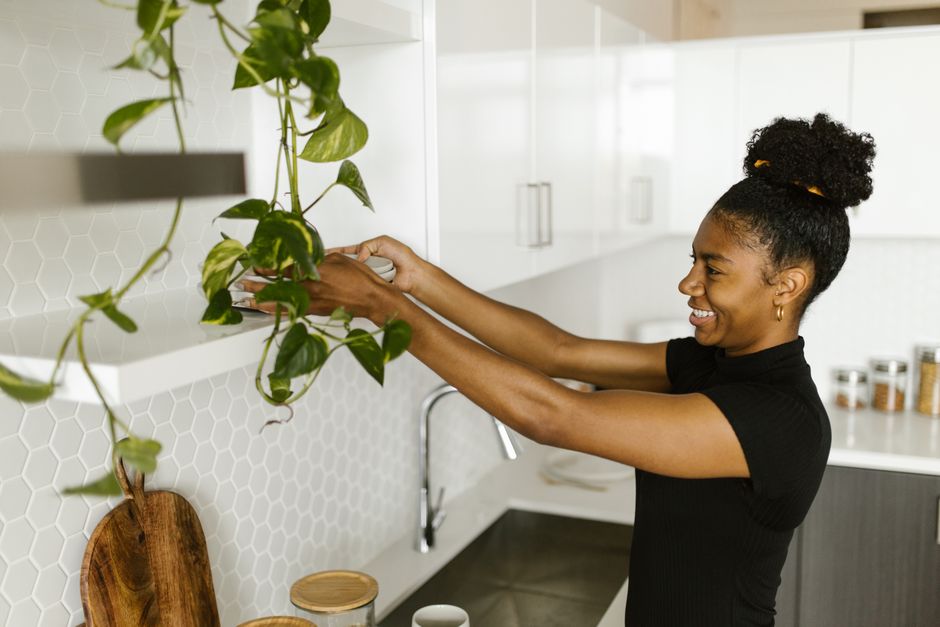
The three-plant rule I ended up with
After the ceiling patch incident I set myself a limit: no more than three hung plants per room, and only one per sightline. A sightline is what you see when you stand in a doorway and look in. If two hung plants overlap from that angle, they count as one visual object and they compete. Pull one down or move it to a different wall.
Three is not a magic number. It is what worked for a 168 square foot room with 8 foot ceilings and one window. In a sunroom with 10 foot ceilings and glass on three sides I have hung seven plants without the room feeling busy, because the ceiling plane is larger and each plant has real air around it. Scale the number to the volume of the room, not the floor area.
Hook load: the part nobody photographs
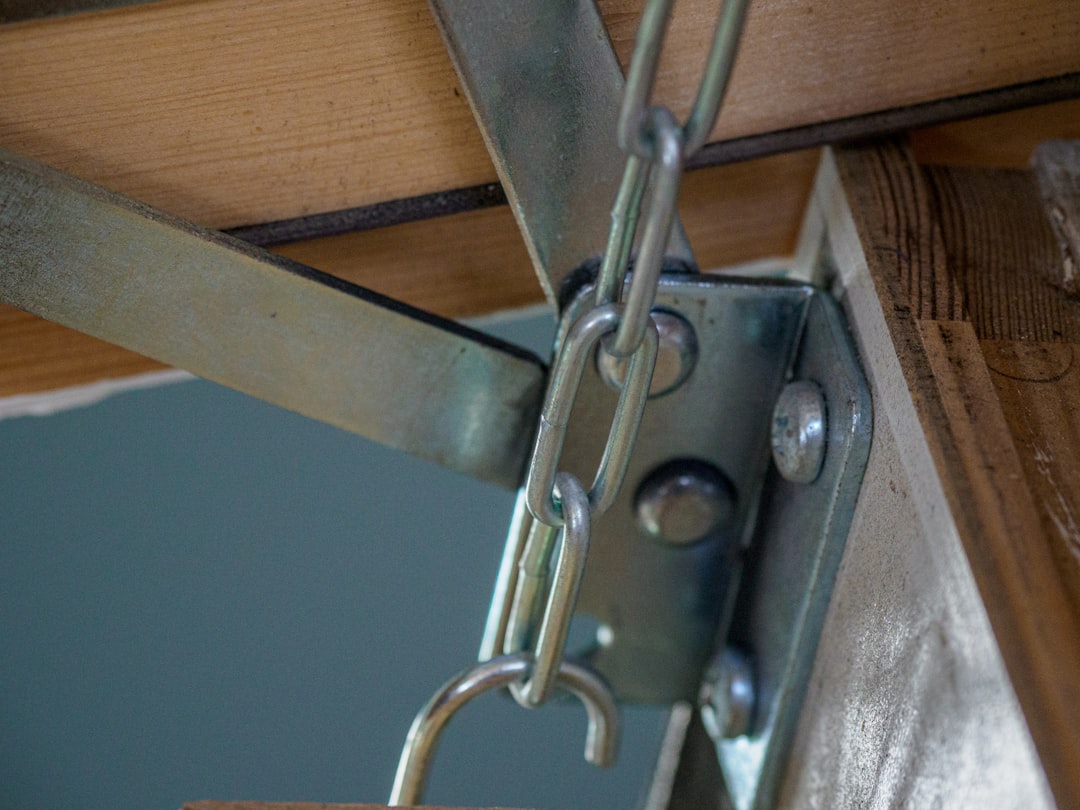
A saturated 6 inch hanging pot with a mature pothos or hoya weighs between 4 and 8 pounds. A 10 inch fern in wet soil can hit 15 pounds. A ceramic hanger adds another 2 to 3 pounds. Drywall alone holds almost none of that safely over time. You need to find a joist, or use a proper toggle bolt rated for the load.
Here is the checklist I run before drilling anything:
- Weigh the pot filled with wet soil on a kitchen scale, then add the weight of the plant and the hanger.
- Multiply that number by 3 to give yourself a working safety margin for swing and future growth.
- Find a ceiling joist with a stud finder, or plan on a toggle bolt rated for at least the safety-margin weight.
- Pre-drill the pilot hole one size smaller than the hook shank so the threads bite.
- Hang the empty pot first and give it a firm tug downward before you commit a plant to it.
The Family Handyman has a clear write-up on choosing drywall anchors by load that I still reference when I move things around. The short version: if the plant plus pot plus water exceeds 10 pounds, you want a joist or a heavy-duty toggle, not a plastic expansion anchor.
Room-by-room placements that actually work
Not every room takes hung plants gracefully. Kitchens and bathrooms sound like natural candidates because of humidity, but they are also the rooms where people move fast and reach up into cabinets. A trailing plant over a stovetop is a fire question, and a plant over a shower is a mildew question. I keep hung plants out of both.
| Room | Best spot | Plants I have had luck with | Avoid |
|---|---|---|---|
| Living room | Corner near a window, 18-24 inches off the wall | Pothos, hoya carnosa, string of hearts | Over seating where people lean back |
| Bedroom | Beside the bed at eye level when seated | Rhipsalis, small philodendron | Directly over the pillow |
| Home office | Behind the desk, off-camera left | Lipstick plant, tradescantia | In the webcam frame if it sways |
| Entryway | Above a console table, 6-7 feet up | Ferns if humidity allows, otherwise pothos | Anywhere a coat can catch it |
| Sunroom | Along the window line, staggered heights | Ceropegia, hoyas, most trailing succulents | Nothing to avoid, this is the easy room |
Height, and why 6 feet 4 inches keeps coming back
The bottom of a hung plant should clear the tallest person who regularly uses the room, plus about 2 inches for growth and swing. For most households that lands the bottom of the trailing foliage somewhere between 6 feet 2 inches and 6 feet 6 inches off the floor. Any higher and the plant reads as a ceiling ornament, disconnected from the room. Any lower and someone walks into it.
Over furniture the rule shifts. Above a sofa I like the bottom of the foliage to sit 12 to 18 inches above the top of the seatback, which usually works out to around 4 feet 6 inches off the floor. That keeps the plant in the same visual band as the artwork on the wall, which is where the eye is already trained to look.
The watering problem, solved once
The reason people abandon hung plants is not light or humidity, it is watering logistics. Nobody wants to drag a stepladder into the living room every Sunday. I tried three approaches before settling on one that stuck.
- Take-down watering: unhook the plant, water it in the sink, let it drain 20 minutes, rehang. Works, but the hook eventually loosens from repeated stress.
- In-place watering with a long-spout can: fast, but drips onto the floor and I stopped bothering.
- Self-watering hanging planters with an internal reservoir: refill every 10-14 days with a squeeze bottle from below. This is what I use now.
The self-watering pots cost more up front, roughly $18 to $35 each, but they turned watering day from a 40 minute chore into a 5 minute walk around the house with a bottle. For any plant hung above 6 feet, I consider a reservoir non-negotiable now.
Lighting a hung plant so it does not just survive
Most hung plants end up in the top third of the room, which is often the darkest zone in an interior space with windows at eye level. Foot-candle readings I have taken with a phone lux meter show a drop of 40 to 60 percent between window-level and ceiling-level, 8 feet back from the glass. That is why pothos two feet from the ceiling in the same room as a bright shelf plant can look leggy while the shelf plant thrives.
Two fixes have worked for me. The first is picking plants that genuinely tolerate the lower light, which for me has meant leaning heavily on pothos, hoya, philodendron brasil, and rhipsalis. The second is a small clip-on grow light angled up from a nearby shelf, running 6 to 8 hours a day on a $10 outlet timer. A 9 watt bulb at 3 feet from the plant is plenty for maintenance growth on trailing aroids. The University of Missouri Extension has a useful overview of supplemental lighting for houseplants if you want to size a fixture properly.
Editing, which is the part I still find hardest
Every six months I walk through the house and ask, for each hung plant, whether it earns its position. Is it healthy. Is the sightline still working. Has the room’s function changed. Last spring I took down two plants that had been up for two years because I had rearranged the seating and they now hung directly over where guests sat. Neither plant was doing anything wrong; the room had moved out from under them.
Styling with hanging plants is not really a styling problem, it is a maintenance and geometry problem dressed up as a styling problem. Solve the hook, the height, the water, and the sightline, and the composition mostly takes care of itself.
Frequently asked questions
Can I hang plants from a rented apartment ceiling without damage?
Yes, but your options narrow. Adhesive ceiling hooks rated for 5 pounds exist and work for very light plants like a small string of pearls in a plastic pot, but I would not trust them for anything heavier. A better route in a rental is a tension rod between two walls in a doorway or window frame, or a freestanding plant stand with an arm, both of which leave no marks and hold more weight than any adhesive.
How do I stop my hanging plant from spinning?
Spinning happens when the hook is a single point and the pot is asymmetrically weighted, usually because the plant has grown lopsided toward the light. Rotate the pot a quarter turn every time you water so growth stays even. If it still spins, swap the single S-hook for a small swivel that lets the pot settle rather than fight the twist, or use a three-point macrame hanger which resists rotation mechanically.
What is the safest weight limit for a standard drywall ceiling hook?
Plastic expansion anchors marketed for ceiling use typically top out at 5 to 10 pounds static load, and I halve that for anything that will move. For a wet 6 inch pot plus mature plant plus hanger you are usually looking at 8 to 12 pounds, so I only use those anchors for the smallest plants. Anything heavier goes into a joist with a proper screw-in hook, or a metal toggle bolt rated for 25 pounds or more.
Do hanging plants really need more humidity than shelved ones?
Slightly, in practice. Warm air rises, and the top third of most rooms sits a few degrees warmer and correspondingly drier than the middle. I have measured a 10 to 15 percent lower relative humidity at ceiling height in winter, which matters for ferns and calatheas but not for pothos or hoya. If you want to hang a humidity-sensitive plant, put a small hygrometer up at plant height for a week before committing.
How often should I re-check the ceiling hook itself?
I check every hook twice a year, usually when I rotate seasonal plants. I hold the base of the hook and give it a gentle downward pull. Any movement, any powder of drywall dust at the base, or any visible tilt means I take the plant down and reset the anchor. Repeated watering cycles wet the pot, which flexes the hook, and over 12 to 18 months a marginal anchor will loosen even if it was fine on day one.
Frequently asked questions
What is slow plant living?
It is the practice of caring for plants on their own terms — not forcing growth or optimizing for maximum output, but accepting their natural pace and developing consistent attention.
How is this different from regular plant care?
Regular plant care is often task-oriented and outcome-focused. Slow plant living is practice-oriented and relationship-focused. Both can produce healthy plants, but the experience and meaning differ.
Will this approach mean my plants grow slower?
Not necessarily slower — but you stop trying to push beyond what plants want. The growth pace becomes the plant's natural pace, which is usually fine and sustainable.
Can I combine slow plant living with serious collecting?
Yes. The two are compatible. Serious collectors often practice slow plant living because it produces better outcomes than aggressive optimization.