My apartment holds around forty houseplants and I stopped buying new ones somewhere around plant number thirty-two. What I did not stop was the itch to make the living room feel different when the light changed. That itch is what most people mistake for wanting another plant. It is usually just wanting a new arrangement, and the plants for that are already on your shelves.
This piece is the rotation system I have used for about six years now to give the same collection four distinct looks a year. It costs nothing beyond a few clean pots and the willingness to move things.
Why rotation beats acquisition
A collector’s home usually suffers from a specific problem: every plant has been placed once, at the moment it arrived, and then never moved again. The pothos went on the bookshelf in 2021 because that is where there was space. The alocasia sits on the plant stand because that is where the plant stand was on delivery day. Six months later the light has shifted twenty degrees on the wall, the alocasia is stretching, and the pothos is dropping leaves because winter took its window.
Rotation solves two things at once. It matches each plant to the season’s actual light, and it gives the room the visual reset most people try to buy their way into. My electricity meter has a light sensor stuck to the north wall and I watched the daily peak drop from around 8,000 lux in July to under 900 lux in December on the same square of drywall. No plant survives that unchanged. Nothing on Instagram will either.
The four-quarter arrangement calendar
I redo the whole apartment on the equinoxes and solstices, roughly. In practice that means the last weekend of March, June, September, and December. Each rotation takes about two hours and involves moving between eight and fifteen plants. I do not touch the rest.
| Quarter | Anchor mood | Plants pulled forward | Plants moved back |
|---|---|---|---|
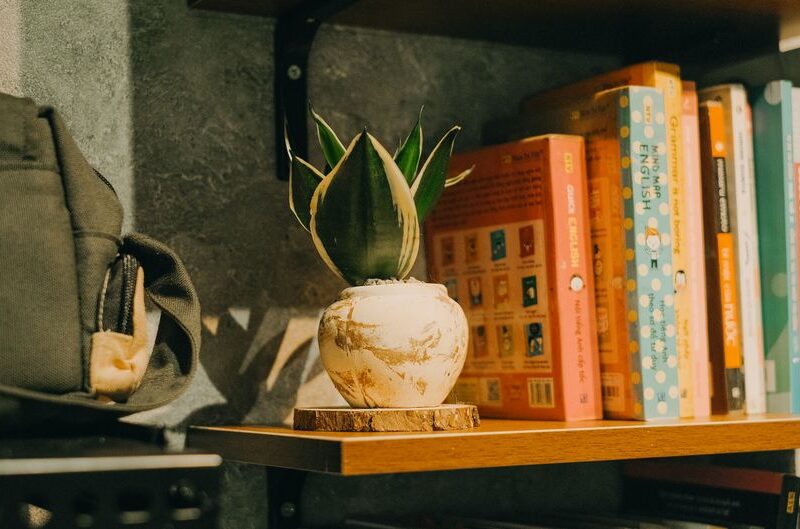
| Spring (late March) | New growth, pale greens, airiness | Ferns, marantas, young philodendrons pushing new leaves | Winter-hardy sansevierias, ZZ, mature pothos |
| Summer (late June) | Density, saturation, jungle feel | Alocasias, colocasias, anything with a fresh flush | Delicate calatheas away from AC drafts |
| Autumn (late September) | Textured, warm-toned, sculptural | Rhaphidophora, mature monsteras, trailing peperomias | Anything that fried in August sun |
| Winter (late December) | Quiet, structural, tolerant of low light | Sansevieria, ZZ, cast iron, thick-leaf hoyas | Sun-lovers into supplemental light or storage |
Grouping in threes and the rule I actually use
Every design blog says to group plants in odd numbers. That is true but useless on its own. The rule I actually apply is what I call the 3-3-3: three heights, three leaf shapes, three textures. If a grouping has all three variations, it reads as intentional. If two of the three collapse (three ferns of similar height, for example), it reads as a shop display.
- Pick the anchor plant first, usually the tallest or the one with the largest single leaf. This is the one that dictates where the group sits.
- Add a mid-height plant with a contrasting leaf shape. A round-leafed peperomia next to a strappy dracaena is the archetype.
- Finish with a trailer or a low mound at the base. String of hearts, a young pilea, or a tucked-in fittonia all work.
- Step back six feet and squint. If your eye moves in a triangle, you are done. If it lands on one plant and stops, swap the anchor.
Six feet is not arbitrary. That is roughly where a person actually sits or stands in a normal room. Arrangements built at arm’s length almost always look wrong from the sofa.
Pot swapping without repotting
The single most useful trick I know: keep the plant in its nursery pot and change only the cachepot. I have about a dozen decorative outer pots in rotation, mostly matte terracotta, one glazed navy, two rough stoneware pieces I found at estate sales, and a couple of vintage brass planters I paid too much for around 2019.
In spring the plants go into the pale terracotta and stoneware. In autumn everything shifts to the brass and darker glazes. Same plants, different frame. This takes about ninety seconds per plant and disturbs nothing at the root level, which matters because most houseplants resent repotting more than they resent bad styling.
Working with the light you have this month
The honest measurement most people skip: get a cheap lux meter or use a phone app that reads the ambient sensor, and take a reading at noon on the tenth of each month at every plant location. I keep the readings in a small notebook. After a year you have a lighting map of your apartment that tells you exactly which spots go dim in November and which stay usable.
Rough thresholds I have found reliable in my own space:
- Under 400 lux at midday: only sansevieria, ZZ, aspidistra, or pothos will hold their form. Everything else stretches.
- 400 to 1,500 lux: most philodendrons, peperomias, hoyas, and mature monsteras will maintain but not push new growth.
- 1,500 to 5,000 lux: active growth zone for most tropicals I keep, including alocasia and anthurium.
- Above 5,000 lux with direct sun: reserved for cactus, succulents, and a couple of sun-tolerant hoyas that color up beautifully.
These are floor levels for foliage plants living indoors year-round. Serious growers push far higher with supplemental lighting, and the University of Minnesota Extension guide to indoor lighting has the fuller technical version if you want the underlying numbers.
Staging shelves versus staging floors
Shelves and floors want different arrangement logic. On a shelf you are reading horizontally and left to right, like a sentence. Anchors go on the outside, trailers spill from either end, mid-height plants fill the middle. Never center your tallest shelf plant. Off-center placement gives the eye somewhere to travel.
Floor arrangements read as a mass from across the room. Here the trick is depth. Put your largest plant furthest from the traffic path, then step down in height toward the walkway. A monstera behind a rubber tree behind a small snake plant creates a receding stage. All three the same height, even if they are different species, flattens the composition.
What I move to storage each season
Not every plant belongs on display every quarter. I have a shelf in the second bedroom, under a modest LED panel running about twelve hours a day at maybe 3,000 lux at the leaves, where plants rest. In winter that shelf hosts the calatheas and marantas because the living room drops below 55 percent humidity and they sulk. In summer it hosts a couple of alocasias that got scorched by the west-facing window I misjudged in July.
This is the part collectors resist. We buy plants to look at them. But a plant that looks tired in the room is not adding anything, and moving it out for six weeks to recover is more respectful of the plant than propping it up for the guests.
Objects among the plants
Two or three non-plant objects per arrangement, no more. A stack of books under a small anthurium raises it to the right height and adds a base color. A ceramic bowl of moss between two philodendrons gives the eye a place to rest. Anything more and the arrangement starts to look like a gift shop.
The RHS houseplant profiles are useful when you want to check whether a plant you already own can handle a proposed new location. I use them as a sanity check before moving something into a spot that looks great but might not have the right conditions.
A quarterly ritual, not a project
The reason this system holds up is that the four rotations become a ritual rather than a chore. I put on a two-hour album, brew coffee, get a bucket of tepid water and a microfiber cloth ready, and treat the rotation as a chance to inspect every plant I move. I catch pests early this way. I notice root issues before they become root rot. The arrangement is really a byproduct of a seasonal check-in.
Six years in, my collection has grown by maybe five plants total. The apartment has looked meaningfully different roughly twenty-four times. That ratio is the whole argument for rotation over acquisition.
Frequently asked questions
How often should I actually move my houseplants around?
Four times a year is enough for arrangement purposes, tied to the solstices and equinoxes when light quality genuinely shifts. Within that, rotate individual pots a quarter-turn weekly so growth stays even. Moving plants more often than quarterly for styling reasons tends to stress the plant without giving the room enough time to feel resolved.
Will rotating plants between rooms hurt them?
Only if the new location is dramatically different in light or humidity. A plant moved from 2,000 lux to 200 lux will drop leaves for a few weeks while it adjusts. Try to keep seasonal moves within a similar light band, or use the winter rotation as an intentional rest period on a supplemental-light shelf. Sudden temperature changes below 55 degrees Fahrenheit are the bigger risk for tropicals.
What if all my plants are roughly the same height?
This is the most common collector’s problem, and the fix is elevation rather than acquisition. Stack books, use plant stands of three different heights, hang two trailers from the ceiling, and put one plant on the floor. You can create six inches of separation between plants of identical stature and the arrangement will read as varied.
Do I need special pots for seasonal styling?
No, but a small rotating library of cachepots in two color families (warm neutrals for autumn and winter, cool neutrals for spring and summer) does more visual work than any single expensive planter. Six to ten cachepots covering the range of pot sizes your collection actually uses is plenty.
How do I keep track of what worked?
I take three phone photos at the end of each rotation, one from the couch, one from the doorway, one from the kitchen. After a year I have twelve reference images and I can see which arrangements I want to revisit and which ones flopped. It is the closest thing to a plant styling journal I have found that actually gets used.
Frequently asked questions
What is slow plant living?
It is the practice of caring for plants on their own terms — not forcing growth or optimizing for maximum output, but accepting their natural pace and developing consistent attention.
How is this different from regular plant care?
Regular plant care is often task-oriented and outcome-focused. Slow plant living is practice-oriented and relationship-focused. Both can produce healthy plants, but the experience and meaning differ.
Will this approach mean my plants grow slower?
Not necessarily slower — but you stop trying to push beyond what plants want. The growth pace becomes the plant's natural pace, which is usually fine and sustainable.
Can I combine slow plant living with serious collecting?
Yes. The two are compatible. Serious collectors often practice slow plant living because it produces better outcomes than aggressive optimization.