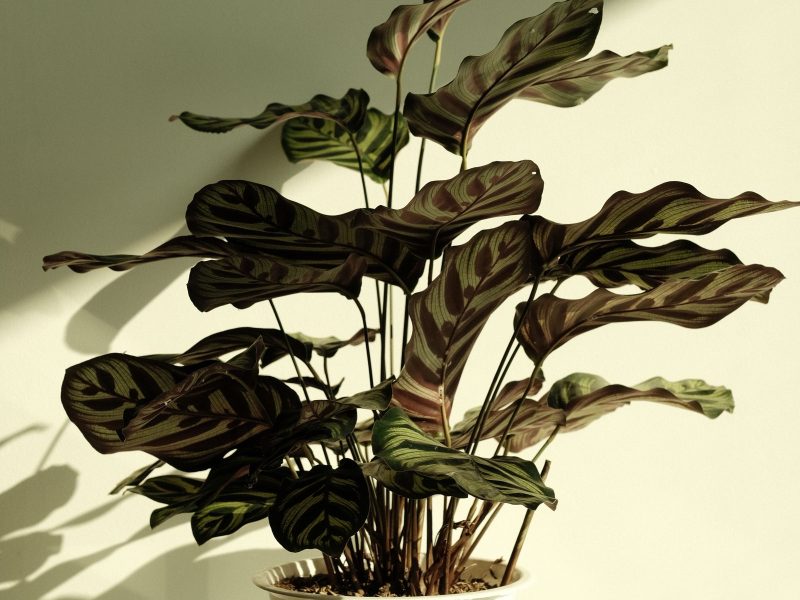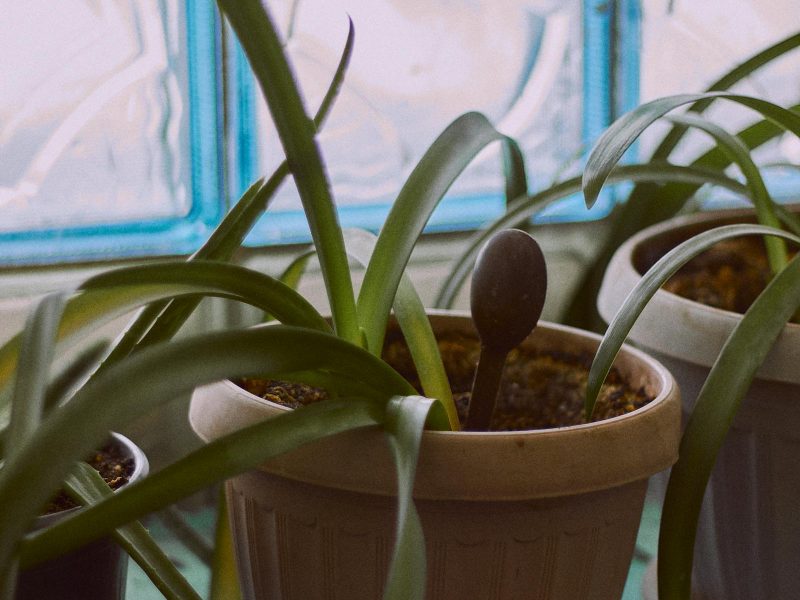
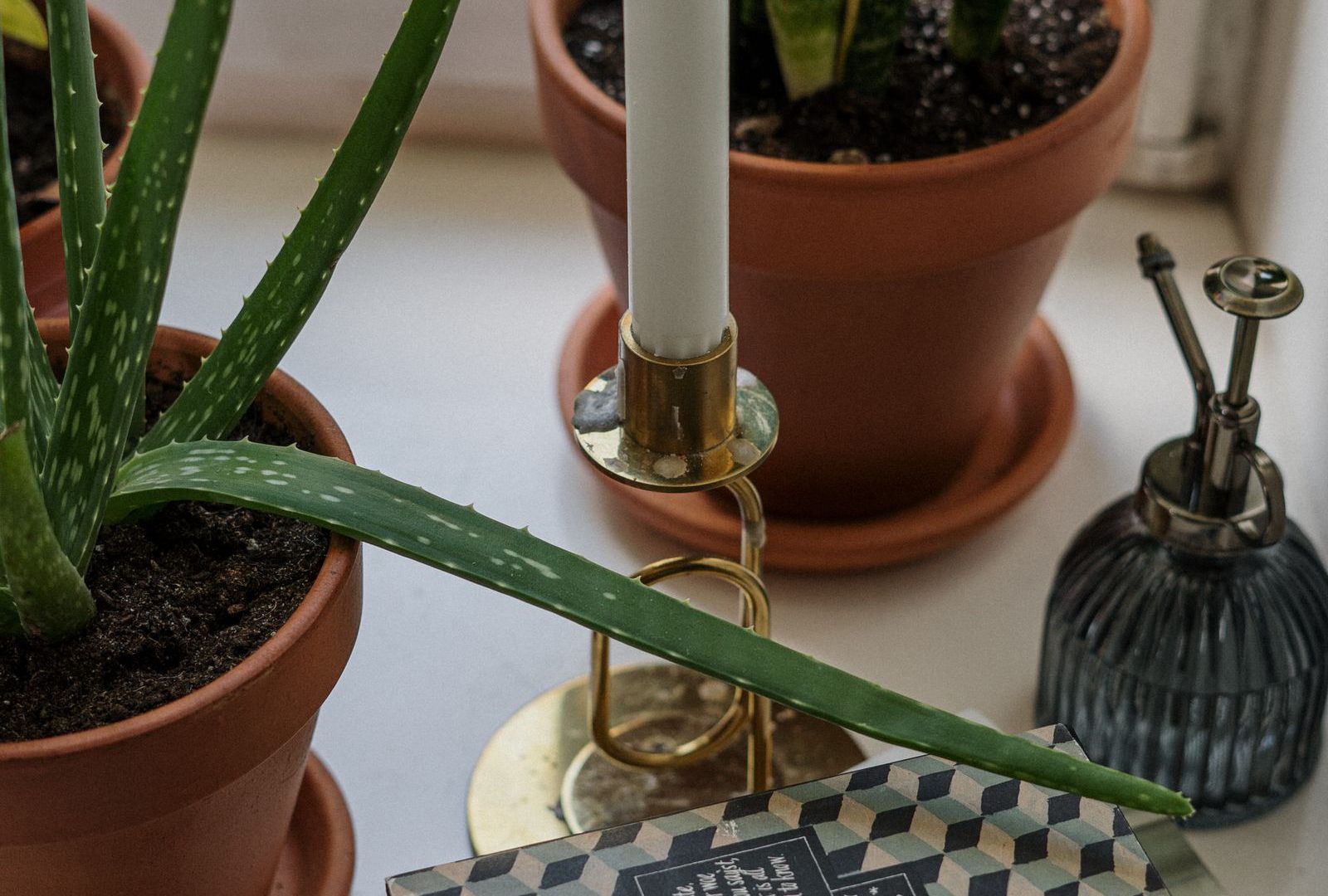
Somewhere between the kettle clicking on and the second cup of coffee, I do the only plant care that has ever really stuck for me. It is not a system I read in a book. It grew out of failing at the ambitious weekend schedules I used to write on the back of nursery receipts, and out of noticing that the plants I lost were almost always the ones I had not looked at in five days. Twenty minutes in the morning, done imperfectly, has kept more of my collection alive than any spreadsheet ever did.
This is not a productivity trick. I am not trying to optimize my houseplants. What a morning routine actually gives a collector is a slow, low-stakes way to notice small changes while they are still small: a slightly softer petiole on an anthurium, a fungus gnat lifting off the topsoil, a Calathea leaf that has curled tighter than yesterday. By the time these things are obvious in the evening, they are usually not small anymore.
Why mornings, and not any other time
Plants are most legible in the morning. Stomata on most tropical foliage open with the light, transpiration ramps up, and any humidity or temperature stress from the night before is still visible in leaf posture. I learned this the hard way with a Philodendron gloriosum that looked completely fine at 7 pm and had a limp new leaf by breakfast: the substrate had gone anaerobic overnight and I only caught it because I happened to lift the pot.
There is a physiological reason to look early. Leaf water potential is at its highest just before dawn and drops through the day as the plant loses water faster than the roots can replace it. A leaf that already looks tired at 8 am is not going to recover on its own by noon. Cornell’s greenhouse extension notes that most tropical foliage plants reach peak photosynthetic activity within one to two hours of light onset, which is exactly the window I want to be in the room.
The other reason is boring but honest: I am the only variable in the room that changes on weekends. If my routine depends on evenings, it collapses every time I have dinner plans. Mornings are the most protected hour I own.
The 20-minute walk-through, in order
I do the same loop in the same order every day. The order matters more than the tasks, because it turns care into a habit instead of a decision. Decisions are what burn people out on plants.
- Minutes 0-3: Open the blinds and just look. No touching, no lifting. I walk past every plant and let my eyes catch anything that reads differently than yesterday: a new leaf unfurling, a droop, a color shift, water on the floor under a nursery pot.
- Minutes 3-8: The finger test, pot by pot. Index finger one knuckle deep on the aroids, two knuckles on anything in a chunky mix. Anything questionable gets lifted for weight. I keep a small notebook on the shelf and write nothing more than the date and one word: “dry”, “wet”, “off”.
- Minutes 8-14: Water only what asked. I water into a saucer of tepid water from the tap that has sat out overnight, roughly 65 to 72 F. Nothing gets watered on a schedule. If a plant is not dry, I move on.
- Minutes 14-17: Wipe, prune, rotate. One wet microfiber cloth for dust on broadleaf plants, snips for one truly dead leaf per plant maximum, and a quarter turn for anything reaching toward the window.
- Minutes 17-20: Check the environment, not the plants. Hygrometer readings, grow-light timers, cabinet fans. This is where I catch the boring failures that kill collections: a fan that stopped, a humidifier out of water, a thermostat that drifted.
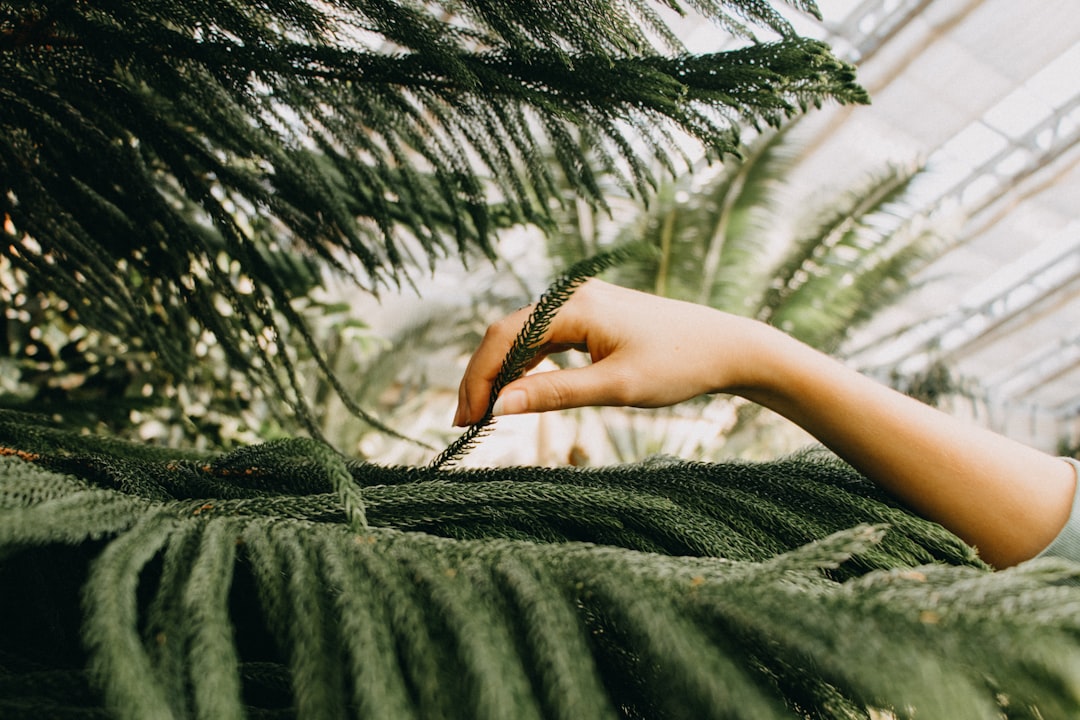
The whole loop takes 18 to 22 minutes on a normal day with about 40 plants. On days when everything is stable it is closer to 12. On days when I find something wrong it can stretch to 45, and that is exactly what the buffer is for.
What I actually check, by plant type
Different plants tell you different things in the morning. Over about six years of keeping notes I have narrowed it down to one or two signals per category that are worth building the routine around.
| Plant group | Morning signal | What it usually means |
|---|---|---|
| Anthurium, Philodendron | Petiole firmness at the base | Soft = overwatered or root damage; firm but leaf droopy = thirsty |
| Calathea, Goeppertia | Leaf position vs. last night | Still praying at 8 am = low light or cold; flat and limp = dry |
| Alocasia | Guttation droplets at leaf tips | Small drops = healthy root pressure; none for days = check roots |
| Hoya, succulents | Leaf thickness pinch | Thin, wrinkled = long overdue water; plump = leave alone |
| Ferns, mosses | Surface of substrate | Dry to the touch = mist or bottom-water same morning |
I keep this table taped inside the cabinet door in my plant room. Not because I forget, but because guests occasionally ask what I am doing, and it is easier to point than to explain that I am reading petioles.
The things I deliberately do not do in the morning
A routine is as much about what you leave out. I used to fertilize, repot, propagate, and rearrange in the morning window, and it turned a calm 20 minutes into a chaotic hour that I started avoiding. Now those all live on a separate weekend list.
- No fertilizing on weekday mornings. Feeding lives on Sunday, one dilute dose across the collection.
- No repotting. Root disturbance plus a workday is how I end up with a plant in shock and nobody home to notice.
- No pest treatments beyond spot-squishing. Anything requiring spray or systemic goes on the evening list so I can rinse and ventilate properly.
- No buying, no browsing shops, no scrolling. The routine is for the plants I already own.
- No music with lyrics. This is genuinely the only weird one, but I concentrate better and I catch more.
Building the habit when you have never had one
The first three weeks are the hard part. I tell people to start with a routine that is embarrassingly short, because the goal at the beginning is not thorough care, it is a chain of days you do not want to break. Ten plants, ten minutes, same time every day. Grow the collection or the depth after the habit is stable, not before.
A few things that helped me get past week three:
- Anchor it to something you already do without thinking. Mine is the coffee. Yours might be after feeding the dog, or before your first meeting.
- Keep the tools in the room. A watering can in the kitchen and snips in the plant room means two friction points; put both where the plants are.
- Write one word per plant on hard days. Not a journal entry. Just “dry” or “fine” so tomorrow-you has a baseline.
- Skip perfectly. Miss a day on purpose in week two, so missing a day feels normal instead of catastrophic.
- Track weeks, not days. A calendar with an X for every week you did the routine four or more times is far more sustainable than a streak.
The University of Maryland Extension’s guidance on frequency of houseplant observation lands in roughly the same place: consistent, low-effort checking beats intense weekend interventions for almost every common problem.
What actually changed for my collection
The numbers I have from my own notebook are modest but real. In the two years before I settled into a morning routine I lost 11 plants, mostly to root rot caught too late. In the two years since, I have lost 3, and two of those were mail-order plants that arrived compromised. My humidity in the cabinet holds within about 4 percent of target across the day because I catch the humidifier reservoir before it runs dry. New leaves push out faster, not because I am doing anything clever, but because nothing is quietly stressed for a week at a time.
None of this is optimization. It is just presence, done on a schedule slow enough that I can keep it up.
Frequently asked questions
How long should a morning plant routine actually take?
For a collection of 20 to 50 plants, 15 to 25 minutes is realistic once you know your plants. The first month will feel slower because you are still learning what each plant looks like at baseline. If your routine keeps stretching past 40 minutes on ordinary days, you are probably watering on a schedule instead of on need, or doing tasks that belong on a weekly list.
What if I am not a morning person?
The time of day matters less than the consistency. Evening works if evenings are the hour you actually own. The only real caveat is that some morning signals (Calathea leaf position, guttation droplets, overnight temperature stress) are strongest in the first two hours of light. If you go evening, add a 3 minute glance in the morning on your way out the door.
Do I need to water every day for this to work?
No. The routine is checking, not watering. On a typical day I water two or three plants out of forty. Watering every plant every morning is the fastest way to root rot in aroids and most tropical foliage. The point of showing up daily is that you catch the plant that needs water on the day it needs it, not five days later.
How do I keep this going when I travel?
Two things: a well-set-up environment (timers, self-watering wicks for the thirstier plants, a humidifier with a large reservoir) and lowered expectations for the first three days back. I do a slightly longer routine, 30 to 40 minutes, the morning I return, and I forgive anything that happened in my absence rather than trying to fix it all at once.
Is a plant journal worth it, or is it overkill?
For a collection under 15 plants, probably overkill. Above that, even a one-word-per-day note pays for itself the first time you are trying to figure out why a plant is declining and you can look back and see it has not had a new leaf in nine weeks. I use a cheap grid notebook, one row per plant, one column per week.
Frequently asked questions
What is slow plant living?
It is the practice of caring for plants on their own terms — not forcing growth or optimizing for maximum output, but accepting their natural pace and developing consistent attention.
How is this different from regular plant care?
Regular plant care is often task-oriented and outcome-focused. Slow plant living is practice-oriented and relationship-focused. Both can produce healthy plants, but the experience and meaning differ.
Will this approach mean my plants grow slower?
Not necessarily slower — but you stop trying to push beyond what plants want. The growth pace becomes the plant's natural pace, which is usually fine and sustainable.
Can I combine slow plant living with serious collecting?
Yes. The two are compatible. Serious collectors often practice slow plant living because it produces better outcomes than aggressive optimization.