Last January I bought a stitched A5 notebook at a stationery shop near the train station, mostly because the cover was the exact green of a mature Philodendron gloriosum leaf. I told myself I would use it for one growing season. Twelve months later the pages are warped from humidity, a Thrips outbreak has its own two-page spread, and I can tell you within three days when my Anthurium warocqueanum pushed each of its four new leaves. That notebook changed how I keep plants more than any grow light or moss pole I have ever bought, and none of the change was the vaguely spiritual thing I expected.
What follows is the actual system that survived the year, the columns I kept, the ones I dropped by March, and the outcomes I can now point to instead of guess at.
Why a notebook beat every app I tried first
Before the paper notebook I cycled through three apps in eighteen months. Each one asked me to photograph a plant, tag it, and set a watering reminder. None of them asked the question I actually needed answered, which was: what changed in the room this week. Apps organize by plant. My problems were almost always organized by room, season, or a single decision (moved the humidifier, swapped a bulb, opened the window on a mild day). A blank page lets you record the cause. A structured app mostly lets you log the symptom.
There is also the friction question. Opening an app, waiting for it to sync, scrolling to the right plant, and typing on glass took me about 40 seconds per entry. Writing two lines in a notebook next to the plant took under 10. Multiply by 30 plants twice a week and the app quietly loses.
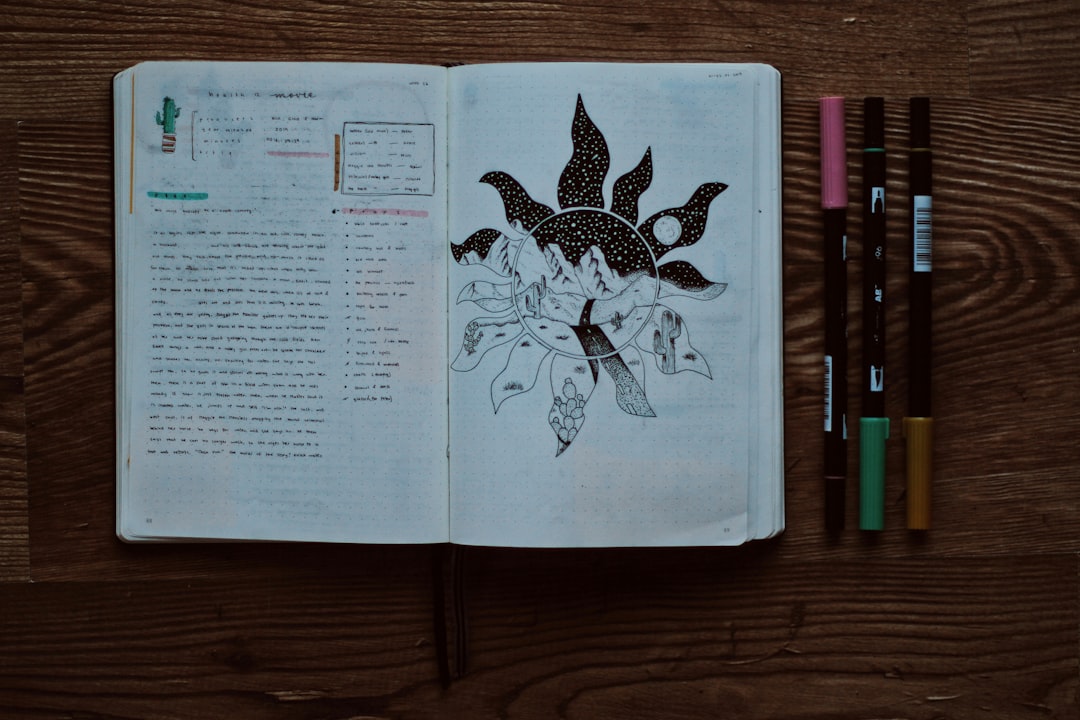
The column layout that finally stuck
My first attempt had nine columns and looked like a spreadsheet. I filled it in for three weeks and then stopped, because writing “no change” seven times in a row across nine columns is a form of self-punishment. By April I had cut it to five columns on a landscape-oriented double page, one row per observation rather than one row per plant. That was the unlock: I only wrote a row when something was worth recording.
| Column | What goes in it | Example |
|---|---|---|
| Date | Day and month only, year on the page header | 14 Mar |
| Plant or zone | Nickname or shelf, not Latin binomial | Top shelf, north window |
| What I saw | Single specific observation, no adjectives | Two new roots pushing from node 3 |
| What I changed | The action, or “watched only” | Moved 8 inches closer to light |
| Room reading | Temperature in F, humidity, hour | 68F, 54%, 9pm |
The “room reading” column is the one collectors underestimate. I bought a $14 hygrometer, kept it on the same shelf all year, and read it whenever I wrote an entry. Not on a schedule. Just whenever I already had the pen out. Over 12 months that produced roughly 180 humidity data points clustered around the moments something interesting was happening, which turned out to be more useful than a continuous logger dumping 8,000 readings into a CSV I would never open.
The weekly ritual, honestly described
Every Sunday morning, coffee in hand, I walked the collection with the notebook. The whole loop took between 12 and 25 minutes depending on how much was actually happening. I stopped in front of each plant, looked at it for maybe 20 seconds, and wrote a row only if the plant had done something or I had done something. Most weeks two thirds of the plants got no entry at all. That felt wrong for the first month and then felt correct forever after.
- Read the hygrometer on each shelf and note it on the page header if it had drifted more than 5 percent from the previous week.
- Walk the collection in the same order every time (left to right, bottom shelf up). Consistent order catches new problems faster than random inspection.
- Flip a leaf on every third plant to look at the underside. Thrips, spider mites, and the beginning of edema all show there first.
- Write only what changed. Resist the urge to record “watered” on every plant; log the exception, not the routine.
- End the loop by writing one sentence at the bottom of the page about the room itself: cold snap, radiator kicked on, blinds left open.
What twelve months of entries actually revealed
The reason to keep a journal is not the writing. It is what you can see when you flip back through six months of pages at once. Three patterns emerged that I would never have caught in real time.
First, my Anthurium collection pushed new leaves in tight clusters that correlated almost perfectly with the humidity in the room climbing above 60 percent for four consecutive days. Not high humidity in general. Four consecutive days. Once I saw that pattern on the page I stopped running the humidifier constantly and started running it in deliberate 5-day bursts every three weeks. Growth rate went up, my electric bill went down, and the wood floor stopped cupping near the plant shelf.
Second, the two plants I lost that year (a small Philodendron spiritus-sancti cutting and a Monstera obliqua) both had journal entries in the two weeks before decline that read, in retrospect, like warning shots I ignored. Slight leaf droop at a normal watering interval. A new leaf that opened smaller than the last. Root tips going brown where they touched the pot wall. I had written all of it down and done nothing, because in the moment each observation seemed minor. Reading them in sequence on one page, they were obviously a story.
Third, and this one surprised me, my own consistency was worse than I thought. I had believed I fertilized every two weeks during the growing season. The journal showed a gap of 34 days in July when I traveled and never quite got back on schedule. The plants that stalled that autumn stalled for a reason I could point to on a page.
What I stopped tracking, and why
Half the value of a year of journaling is learning what not to record. I abandoned four categories that seemed important in January and turned out to be noise.
- Daily watering logs. I water when the top inch of substrate is dry to the second knuckle, which varies. Logging every watering just produced a wall of identical entries.
- Photograph counts. I took a photo of every new leaf for two months. The photos live on my phone. I never once went back to compare them, because I had the written notes.
- Fertilizer ppm math. I use a diluted Dyna-Gro Foliage-Pro at about 200 ppm for most aroids and calatheas. Writing the number every time added nothing because I never changed it.
- Aspirational notes. Early entries include things like “want to try leca on the Alocasia“. Those belong in a separate wish list, not the observation journal, where they clutter the record.
Setting up your own journal without overthinking it
If you want to start, here is the shortest possible version of what worked. Buy a notebook you will actually pick up. Mine cost about $18 and I have used maybe 40 percent of the pages in a year, so cost per useful year is trivial. Put a cheap hygrometer on each shelf or in each room where you keep plants; the Govee models around $12 are good enough. Give yourself a single 20 minute window each week, at the same time, and treat it as a standing appointment with the collection.
Do not try to be systematic in month one. Write whatever you notice, in whatever order. By month two you will see which columns you keep reaching for and which ones you keep skipping. Cut the ones you skip. The journal that survives is always smaller than the one you designed.
For readers who want the horticultural reasoning behind the observations I was making, the RHS houseplant growing guide is a sober reference on light and watering, and the University of Minnesota Extension notes on watering indoor plants match what I have seen on the page over a year: the schedule matters less than the trigger.
Frequently asked questions
How long before a plant journal starts paying off?
For me the first useful pattern appeared around week 10, when I could see that one shelf was consistently running 8 to 12 percent drier than I had assumed. Before that the entries mostly felt like busywork. Give it a full season, roughly three months, before you decide whether it is working. Anything shorter and you are looking at noise rather than trend.
Should I use a bullet journal, a spreadsheet, or an app?
Whichever one you will actually open in front of the plant. I found paper won because it involved no unlocking, no scrolling, and no autocorrect fighting with plant names. Spreadsheets are excellent for people who already live in them; if opening Excel is a chore, they will not survive contact with a Sunday morning. The tool matters far less than the ritual.
What if I have only five or six houseplants, is journaling overkill?
Honestly, yes for a collection of five or six easy plants, no for a collection of five or six difficult ones. If you have one Anthurium warocqueanum, one Philodendron spiritus-sancti, and three fussy calatheas, a notebook is proportionate. If you have three pothos and a snake plant, a photo every couple of months on your phone is plenty.
Does journaling help with pest problems specifically?
More than I expected. Thrips and spider mites both leave a subtle progression (stippling, then bronzing, then leaf drop) that plays out over 10 to 21 days. Written entries flatten that timeline onto one page and make the pattern obvious before the population explodes. My one serious Thrips outbreak was caught roughly two weeks earlier than it would have been without notes, which is the difference between a spot treatment and a full quarantine.
What do I do with the notebook when it fills up?
Mine will last another season at the current pace. When it does fill, I plan to keep it on the shelf next to the current one and start a fresh volume, rather than transcribing anything. The value is in flipping back through actual pages, not in a clean archive. A row of stained, warped notebooks is a perfectly good record of a collection over time.
Frequently asked questions
What is slow plant living?
It is the practice of caring for plants on their own terms — not forcing growth or optimizing for maximum output, but accepting their natural pace and developing consistent attention.
How is this different from regular plant care?
Regular plant care is often task-oriented and outcome-focused. Slow plant living is practice-oriented and relationship-focused. Both can produce healthy plants, but the experience and meaning differ.
Will this approach mean my plants grow slower?
Not necessarily slower — but you stop trying to push beyond what plants want. The growth pace becomes the plant's natural pace, which is usually fine and sustainable.
Can I combine slow plant living with serious collecting?
Yes. The two are compatible. Serious collectors often practice slow plant living because it produces better outcomes than aggressive optimization.