
My first serious plant loss was a Philodendron gloriosum that I drowned on a Tuesday because the calendar said Tuesday. It had been sitting in a chunky aroid mix that stayed wet for eleven days after the previous soak, and I never bothered to check. That plant taught me the single most useful lesson I know about growing collector-grade houseplants at home: a watering schedule is a lie you tell yourself, and a watering rhythm is a conversation you keep having with the pot.
Everything below is the routine I actually run for around forty rare aroids, calatheas, and a handful of hoyas in a Zone 6 apartment with forced-air heat in winter and a north-facing living room that swings from 62F to 78F across the year. It is not fancy. It is boring on purpose. Boring is what keeps rare plants alive.
Why a calendar cannot water your plants
The variables that decide when a pot needs water are all moving at once. Substrate mix, pot material, root mass, ambient humidity, light intensity, leaf area, temperature, and the plant’s own seasonal appetite all shift week to week. A 6 inch terracotta pot of pon in a south window at 40 percent humidity might dry in 4 days. The same plant in a plastic nursery pot of peat-heavy mix in a shady bathroom at 70 percent humidity can hold moisture for 3 weeks. “Water every 7 days” is a coin flip in either direction.
What you actually want is a way to read the pot itself. Three cheap tools do 95 percent of that work: your hand, a kitchen scale, and a long wooden skewer or moisture probe. I use a Sustee capillary indicator for anything I care about and a $9 postal scale for the heavier specimens. Nothing here needs a smart sensor.
The weight method, step by step
This is the backbone of the whole system. It sounds fussy for about a week, then it becomes automatic and you stop thinking about watering at all.
- Water the plant thoroughly until roughly 20 percent of the volume drains from the bottom. Let it finish draining for 15 minutes.
- Lift the pot. Note the weight in grams, or just commit the feel to memory. This is your “wet” reference.
- Wait 24 to 48 hours, then lift again. The pot will feel noticeably lighter as free water evaporates and the plant transpires.
- Keep lifting daily. When the pot feels roughly 40 to 60 percent of the difference between wet and bone-dry, most aroids and hoyas want water. Thin-leaved calatheas want it closer to 30 percent lighter.
- Water again, note how many days passed, and write it down. Three cycles gives you a working rhythm for that specific pot in that specific room.
I keep a paper notebook on top of the humidity cabinet with one line per plant per watering: date, days since last soak, and a one-word note like “hot week” or “cloudy.” After a month you can predict most plants within a day. After a season you stop needing the notebook for the reliable ones and only track the fussy specimens.
What the skewer and the probe actually tell you
A long bamboo skewer pushed to the bottom of the pot and pulled out clean is the oldest trick in the book, and it still works for anything up to about 8 inches deep. Damp, cool, and clinging with substrate means wait. Dry and clean means water. In chunky semi-hydro mixes the skewer lies to you, because the surface of a LECA or pon particle can feel dry while the interior is saturated. That is where a capillary indicator earns its keep. Sustee sticks go from blue to white as available moisture drops, and unlike a two-prong conductivity meter they do not depend on mineral content in the water.
Cheap two-prong “moisture meters” from hardware stores are worse than useless. They read the electrical conductivity of the substrate, which changes with fertilizer salts, water hardness, and root density. I threw mine out after it insisted a bone-dry pot of pon was “wet” because of accumulated salts.
Substrate is half of the rhythm
The mix in the pot determines how forgiving your timing has to be. Chunky, airy mixes let you water more often with less risk of rot. Dense, water-retentive mixes buy you more days between waterings but punish any overwatering hard. Here is what I run in my collection and roughly how long each mix holds for a 6 inch pot in average conditions.
| Substrate | Typical dry-down (6 inch pot) | Best for | Watching for |
|---|---|---|---|
| Chunky aroid mix (bark, perlite, charcoal, coco) | 5 to 8 days | Philodendrons, Anthuriums, Monsteras | Fertilizer, dries fast in winter heat |
| Pon (pumice, zeolite, lava) | 7 to 14 days | Hoyas, mature aroids, rot-prone rescues | Salt buildup, needs flushing quarterly |
| LECA in a reservoir | 10 to 21 days | Hands-off growers, travel-heavy owners | Root adaptation, EC of the reservoir |
| Peat-perlite houseplant mix | 7 to 12 days | Calatheas, ferns, marantas | Hydrophobic if fully dry, easy to overwater |
| Sphagnum only (props) | 3 to 6 days | Rooting cuttings, sick roots | Compacts and suffocates over time |
I keep almost everything mature in pon or a chunky aroid mix now, because both fail gracefully. When I forget a plant for a week nothing dies. When I overshoot a watering the extra volume drains through instead of pooling.
Seasonal cadence in a real home
The single biggest shift most collectors miss is how much the season changes the pace. In my apartment, a Philodendron verrucosum in the same pot with the same substrate goes from a 6 day rhythm in July to a 14 day rhythm in January. Forced-air heat drops indoor humidity to around 22 percent in deep winter, but shorter days and cooler leaf temperatures cut transpiration more than the dry air raises evaporation from the pot. The plant simply drinks less.
My rough seasonal notes:
- Spring (March to May): waterings tighten by 1 to 3 days as new growth flushes. Start fertilizing at quarter strength.
- Summer (June to August): peak rhythm. Some pots need attention every 4 days. This is when the weight method pays off most.
- Autumn (September to November): stretch gradually. Do not force a schedule change; let the pots tell you they are holding water longer.
- Winter (December to February): I cut fertilizer entirely and often go 10 to 21 days between waterings on the same plants that drank weekly in July.
Grow lights complicate this. If you run supplemental light 12 hours a day year-round, your winter rhythm will look much more like a mild summer. The rhythm follows total light and warmth, not the wall calendar.
Water quality, temperature, and how much to pour
Tap water in my building comes out at around 180 ppm total dissolved solids and a pH of 7.6. Most aroids and hoyas tolerate that fine. Calatheas, marantas, and Alocasia frydek do not, and I keep a 3 gallon jug of rainwater or 0 ppm reverse osmosis for those. If your tap runs over 250 ppm or you see white crust on soil surfaces within a month of repotting, switch the sensitive plants to filtered water before you blame anything else.
Water temperature matters more than most guides admit. Cold tap water below about 60F visibly shocks warm-loving aroids; I have watched Alocasia leaves droop within an hour of a cold soak. I fill my watering can the night before and let it come to room temperature, which also lets residual chlorine dissipate. When I water, I water thoroughly, until about 15 to 20 percent of the volume drains out the bottom. Small sips create dry pockets in the root zone and drive salts upward instead of flushing them through.
Common rhythm mistakes and how to catch them early
Almost every problem I see in collector groups traces back to a mismatch between watering habit and one of the variables above. A few patterns show up over and over.
Watering by the top inch
The top inch of substrate dries first and fastest. In a 6 inch pot, the bottom third can still be swampy when the surface reads dry. This is how healthy-looking plants suddenly collapse: the top roots are fine, and the bottom roots have been dying for weeks.
Never letting anything dry
Most aroids evolved as epiphytes or hemi-epiphytes. Their roots want air between drinks. A pot that stays continuously moist for more than about 10 days is a rot factory for anything except a bog plant. If your rhythm never dips into “pot feels light,” your rhythm is too fast.
Panicking after a miss
You skip a plant for four extra days, come back, and want to soak it twice to make up. Do not. Water normally, and note the recovery time. A well-rooted aroid handles a missed watering better than a double one.
Building your own record
The point of all of this is not to memorize numbers from someone else’s apartment. It is to build a small, honest record of how your plants behave in your rooms with your habits. Three months of notes will teach you more than any guide, mine included. Once you have that record, the whole hobby gets quieter. You stop worrying about watering and start noticing the plants themselves, which is the reason most of us collect them in the first place.
For deeper background on plant water use and substrate physics, the University of Minnesota Extension guide to watering indoor plants and the RHS houseplant watering guide are both worth an hour of your time. Neither will give you a schedule, and that is the point.
Frequently asked questions
How often should I water a rare aroid like a Philodendron gloriosum?
There is no honest answer in days. In a 6 inch pot of chunky aroid mix in average home conditions, expect somewhere between 5 and 10 days in summer and 10 to 18 days in winter. Weigh the pot after a full watering, then again daily, and water when it feels roughly half the difference between wet and bone-dry.
Is bottom watering better for rare plants?
Bottom watering is fine for small, well-rooted plants and useful for hydrophobic peat mixes, but it does not flush accumulated salts out of the substrate. I bottom water for 20 minutes if a pot has gone too dry, then top water thoroughly the following week to move salts down and out.
Do I need distilled or reverse osmosis water?
Only for genuinely sensitive genera: Calathea, Maranta, Ctenanthe, some Alocasia, carnivorous plants, and anything you are already seeing tip burn on. For most aroids and hoyas, room-temperature tap water under about 250 ppm is fine as long as you flush the pot every few months.
How do I know if I am underwatering versus overwatering?
Overwatered plants usually show soft, yellowing lower leaves, a sour smell from the substrate, and mushy dark roots when unpotted. Underwatered plants show crispy leaf edges, drooping that recovers within hours of a soak, and firm but thin, papery roots. When in doubt, unpot and look. The roots do not lie.
Should I mist my rare plants between waterings?
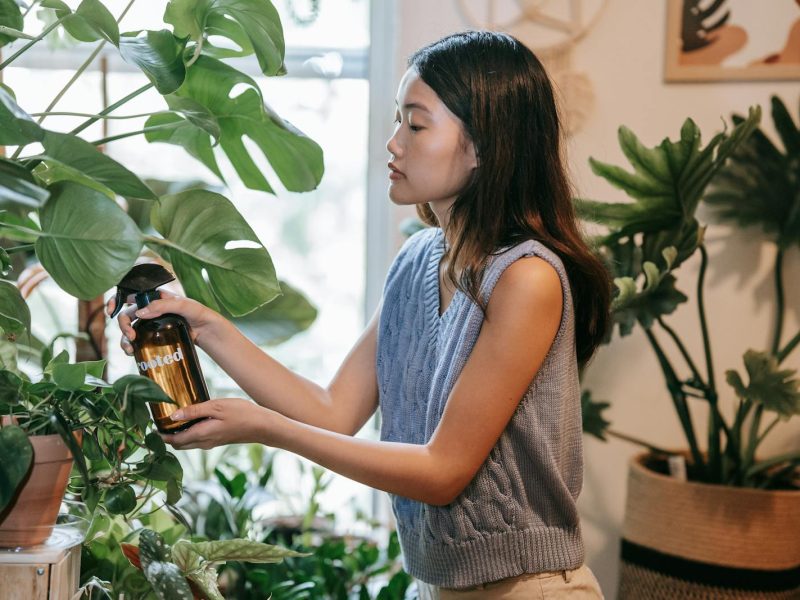
Misting does very little for humidity, which drops back within minutes, and it can encourage fungal spotting on velvety leaves like Anthurium clarinervium. If you want higher humidity, use a proper humidifier or an enclosure. Save misting for wiping dust off leaves.
Frequently asked questions
Is edema harmful to my plant?
Usually mildly cosmetic. Leaves are slightly damaged but functional. The plant continues normal growth. The underlying conditions (over-watering, poor airflow) can lead to more serious problems if not addressed.
Can I remove edema bumps?
No. Edema bumps are permanent leaf damage. They don't go away. Removing leaves is only useful for severely affected leaves once new healthy leaves are established.
Why does my plant have edema in winter?
Cool winter temperatures reduce leaf transpiration. Combined with normal watering, this leads to water pressure buildup in cells. Adjust watering (less frequent) and improve airflow during winter.
How do I tell edema from pest damage?
Edema doesn't move or spread aggressively. Pests do. Look closely with magnification. If the bumps stay in place and don't multiply quickly, it's edema, not pests.