Yellow leaves rarely lie, but they do speak in dialect. After roughly fifteen years of keeping fussy aroids, hoyas, and a rotating cast of citrus indoors, I have come to treat chlorosis less as a single diagnosis and more as a punctuation mark. The location of the yellow, the fate of the veins, the age of the affected leaf, and the speed of the change together tell you what the plant is short of or drowning in. This post walks through the pattern-reading I actually do at my bench, in the order I do it.
I will keep the botany honest but practical. If you can name the leaf, look at the veins, and count how long the symptom took to appear, you can usually rule out three or four causes before you touch a fertiliser bottle.
What houseplant chlorosis actually is
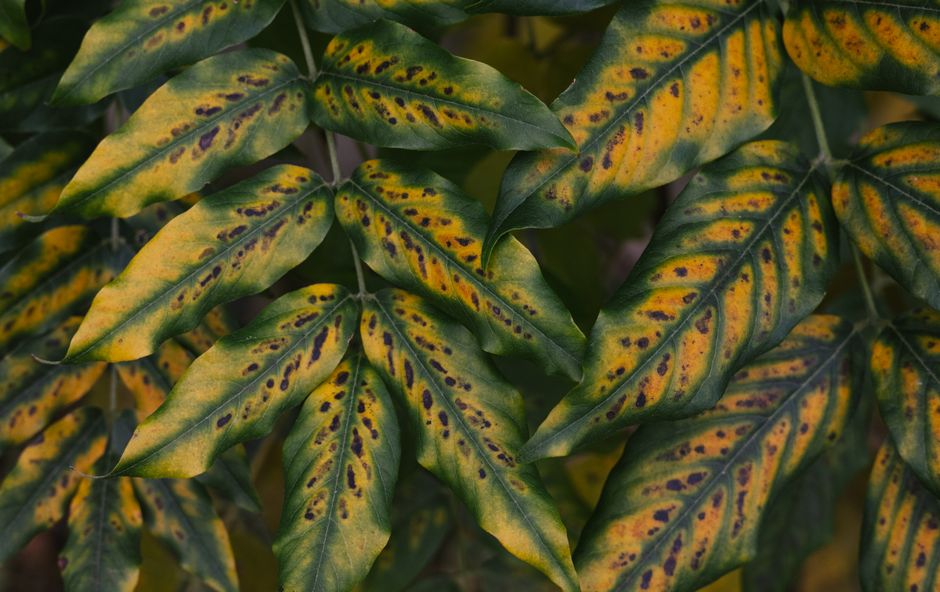
Chlorosis is the loss of chlorophyll in leaf tissue. The leaf keeps its structure but loses the green pigment that drives photosynthesis, so the underlying carotenoids and, later, the pale cell walls show through. It is a symptom, not a disease. The University of Minnesota Extension notes that iron chlorosis alone accounts for a large share of interveinal yellowing in ornamentals, but at least eight distinct triggers produce a yellow leaf indoors, and they do not look identical.
The mistake I made for years was reaching for a fertiliser the moment anything paled. Chlorosis from waterlogging looks superficially similar to chlorosis from nitrogen deficiency, and the wrong response makes each one worse. Read first, feed second.
The five yellowing patterns that matter
Almost every case I see indoors falls into one of five silhouettes. Learn these and you will diagnose faster than any app.
- Interveinal on new growth, veins stay green. Classic iron or manganese shortage, usually because the potting mix pH has drifted above 6.8 and the micronutrients are locked out even if present.
- Uniform pale-green on the oldest leaves, working up. Nitrogen deficiency. The plant is cannibalising mobile nutrients from lower foliage to feed the tip.
- Yellow with soft, mushy petioles, whole leaf goes limp. Overwatering and root suffocation. The chlorosis is secondary; the roots are the story.
- Marginal yellowing that browns into a crisp edge. Fertiliser salt burn, tap-water fluoride on sensitive genera such as Dracaena and Calathea, or chronic underwatering.
- Bleached, almost white patches on the sun-facing side. Photobleaching from an abrupt light increase, not a nutrient issue at all.
Before you do anything else, decide which of these five you are looking at. The rest of the article assumes you have.
Old leaves versus new leaves: the mobility rule
This is the single most useful piece of plant physiology for a hobbyist. Nutrients divide into two groups based on whether the plant can move them internally.
| Mobility | Nutrients | Yellows shows up on |
|---|---|---|
| Mobile | Nitrogen, phosphorus, potassium, magnesium | Oldest leaves first |
| Immobile | Iron, manganese, calcium, sulphur, boron, zinc, copper | Newest leaves first |
If the yellowing starts at the top of the plant, you are almost certainly looking at a micronutrient issue or a pH lockout, not a shortage of what is in the pot. If it starts at the bottom, the plant is redistributing something it does not have enough of overall. That one distinction resolves maybe 70 percent of my bench diagnoses in under a minute.
Why pH beats fertiliser most of the time
Substrate pH governs whether roots can take up what is already in the mix. Most tropical houseplants want a slightly acidic root zone, roughly 5.8 to 6.5. Peat-based mixes drift acidic over time; coir and heavily limed commercial mixes drift alkaline. Tap water in hard-water regions can push a pot above 7.2 within six months of repotting, at which point iron becomes chemically unavailable even if you doused the plant in chelated iron last week.
I keep a cheap soil pH pen at the bench and test any chlorotic plant before I feed it. If the reading is above 6.8 on an aroid or a citrus, I flush thoroughly with rainwater or distilled water, then repot into fresh mix rather than trying to acidify the existing substrate. Attempting to correct pH with vinegar or sulphur in a small pot is unreliable and usually shocks the roots.
A ten-minute diagnostic walkthrough
This is the checklist I run when a client sends me a yellowing photo. Work through it in order and do not skip steps.
- Photograph the plant in daylight, front and back of the affected leaf.
- Note which leaves are yellow: newest, oldest, middle, or scattered.
- Check whether veins are still green or the whole leaf has faded.
- Lift the pot. Weight tells you more about watering than any moisture meter.
- Unpot if you can. Healthy roots are white or tan and firm; brown, soft, or sour-smelling roots explain most sudden yellowing.
- Test substrate pH with a pen or a strip; record the number.
- Recall the last fertiliser date and dilution. Salt crust on the pot rim is a tell.
- Check for pests on leaf undersides, especially spider mites, which cause stippled chlorosis that looks nutritional at first glance.
- Note recent changes: a move, a repot, a heater switching on, a new grow light.
- Only then decide on an intervention.
Matching cause to pattern
Here is the reference I actually consult, condensed from years of notebook scribbles. Use it after you have run the walkthrough above, not instead of it.
| Pattern | Most likely cause | First response |
|---|---|---|
| Interveinal, new leaves, green veins | Iron lockout from high pH | Flush, check pH, repot if above 6.8 |
| Interveinal, older leaves, green veins | Magnesium deficiency | 1 teaspoon Epsom salt per litre, monthly, for two months |
| Uniform yellow, oldest leaves | Nitrogen deficiency or root loss | Inspect roots first; feed only if roots are healthy |
| Yellow with soft petioles | Overwatering | Unpot, trim rot, repot in fresh airy mix |
| Yellow margins, brown crisp | Salt or fluoride burn | Flush with 3 pot volumes of low-mineral water |
| Stippled yellow flecks | Spider mites | Shower the plant, treat with insecticidal soap |
| Bleached patches, one side | Photobleaching | Move back from light, acclimate over 10 days |
When yellow leaves are not a problem
Every plant sheds. A mature Ficus lyrata in good health drops two or three lower leaves a year, and a fast-growing pothos will yellow the oldest leaf on a vine roughly every 6 to 8 weeks in active season. If a single old leaf yellows uniformly and the rest of the plant looks vigorous, that is programmed senescence, not chlorosis worth chasing. I remove those leaves with clean snips and move on.
The moment to worry is when yellowing is faster than growth, or when it appears on new tissue, or when more than roughly 10 percent of the canopy is affected within a month. Those are the thresholds I use for my own collection.
Watering and root health, briefly
Because so much apparent chlorosis is really a root problem in disguise, a note on watering technique is warranted. Water thoroughly until roughly 20 percent of the volume drains out, then do not water again until the top third of the substrate has dried. In a 15 cm pot that usually means 7 to 10 days between waterings in summer and closer to 14 in winter for most tropicals. Rot-prone genera such as Anthurium and Alocasia want the substrate closer to dry than damp between drinks. The RHS houseplant guidance is a sensible starting point if you are new to indoor cultivation.
Frequently asked questions
Can chlorotic leaves turn green again?
Rarely all the way back. Once chlorophyll has broken down in a leaf, the plant does not rebuild it efficiently. New leaves that emerge after you correct the cause should come in fully green, and that is the signal your fix worked. Old yellowed leaves may partially re-green if the deficiency was mild, but do not use them as your metric.
Should I remove yellow leaves or leave them on?
Remove a leaf when it is more than about 60 percent yellow, when it is soft or infected, or when it is blocking light to healthy foliage. A partially yellow leaf still photosynthesises in its green regions, and the plant may recover some mobile nutrients from it before dropping it, so I usually leave those alone.
Is chelated iron worth using indoors?
Only after you have ruled out a pH problem. Adding iron to a pot at pH 7.4 mostly wastes the iron. If pH is in range and the plant is still interveinally chlorotic on new growth, an EDDHA-chelated iron product at label rate can help, especially with citrus and gardenias kept indoors.
Does hard tap water cause chlorosis?
Indirectly, yes. Hard water raises substrate pH over months and deposits calcium and magnesium salts that lock out iron. Sensitive genera such as Calathea, Maranta, and Dracaena also react to fluoride and chloramine. I use rainwater or filtered water for the fussy shelf and tap water for the rest.
How long before I see improvement after fixing the cause?
New growth should emerge green within 2 to 4 weeks in active season if the correction was the right one. If the next flush of leaves comes in yellow too, you have not solved the problem and it is time to revisit the diagnostic walkthrough rather than escalate the treatment.
The habit worth building
Keep a short log. Date, plant, symptom, action, outcome. Three lines per entry. After a year you will notice that your Philodendron gloriosum yellows every February when the radiators dry the room, or that your hoya sulks in the six weeks after a repot. Pattern recognition beats reference tables once you have your own data, and chlorosis is the symptom that rewards that habit most.