A collector friend once handed me a Philodendron gloriosum that had lived in the same peat brick for almost four years. The leaves were still pushing, but each new one came smaller than the last, and the pot had gone light enough to lift with two fingers. When I tipped the root ball out on newspaper, the mass held its shape like a wet sponge, threaded with dark hair-thin roots that had circled themselves into a mat. Nothing was rotten. Nothing was thriving either. That plant became the reason I stopped treating repotting as an event and started thinking of it as a training program that unfolds over months.
Root training in mature plants is not the same conversation as potting up a nursery liner. Established root systems have habits. They have preferred moisture rhythms, a memory of the substrate that raised them, and a set of vascular pathways that resist being rerouted. If you move them too fast, they sulk. If you move them too slowly, the pathologies you were trying to fix simply travel with the plant into the new pot. The middle path takes patience and a few small decisions made in the right order.
Why old root balls resist change
The first thing to understand is what happens inside a pot after the second or third year. Fine feeder roots die and regenerate constantly, but the coarse structural roots stay put. Around them, organic substrates break down into a finer particulate that holds water more tightly than it did when fresh. The plant compensates by pushing new feeders into whatever thin, well-aerated shell it can find, usually the rim of the pot or the drainage layer. Growth continues, but the middle of the ball becomes a dead zone.
When you drop that whole mass into a coarse chunky aroid mix, the outer feeders that were living on capillary action from a fine peat suddenly find themselves surrounded by bark and perlite that drain in seconds. They desiccate within a week. You watch the plant crash and blame the mix, when the real problem is that you asked mature roots to relearn their entire hydraulic strategy overnight.
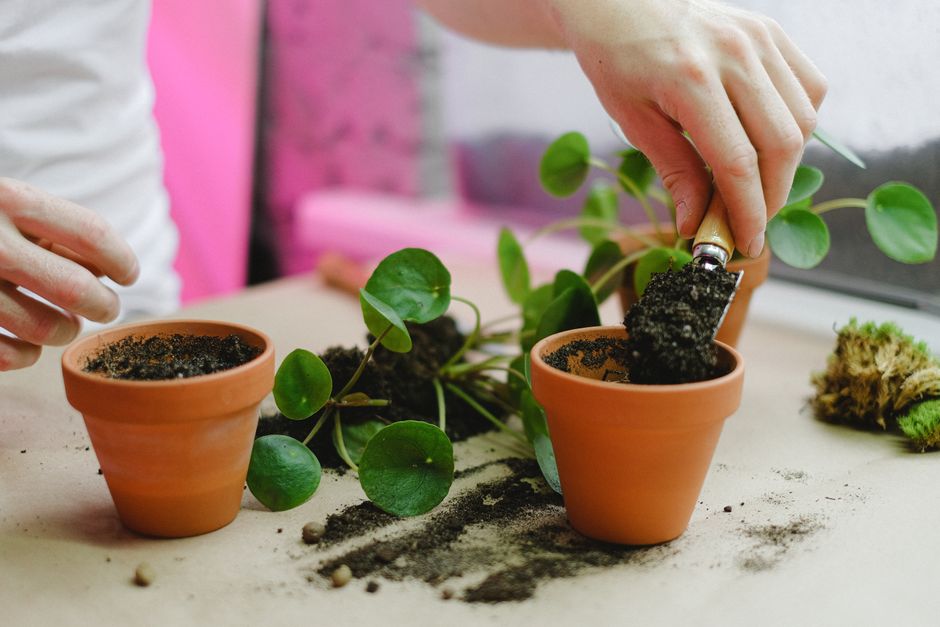
The three-phase retraining protocol I use
I have settled into a phased approach that has worked across roughly forty plants in my own collection, from small anthuriums to a mature Monstera deliciosa that outgrew its terra cotta. The pace is slow on purpose. A full transition takes three to four months, and I refuse to compress it.
- Weeks 1 to 3 – the conditioning soak. Before I touch the root ball, I bring the plant’s watering rhythm into alignment with the new substrate. If I am moving from peat to a bark-heavy mix, I start watering the old pot more frequently but with less volume, letting the top inch dry between soaks. This trains the canopy to accept a faster drying cycle without root stress.
- Weeks 4 to 6 – partial exposure. I tip the plant out, gently rinse away roughly a third of the old substrate from the outer edge, and pot into a transition mix that is about 60 percent old-style medium and 40 percent new. The core stays intact. This gives the outer feeders a familiar interface while introducing them to the new particle size.
- Weeks 10 to 14 – full transition. By now the plant should be pushing new roots into the transition layer. I unpot again, remove another third of the original core, and repot into the target mix. There is usually a two-week pause in canopy growth. It always resumes.
The temptation, always, is to skip the middle step. I have skipped it maybe six times in ten years. Four of those plants stalled for a full growing season.
Reading the roots before you decide anything
Not every established plant needs the full protocol. I make the call based on what the root ball actually looks like when I lift it out. This is where a lot of care guides wave their hands, so I keep a simple decision table on the wall above my potting bench.
| What you see | What it means | What I do |
|---|---|---|
| White or cream feeders throughout, substrate holds shape | Healthy but root-bound | Full three-phase protocol |
| Roots only around the rim, dry core | Substrate has hydrophobic | Skip phase 1, start at phase 2 |
| Brown mushy sections, sour smell | Anaerobic decay in progress | Bare-root, hydrogen peroxide rinse, sphagnum recovery for 4 weeks first |
| Thick corky roots only, few fine feeders | Chronic underwatering | Rehydrate in old pot for 2 weeks before any change |
| Roots pushing out drainage holes | Ready but not urgent | Full protocol at next seasonal transition |
The sniff test matters more than most people give it credit for. A healthy root ball smells like wet forest floor. Anything sour, sulfurous, or sharply chemical is telling you something has gone wrong at the microbial level, and no amount of clever substrate work will fix that without addressing the decay first.
Substrate transitions that actually work
The specific transition mix depends on where you are starting and where you want to end up. I have found a few combinations that reliably let mature roots cross the gap without stalling. My working baseline for aroid transitions runs about 35 percent orchid bark at 6 to 9 mm grade, 25 percent perlite at coarse grade, 20 percent coco chips, 15 percent worm castings, and 5 percent horticultural charcoal. For the transition phase I blend that 40/60 with whatever the plant came out of.
Humidity during the transition matters more than most collectors realize. I aim for 65 to 75 percent relative humidity around any plant going through phase 2 or 3, which usually means moving it into a cabinet or under a clear tote for the first two weeks after each repot. The canopy transpiration drops fast when roots are disturbed, and if ambient air is dry, the leaves start pulling water faster than the healing roots can supply it. That is the mechanism behind most post-repot leaf droop.
Temperature, timing, and the season you choose
I do not retrain roots in winter. Not because it cannot be done, but because the recovery windows stretch by roughly 50 percent when soil temperatures drop below about 68°F. My protocol assumes root-zone temperatures in the 72 to 78°F range, which for most heated homes means starting in mid-spring and finishing by early autumn. If I am working on a plant in a heated propagation area with bottom heat holding the substrate at a steady 75°F, I will run the protocol year-round, but only for plants I can keep in that controlled space for the full 14 weeks.
Light is the other variable I hold steady. Moving a plant to brighter light while it is retraining roots is asking for scorch, because the reduced root efficiency cannot support the increased transpiration demand. I keep light levels within about 10 percent of what the plant was getting before I started, then adjust upward only after week 14 when new root growth is visible.
What the recovery timeline actually looks like
The clearest indicator that a retrained root system has taken hold is not new leaf growth. It is petiole thickness. When a plant is running on stressed roots, it will still push leaves, but the petioles come in thinner and the leaves droop more between waterings. About three weeks after a successful phase 3 repot, I start seeing new petioles emerge at their normal caliper. That is my go-signal to resume normal fertilization at half strength, then full strength another two weeks later.
- Petioles returning to normal thickness by week 17 to 19
- Watering interval stabilizing (no more surprise dry-outs)
- Root tips visible through drainage holes by week 20
- New leaves emerging at pre-retraining size or larger
- Substrate holding structural integrity, not compacting
The gloriosum I mentioned at the start took 16 weeks to fully transition. The first new leaf after the process was larger than any it had pushed in the previous two years. That is the payoff, and it is the reason I stopped rushing.
Frequently asked questions
Can I retrain roots on a plant that is actively flowering or fruiting?
I would not. Reproductive tissue draws heavily on root reserves, and disturbing the root system during that draw tends to abort the flower or stunt the seed. Wait until the inflorescence has finished or been cut, then give the plant two to three weeks of recovery before starting phase 1. The only exception is emergency intervention for root rot, which overrides everything else.
How is this different from just repotting into fresh mix?
Standard repotting assumes the roots can adapt to whatever you give them. That assumption holds for young plants and for anything that has been repotted every 12 to 18 months. For plants that have sat in the same substrate for three or more years, the root system has specialized to that specific medium, and a sudden change triggers a stress response that can last a full growing season. Phased retraining respects that specialization.
What if I do not have space to keep a plant in a controlled environment for 14 weeks?
You can compress the timeline to about 8 weeks by shortening each phase, but I would only do that for plants under two years old or for genera that are known to be forgiving, such as pothos, most epipremnum, and syngonium. For anything slow-growing or expensive, the extra six weeks of caution is cheap insurance.
Does the same protocol work for semi-hydroponic conversions?
The framework works, but the specifics change. Moving from soil to LECA or pon is a bigger hydraulic shift than any soil-to-soil transition, and the transition phase should use a bare-root water culture step for two to three weeks between the old substrate and the new inorganic medium. The Royal Horticultural Society houseplant guidance covers the basics of hydroponic culture if that is new territory. I have also found the University of Minnesota Extension houseplant resources useful for baseline reference on substrate behavior.
How do I know when a mature plant does not need retraining at all?
If the root ball comes out with white feeders distributed evenly through the substrate, the mix still smells earthy and holds structure, and the plant is putting out new leaves at consistent size, leave it alone. Root training is a corrective and preventive practice, not a maintenance requirement. Some of my oldest plants have gone five years between meaningful root work, and they are thriving.
Frequently asked questions
Can leaves recover from sun burn?
The burned tissue itself doesn't recover. The plant compensates by producing new healthy leaves. Recovery is measured by whether new leaves come in healthy, not by repair of damaged leaves.
How quickly can sun damage occur?
In direct afternoon sun on a shade-tolerant plant, damage can occur within hours. Less intense sun causes damage over days. Once you see scorch marks, the damage has already happened.
How do I acclimate a plant to brighter light?
Move gradually over 2-4 weeks. Each step should be only slightly brighter than the previous. Watch for stress signs (leaf curling, faded color, leaf drooping) and pause if you see them.
Will a sun-burned plant die?
Usually not from sun burn alone, unless damage is extreme (over 70% of leaves). Move the plant to appropriate light, wait for new growth, and most plants recover within 2-4 months.