A plant that has quietly refused to grow for three months is one of the most frustrating things in a collection, because nothing looks obviously wrong. No crispy edges, no wilt, no dramatic yellowing. Just a philodendron that pushed one small leaf in April and has been sitting on my shelf ever since, staring at me. Stunted growth is a diagnosis by absence, and it took me a long time to build a reliable checklist for it.
What follows is the sequence I run through when a plant stops moving. I have used it on aroids, calatheas, and one very stubborn Alocasia that turned out to be root-bound in a way I did not expect. The six causes below cover roughly nine out of ten cases I see in my own collection and in the plants friends bring over for a second opinion.
What counts as stunted, and what does not
Before troubleshooting, I try to be honest about whether the plant is actually stalled. A mature Anthurium clarinervium might push one leaf every six to ten weeks in winter, and that is normal. A newly repotted plant will often sit still for four to six weeks while roots re-establish. Seasonal slowdown between November and February is expected almost everywhere north of the tropics.
My working definition: growth has stopped when a plant that should be actively producing (spring through early autumn, or year-round under supplemental light) has not opened a new leaf or extended a visible node in eight weeks or more, and the existing foliage looks static rather than declining. If leaves are also getting smaller each cycle, that is a stronger signal that something is genuinely off.
Cause 1: light that is technically alive but nutritionally too dim
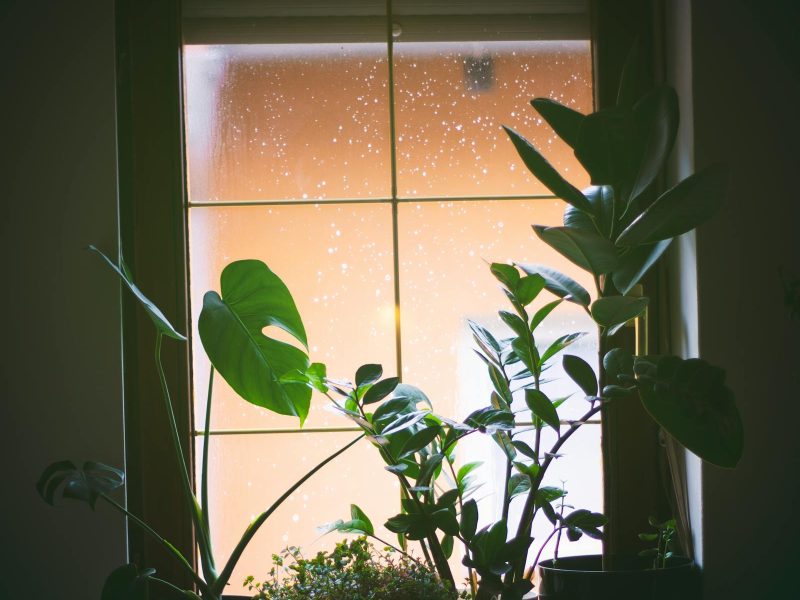
This is the single most common reason growth stalls in my house. A plant sitting three feet back from a north window is not dying, but it is receiving something in the range of 50 to 150 foot-candles, which is maintenance light, not growth light. Most collector aroids want 200 to 400 foot-candles at minimum to push new leaves consistently, and thicker-leaved species like Philodendron gloriosum happily take more.
I keep a cheap lux meter on my desk and I moved to checking plants at the leaf surface, not at the window. A reading that felt fine to my eyes turned out to be 90 foot-candles on the actual leaf. Moving that plant 18 inches closer to the glass, or adding a small 20 watt LED bar overhead, restarted growth within about three weeks.
Cause 2: root problems you cannot see from the top
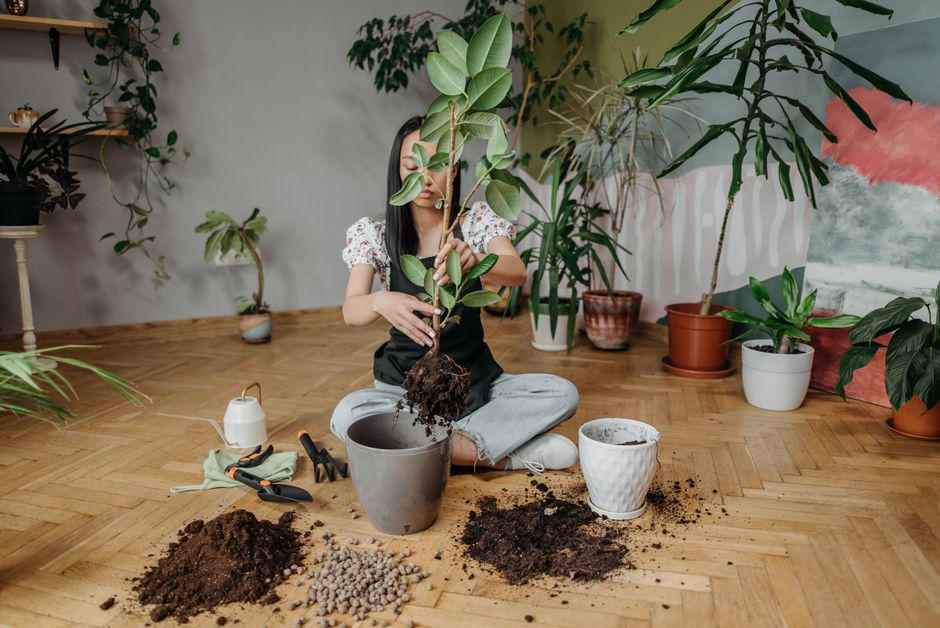
The second thing I check is the root ball. Not by guessing, but by sliding the plant out of its pot and looking. Three patterns explain a lot of stalled growth:
- Circling roots pressed against the pot wall with no fresh white tips. The plant has run out of runway and is waiting.
- A dark, compacted core of old soil that stays wet while the outer layer dries. Roots inside that core suffocate quietly.
- Sparse, thin roots where there should be a healthy network, usually a signal of past rot that pruned the system back.
None of these are visible from above. I now unpot any stalled plant before I change anything else, because the answer is often waiting there.
Cause 3: substrate that has quietly collapsed
Peat-based mixes break down. After 12 to 18 months the air pockets that let roots breathe are gone, replaced by something closer to wet clay. The plant is not overwatered in the traditional sense, but it is drowning between waterings because the substrate no longer drains through.
My rule is that any plant that has been in the same mix for over a year and has stopped growing gets a full repot into fresh, chunky substrate rather than a bigger pot. For aroids I use a mix roughly along these lines:
| Component | Ratio | What it does |
|---|---|---|
| Orchid bark (fine) | 4 parts | Structure, air, slow to break down |
| Perlite or pumice | 3 parts | Drainage, prevents compaction |
| Coco coir or peat | 2 parts | Moisture retention |
| Worm castings | 1 part | Slow, gentle nutrition |
| Horticultural charcoal | 0.5 part | Buffers, keeps mix sweet |
The University of Minnesota Extension guide to soilless media is a good sanity check on component behaviour if you want to build your own recipe rather than copy mine.
Cause 4: temperature that never really warms up
Tropical aroids and most calatheas want soil temperatures above 65 F, ideally in the low 70s, to grow actively. A plant sitting on a cold floor near a north-facing window can be receiving daytime air at 70 F while its root zone sits at 58 to 62 F. Roots that cold barely take up water or nutrients, and the plant looks fine but does nothing for months.
I bought a cheap probe thermometer and started checking the top inch of soil in problem pots. Anything below 65 F got moved off the floor onto a shelf, or placed on a seedling heat mat set to about 72 F. Two of my slowest philodendrons responded within a month.
Cause 5: fertiliser problems in either direction
Both under-feeding and over-feeding produce the same visible result, which is a plant that stops moving. Undernourished plants have exhausted the mix. Overfed plants have accumulated salts that burn root tips and shut down uptake. The clues are different if you look:
- Flush the pot with three times its volume of plain water and let it drain fully. This clears salt build-up if that is the issue.
- Check the runoff with a cheap TDS meter if you have one. Above about 800 ppm for most houseplants means salts are stacking up.
- Restart feeding gently at quarter strength with a balanced liquid fertiliser (something like 3-1-2 or 20-20-20 diluted) every second watering during active growth.
- Give it four weeks before judging the result. Fertiliser corrections are not overnight fixes.
The RHS guidance on feeding houseplants is a sensible baseline if you want a second reference on rates and timing.
Cause 6: pests you have not spotted yet
Spider mites, thrips, and root mealybugs are all capable of holding a plant in stasis without producing obvious damage until populations are large. I lost most of a year of growth on a Philodendron verrucosum before I found a light thrips population by tapping a leaf over a white sheet of paper. Two tiny dark specks that moved. That was it.
The diagnostic checklist I now run on any stalled plant:
- Tap several leaves over white paper and watch for movement for 30 seconds
- Inspect leaf undersides and node junctions with a 10x loupe
- Slide the plant out of the pot and check the root zone for white cottony patches (root mealybugs)
- Look for stippling, silvery scarring, or tiny black frass dots on newer leaves
- Isolate the plant for two weeks even if you find nothing, just in case
How I actually work through a stalled plant
In practice I do not check all six causes in parallel. I go in this order because it matches how often each one turns out to be the real answer, and because each step is cheap:
- Confirm the plant is genuinely stalled (eight weeks, active season, static leaves).
- Measure light at the leaf surface with a meter or a phone app.
- Check root-zone temperature with a probe.
- Unpot the plant and inspect roots and substrate.
- Flush salts and restart gentle feeding.
- Do a pest inspection with paper and loupe.
Roughly 70 percent of my cases are solved by steps 2 through 4. Fertiliser and pests are the tail, but they matter when nothing else fits.
Frequently asked questions
How long should I wait before deciding a plant is stunted rather than just slow?
Eight weeks of no visible new growth during the active season is my threshold. For mature slow growers like Anthurium clarinervium or Philodendron gloriosum, I extend that to ten or twelve weeks before intervening. Newly imported or freshly repotted plants get at least six weeks of quiet time before I start troubleshooting, because disturbance itself pauses growth.
Can I fix stunted growth without repotting?
Sometimes. If the cause is light, temperature, or a light nutrient issue, correcting the environment is usually enough. But if roots are circling, the substrate has collapsed, or salts have built up in the pot, no amount of environmental tweaking will restart growth. A repot is often the fastest single intervention when you are not sure which factor is dominant.
Will a stunted plant ever grow to normal size, or is it permanently smaller?
New leaves produced after you correct the underlying issue will size up gradually, cycle by cycle. It is common to see the next leaf come in slightly larger than the last, then another jump, until the plant is back on its normal trajectory within three to five new leaves. Existing small leaves stay their current size, but they still contribute photosynthesis.
Is stunted growth a sign of root rot?
It can be, especially if the plant was recently overwatered or the mix stays soggy. Root rot usually leaves behind sparse, brown, mushy roots and a sour smell when you unpot. If you find that, cut back to healthy white or tan tissue, repot into fresh chunky mix, and expect a further six to eight weeks of recovery before growth resumes.
Does adding rooting hormone or growth stimulant help a stalled houseplant?
In my experience, no. Rooting hormones are designed for cuttings, not established plants, and most retail growth stimulants are dilute seaweed or humic acid solutions that do little on their own. Fixing light, roots, and temperature has produced results for me that no bottle ever has.
Frequently asked questions
How long does it take to develop a personal plant styling aesthetic?
Typically 2-5 years of active collecting and styling. Initial choices reflect external influences; over time, your own preferences emerge through experience and trial.
Should I follow specific styling rules?
Use principles, not rules. Rules are rigid; principles are flexible. Pay attention to what works in your space and adjust accordingly.
How can I tell if my plant arrangement is working?
Visual harmony, plant health, ease of care, and your own enjoyment of the space. If all four are positive, the arrangement is working.
Can plant styling improve my home's overall feel?
Yes, significantly. Plants add life, color, texture, and presence to spaces. Thoughtfully styled plants can transform how a home feels to live in.