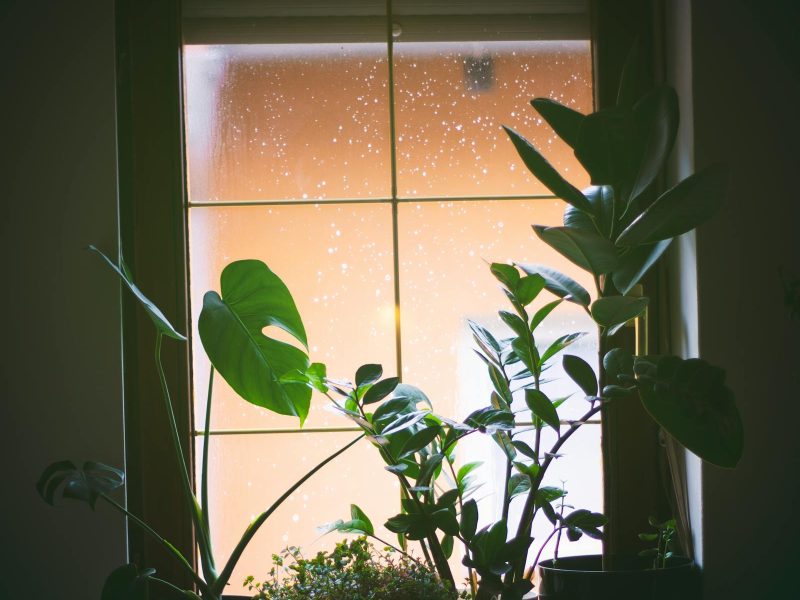
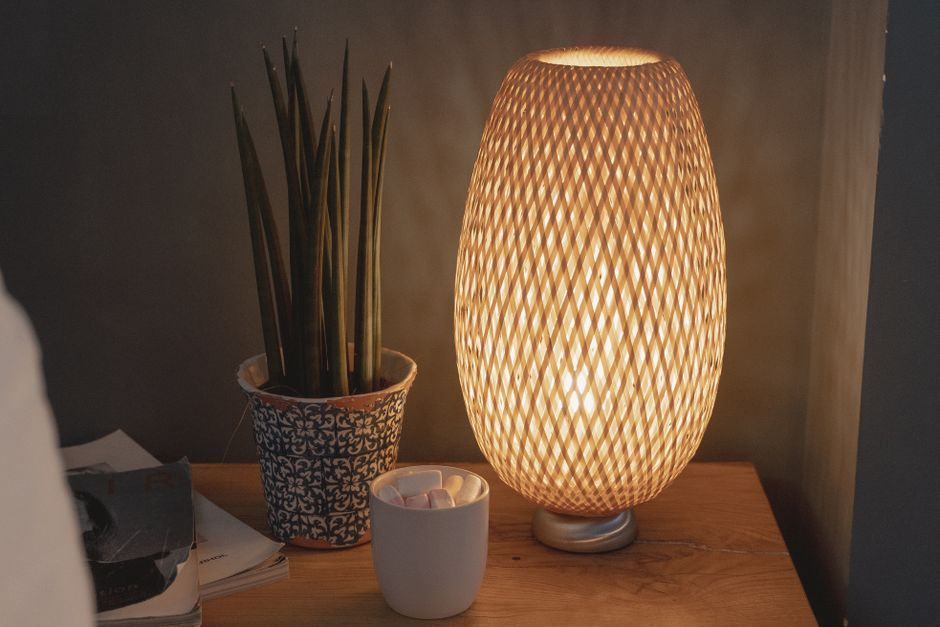
My bedroom sits on the north side of a narrow terrace house, and for years I treated it as a plant graveyard. Anything I brought in from the bright living room sulked within a week, dropped leaves by the second, and shed roots by the third. I eventually stopped fighting the room and started listening to it. What survives here now is a small, quiet collection that asks for almost nothing, tolerates my inconsistent Sunday watering, and looks composed rather than desperate at 7am on a rainy Tuesday.
This piece is the shortlist I would give a friend furnishing a first proper bedroom, or an experienced grower who wants to stop treating the sleeping room as an extension of the greenhouse. The focus is on bedroom plants that behave well in low to medium light, forgive missed waterings, and stay compact enough to live on a nightstand or the corner of a chest of drawers without dominating the room.
What actually makes a plant “bedroom-appropriate”
Before I list anything, it helps to name the constraints. A bedroom is usually the coolest room in the house, the darkest, and the one where I am least willing to fuss. It is also where I care most about air quality and about not tripping over a trailing vine at 3am. My working checklist for a candidate looks like this.
- Tolerates 100 to 400 foot-candles without etiolation. That covers most spots more than 2 metres from a window.
- Handles 15 to 20 degrees Celsius overnight without dropping leaves.
- Forgives a two-week gap between waterings, because I will forget.
- Stays under 90cm tall at maturity, or trails predictably.
- Non-toxic if the household includes pets, or placed well out of reach if not.
- No heavy pollen, strong scent, or flowering flush that might disturb sleep.
Anything that fails two of those is a living-room plant in disguise, no matter how often Pinterest insists otherwise. A fiddle-leaf fig in a north bedroom is a slow-motion apology.
My seven-plant bedroom shortlist
These are the species I keep recommending after a decade of trying almost everything else. I have grouped them by role rather than by family, because when I am styling a room I think about placement first and taxonomy second.
| Role | Plant | Minimum light | Watering rhythm | Mature size |
|---|---|---|---|---|
| Sculptural floor piece | Sansevieria zeylanica | Low | Every 3 to 4 weeks | 80cm |
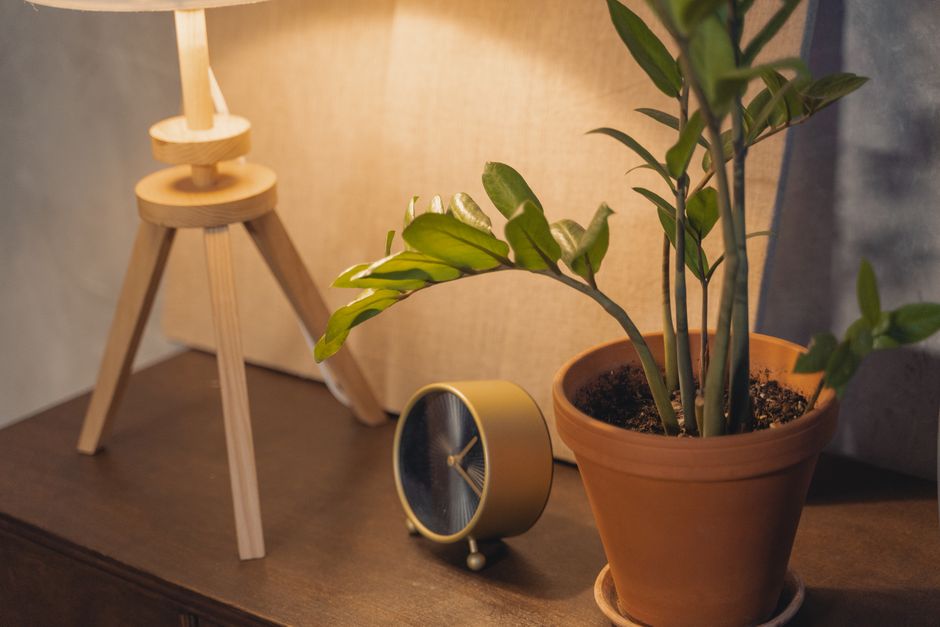
| Nightstand anchor | Zamioculcas zamiifolia | Low | Every 2 to 3 weeks | 60cm |
| Trailing shelf | Epipremnum aureum ‘Marble Queen’ | Low to medium | Every 10 to 14 days | Trails 2m+ |
| Textural filler | Aspidistra elatior | Very low | Every 3 weeks | 70cm |
| Soft green mound | Chlorophytum comosum | Medium | Weekly | 40cm |
| Air-quality workhorse | Chamaedorea elegans | Low to medium | Every 10 days | 1m |
| Small oddity | Peperomia obtusifolia | Medium | Every 12 to 14 days | 25cm |
Six of the seven are non-toxic to cats and dogs per the ASPCA toxic and non-toxic plant database. The two exceptions are the sansevieria and the pothos, which are mildly toxic if chewed. I keep both on high shelves in rooms shared with a curious cat.
A quick word on the “plants clean the air” claim
You will still see the 1989 NASA Clean Air Study cited as proof that a few houseplants scrub a bedroom of formaldehyde and benzene. The reality, based on more recent work summarised by the Journal of Exposure Science and Environmental Epidemiology review, is that you would need roughly 10 plants per square metre to match the effect of simply opening a window for a few minutes. I keep plants in my bedroom because they lower my resting cortisol, not because they are a HEPA filter. Set your expectations accordingly and open the window.
A low-effort weekly routine
The whole point of a bedroom collection is that it should not become a second job. This is the exact rotation I run, and it takes me about eight minutes on a Sunday morning with a cup of coffee.
- Finger-check every pot. Push a finger 3cm into the substrate. Water only what feels dry at that depth. Skip anything still damp.
- Water from the top with tepid rainwater until it drains from the base. Empty the saucer within 10 minutes. Standing water is where fungus gnats begin.
- Wipe two or three leaves per plant with a soft, barely damp cloth. Dust cuts light transmission by up to 30 percent on broad-leaved species.
- Rotate each pot a quarter turn clockwise so growth stays even and plants do not lean toward the window.
- Scan for pests, especially the undersides of leaves and the leaf axils. Two minutes here saves two months of thrips later.
- Feed at quarter strength from March to September only, using a balanced 3-1-2 liquid feed. Skip entirely in winter.
- Open the window for 10 minutes before you leave the room. Fresh air matters more than any single plant.
That is the whole routine. No misting, no bottom-watering rituals, no weekly repot. Bedroom plants reward consistency over intensity.
Placement rules I actually follow
Styling matters as much as species choice. A well-chosen plant in the wrong spot looks like clutter. I use three rules of thumb, borrowed from a florist friend and refined by years of my own bedroom-rearranging.
The 60-30-10 rule for greenery
Sixty percent of the visual green mass sits at one anchor point, usually a floor plant in a corner. Thirty percent sits at a mid-height, on a chest or dresser. Ten percent is small and elevated, on a shelf or ledge. This mirrors the classic interior design ratio and keeps the eye moving without feeling scattered.
Never within 40cm of a pillow
A plant next to your head at night is a fungus gnat launching pad. It also drops the occasional leaf into your hair, which is a specific indignity I have earned twice.
Match the pot’s undertone to the room’s warmest wood
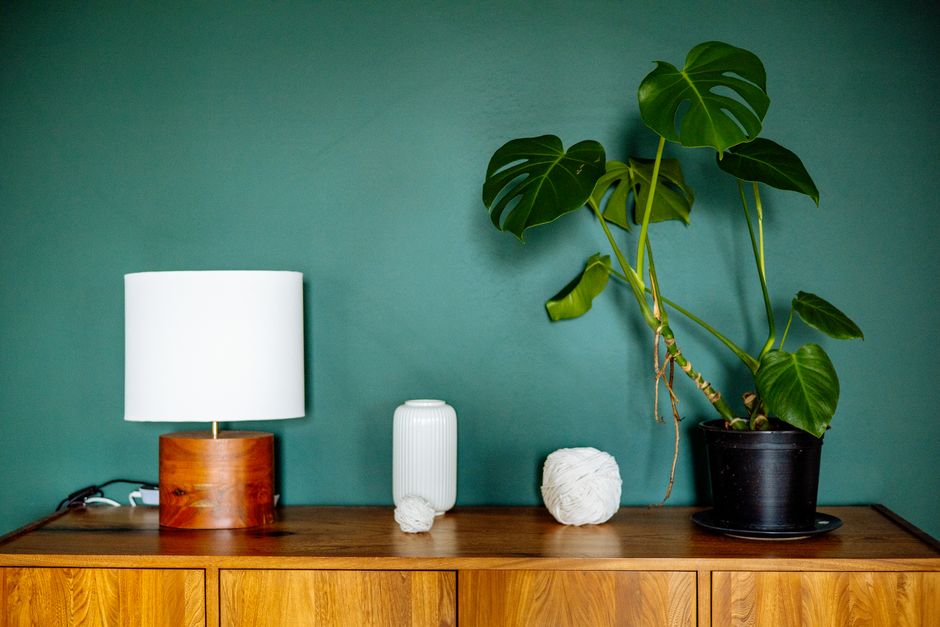
If your bed frame is a warm oak, choose terracotta, unglazed stoneware, or honey-toned rattan. If everything in the room is cool grey and white, matt black or pale concrete reads correctly. Mismatched pots are the single fastest way to make a considered plant collection look like a garden centre clearance shelf.
Common problems in bedrooms, and what they usually mean
Bedroom plants tend to fail in a small number of predictable ways. Here is my mental triage list when a leaf goes wrong.
| Symptom | Most likely cause | First correction |
|---|---|---|
| Yellow lower leaves, soft stems | Overwatering in cool room | Stop watering for 3 weeks, check roots |
| Long, pale new growth | Insufficient light | Move within 1.5m of window, or add a 9W grow bulb |
| Crispy leaf tips | Dry radiator air in winter | Move 60cm away from heat source |
| Tiny flies around pots | Fungus gnats in damp topsoil | Top-dress with 1cm of horticultural grit |
| Sticky residue on leaves | Scale or mealybug | Isolate, wipe with 70% isopropyl on cotton |
| Sudden leaf drop after moving | Acclimation shock | Leave alone for 4 weeks, resist repotting |
The single most common mistake I see in reader photos is a plant sitting in a decorative pot with no drainage, watered on the same schedule as the living room ficus. Cool bedrooms dry out roughly 40 percent slower than warm south-facing rooms. Halve your instinct and you will be closer to right.
Building the collection slowly
I would not start with all seven plants at once. Buy two, live with them for a month, and see how the room actually behaves at night and on grey afternoons. The Royal Horticultural Society’s guidance on houseplants for beginners makes the same point in gentler language, and I agree with it. A bedroom that feels alive with three well-placed plants beats one that feels crowded with fifteen.
Start with the ZZ plant on the nightstand and a parlor palm in the darkest corner. If both are still thriving after eight weeks, add a trailing pothos on a shelf. Then, and only then, consider the sansevieria as a floor piece. Growth by attrition is a better teacher than any care guide.
Frequently asked questions
Do bedroom plants really release CO2 at night and disturb sleep?
Most plants respire at night and release small amounts of CO2, but the quantities are trivial compared with your own breathing. A sleeping adult exhales roughly 500 grams of CO2 over eight hours. A dozen average houseplants produce well under 10 grams in the same window. The claim that plants “steal your oxygen” is a persistent myth. CAM plants like sansevieria and orchids actually take in CO2 at night, which is a small bonus but not a reason to buy them.
Which bedroom plant is best for a north-facing room with no direct sun?
The cast iron plant, Aspidistra elatior, is the honest answer. It handles genuinely dim corners that would kill most alternatives, tolerates cool temperatures down to 7 degrees Celsius, and shrugs off missed waterings. It is slow, so buy the largest specimen you can afford rather than waiting three years for a small one to fill out.
How many plants can I safely keep in a small bedroom?
I use a rough guide of one medium plant per 3 square metres of floor space. A typical 12 square metre bedroom comfortably holds four to five plants without feeling crowded or creating humidity problems. More than that and you start to notice condensation on cool mornings, which can encourage mould on adjacent walls.
Should I mist my bedroom plants?
Rarely. Misting raises humidity for about 20 minutes and then leaves damp leaves in a cool room, which is a straightforward invitation to fungal spotting. If a plant genuinely needs higher humidity, group it with two or three others on a pebble tray or move it out of the bedroom. My bedroom sits at 45 to 55 percent relative humidity year-round, which suits every plant on the shortlist above.
Are there any plants I should absolutely avoid in a bedroom?
I would skip anything with strong nocturnal fragrance, such as jasmine or gardenia, because the scent builds up in a closed room. I would also avoid weeping figs, which drop leaves at the slightest change in light or temperature, and any large-leaved calathea, which will sulk visibly in the cooler air and become a source of low-grade guilt every morning.
The room I actually sleep in
My current bedroom holds a ZZ plant on the nightstand, a parlor palm in the corner behind the door, a marble queen pothos trailing from the top of the wardrobe, and a small peperomia on the windowsill. Four plants, eight minutes of care a week, and a room that feels quietly alive without ever feeling like a project. That, more than any species list, is what I want for anyone starting out. Choose less, place it well, and let the room teach you the rest.