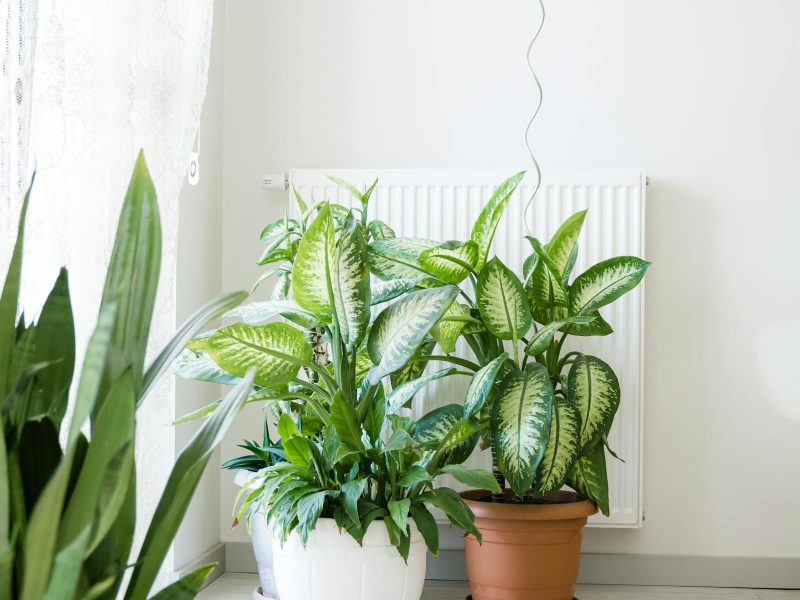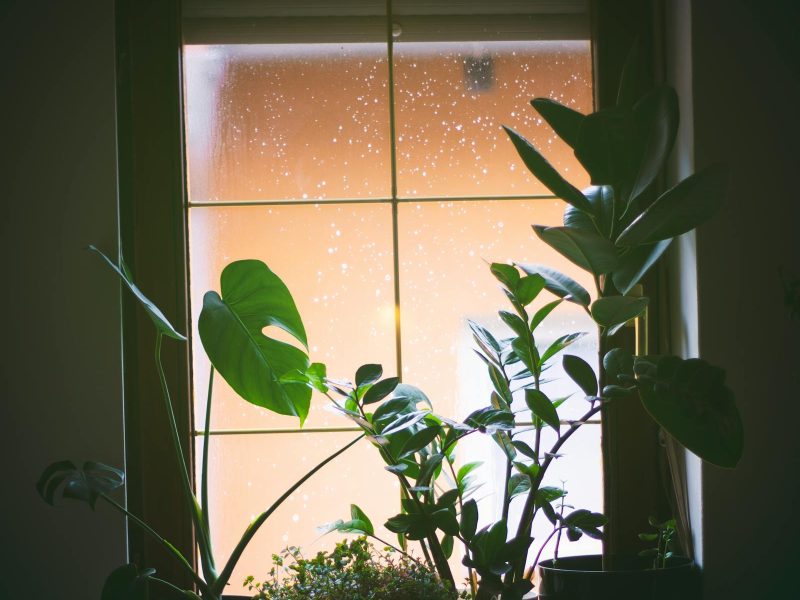

My living room took about seven years to settle. I do not mean the plants took seven years to grow (some did), but that the room itself, the shelves and the pots and the way a Philodendron gloriosum spills off a low walnut console, needed that long to stop looking staged. What I was chasing without a name for it was the slow aesthetic: a plant home built from pieces that patina rather than fade, arranged around the light a room actually has, edited quietly over years instead of styled in a weekend.
This is not minimalism, and it is not the maximalist jungle look either. It sits somewhere older and calmer, closer to the way a botanist’s study might look after thirty summers of use. Below is how I think about it now, after replacing most of what I bought in my first two years of collecting.
What the slow aesthetic actually looks like
A room in this idiom has fewer than a dozen visible plants, most of them mature, and each one placed where the light suits it rather than where a shelf happens to be empty. Materials are mostly natural: unglazed terracotta, stoneware, wood, linen, wool, hand-blown glass. Colors sit in a narrow band, usually earth tones plus the greens of the plants themselves. Nothing is symmetrical. There is dust on the top of the bookshelf and a watering can that shows water stains.
The opposite look, which I lived with for a while, uses matched white ceramic pots, glossy black plant stands, and one plant per surface at even spacing. It photographs well for about a month, then reads as a showroom for the rest of its life.
Map the light before you buy a single pot
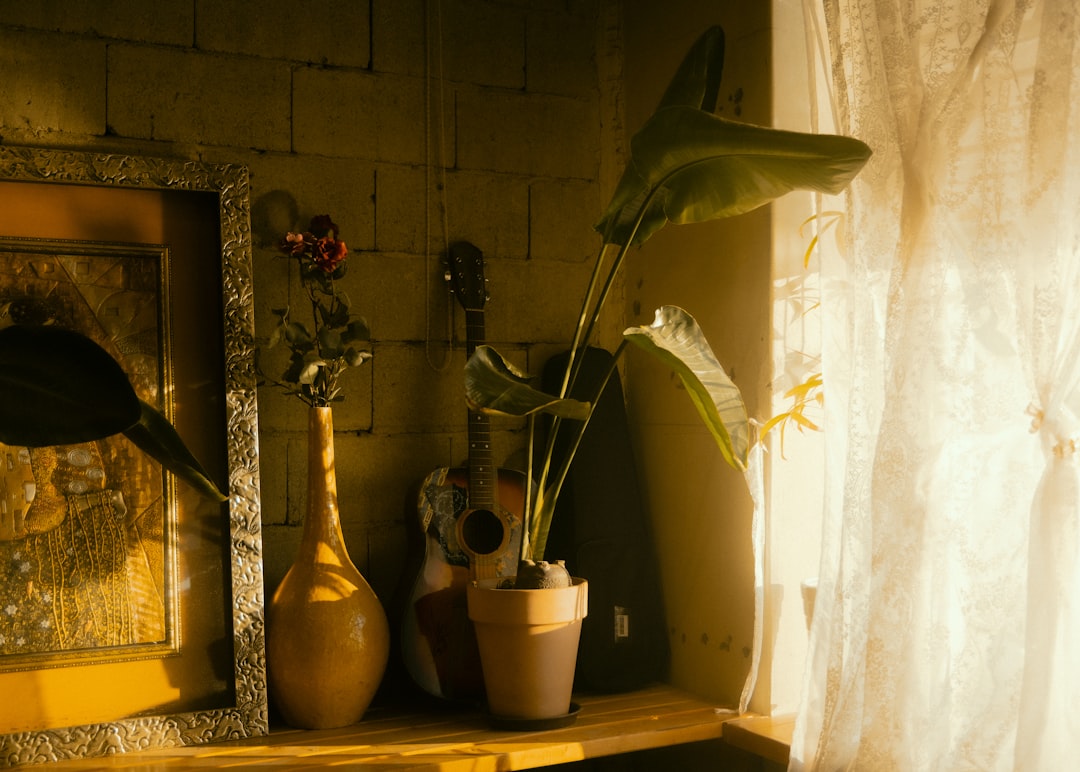
Before I chose plants for the current arrangement, I spent a week measuring light with a cheap lux meter clipped to a phone. I checked each intended spot four times a day, roughly 8am, noon, 3pm, and 6pm, over five days in late September. I wrote the readings on masking tape and stuck them to the wall.
The numbers surprised me. A corner I had assumed was bright averaged 180 lux at noon, which is nowhere near enough for a variegated Monstera. A spot I had written off as “too close to the window” was actually diffused by a linen curtain and sat around 8,000 lux, ideal for an Anthurium clarinervium that had been sulking two meters away.
- Choose the five or six spots where a plant could plausibly live for years, not months.
- Measure lux at each spot at 8am, noon, 3pm, and 6pm for at least three days.
- Note the season. Winter readings in a temperate room can drop to 20% of summer values.
- Match plants to the median reading, not the peak. A brief noon spike does not feed a plant that sits at 300 lux the other 22 hours.
- Leave at least one spot deliberately empty. The eye needs somewhere to rest.
The Missouri Botanical Garden’s plant finder is a useful sanity check on light requirements; I cross-reference it with the MoBot plant finder whenever I add a new species.
Materials that improve with age
The single biggest shift in how my home reads came from replacing plastic and glazed white ceramic with materials that get more interesting as they wear. A terracotta pot picks up mineral crust around the rim within a year. Oak develops a soft grey where a watering can sits. Linen wrinkles into itself. None of this happens to a glossy white cube.
| Material | How it ages (2 to 10 years) | Where I use it |
|---|---|---|
| Unglazed terracotta | White mineral bloom, softening color | Aroids, most collector plants |
| Stoneware, matte glaze | Subtle crazing, hairline patina | Statement plants on the floor |
| Oiled oak or walnut | Deepens in tone, small water rings | Shelves, low consoles |
| Hand-blown glass | Mineral rings in propagation vessels | Cuttings, single stems |
| Untreated linen | Softens, wrinkles quietly | Curtain diffusion, table runners |
| Cast iron | Darkens, occasional rust flecks | Plant stands, brackets |
| Glossy white ceramic | Chips read as damage, not character | Nowhere, anymore |
Terracotta has the added benefit of breathing, which matters for the aroids I keep. The RHS covers the practical reasons clay containers suit many houseplants in their houseplant growing guide.
Arrange in threes, at three heights
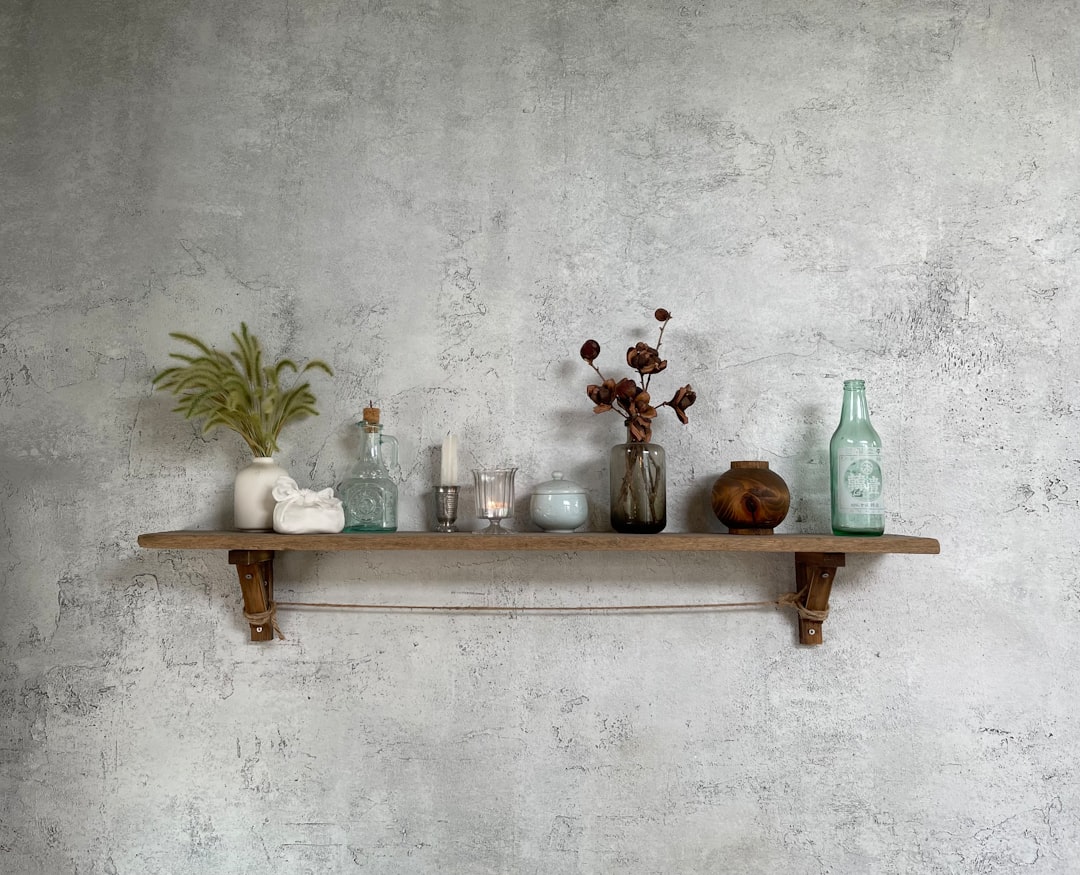
The arrangement rule I keep returning to is a variation on the florist’s odd-number principle. Group plants in threes: one tall, one medium, one trailing or low. Repeat the group at least twice in the room, but not identically. The eye reads the rhythm without noticing the pattern, which is what you want.
My north wall is a good example. On a walnut shelf 180 cm high, a mature Rhaphidophora tetrasperma climbs a moss pole (tall). Below it on a plant stand at 60 cm, a Philodendron mamei with silver markings holds the middle (medium). On the floor beside them, a Peperomia argyreia spills sideways in a shallow terracotta bowl (low). Two meters to the right, the pattern repeats with different species: an Alocasia zebrina, a Calathea orbifolia, and a trailing Peperomia prostrata.
- Tall element between 150 and 200 cm, usually a climber on a support
- Medium element between 40 and 90 cm, ideally with a textured leaf
- Low or trailing element under 30 cm, softening the base
- At least 50 cm of negative space around the whole group
- Repeat the rhythm elsewhere in the room, never mirror it exactly
- Vary pot heights within the group, not just plant heights
Edit like a curator, not a collector
The hardest habit to build was editing. A serious collector accumulates. A styled home does not. My compromise is a growing area (a converted spare room with grow lights and a humidifier running around 65% RH) where new plants live for six months to two years before I decide whether they earn a spot in the main rooms. Roughly one in four graduates. The rest stay in the grow room, get gifted to friends, or, if they never thrived, get honestly composted.
This slow filter is what keeps the living areas from becoming a nursery. It also means the plants I do display are usually mature specimens with character: a leaf span that fills a corner, aerial roots that have found their pole, a variegation pattern that has stabilized after four or five leaf cycles.
Light, warmth, and the quiet mechanics
Behind the aesthetics is the boring work that keeps the plants alive long enough to age well. I run a small humidifier from October through April, targeting 55 to 60% RH in the main rooms. Room temperature stays between 65 and 75°F. Watering is done by weight, not schedule: I lift each pot, and if it feels light, it gets water. A few grow lights are hidden inside a bookshelf and above the tallest climber, running about 10 hours a day on a timer, warm-white so they blend into the lamp light in the evening.
None of this equipment is visible from the couch. The humidifier lives behind a curtain. The grow lights are recessed. The soil moisture meter, when I use one, comes out and goes away. The slow aesthetic depends on the machinery being present but quiet.
Give the room time
The single instruction I would give a friend starting this is: buy fewer things, more slowly. Live with a plant for a full year before deciding where it belongs. Let a pot develop its mineral crust before you decide it needs cleaning. Move a stand three times over six months to find its real place. Most of the rooms I admire in other people’s homes were not designed; they were tolerated into being.
Frequently asked questions
How many plants should a slow aesthetic room actually have?
In my main rooms I keep between six and ten visible plants, with a handful of small propagation vessels on a windowsill. The exact number matters less than the ratio of plants to empty surfaces. If every horizontal surface has something on it, the room reads as cluttered regardless of style. I aim for roughly half of surfaces empty at any time.
Can I get this look with cheaper, mass-produced plants?
Yes, and I would encourage it. A mature Pothos in a good terracotta pot on an oak shelf reads more expensive than a rare aroid in a plastic nursery pot. Spend the budget on the pot, the stand, and the light. The plant itself can be a hardware-store Monstera deliciosa that you grow out over three years.
What about renters who cannot change the room itself?
Most of the effect comes from portable elements: pots, stands, a linen curtain clipped over a bare window, a rug that hides a landlord-white floor. I have used the same eight pots across three apartments in six years. The room changes, the plant home does not.
Do grow lights ruin the aesthetic?
Only if they are visible and cool-white. Warm-white LEDs in the 2700 to 3000K range, tucked into a bookshelf or above a tall plant, read as ambient lamp light in the evening. I use small fixtures under 15 watts each, several of them, rather than one large panel.
How long does it take to build this kind of room?
Longer than any social media post suggests. My current arrangement took about seven years to settle, with the last two years being mostly refinement rather than addition. Plan for a five-year horizon at minimum if you want the plants to reach mature size and the materials to acquire their patina.
Frequently asked questions
How long does it take to develop a personal plant styling aesthetic?
Typically 2-5 years of active collecting and styling. Initial choices reflect external influences; over time, your own preferences emerge through experience and trial.
Should I follow specific styling rules?
Use principles, not rules. Rules are rigid; principles are flexible. Pay attention to what works in your space and adjust accordingly.
How can I tell if my plant arrangement is working?
Visual harmony, plant health, ease of care, and your own enjoyment of the space. If all four are positive, the arrangement is working.
Can plant styling improve my home's overall feel?
Yes, significantly. Plants add life, color, texture, and presence to spaces. Thoughtfully styled plants can transform how a home feels to live in.