
My first Monstera adansonii was a sad four-inch pot from a garden centre clearance rack, and for about eight months I did almost everything wrong. It survived anyway, which is the honest opening line for this plant: it forgives more than the internet suggests, but it also refuses to become the lace-leaved cascade in the photos unless you give it a few very specific things. After keeping three separate plants across two apartments and two window aspects, I have opinions about which advice is worth following and which is repeated because it sounds nice.
What follows is not a beginner rundown. It is what I would tell a friend who already owns one, has watched it sulk, and wants to know why the leaves it puts out today are smaller than the ones it arrived with.
Why the hype outruns the plant
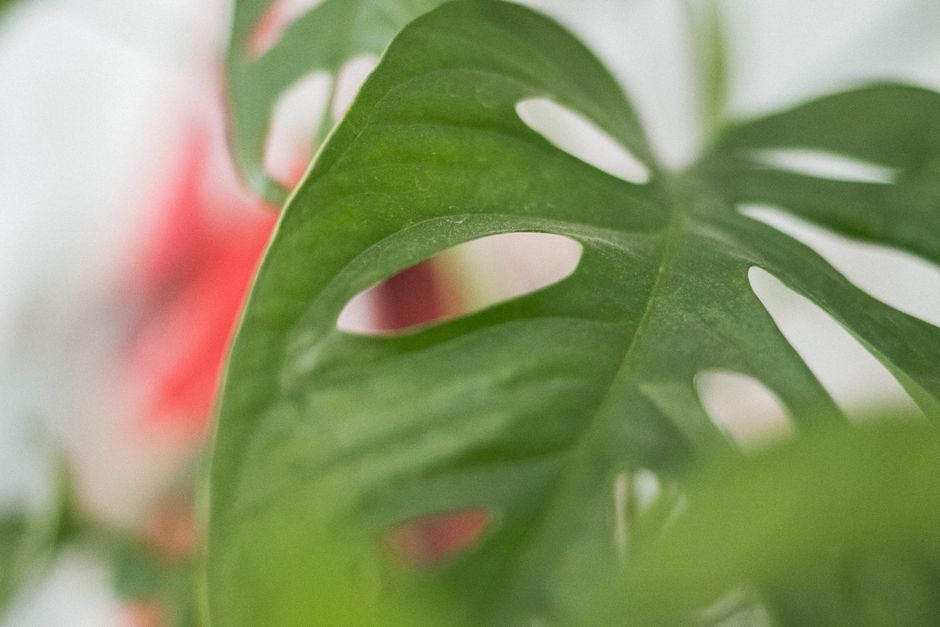
Adansonii is sold on a promise of dramatic fenestration, and yes, mature leaves develop those elongated holes. But juvenile leaves, the ones almost every plant ships with, are small and often unfenestrated. Growers force early hole formation with warm greenhouses, saturated humidity and strong overhead light, then ship the plant to a living room averaging 40 percent humidity and 200 foot-candles at the window. The new growth reverts. People assume the plant is failing when it is simply telling the truth about its new environment.
Once I stopped comparing my plant to nursery photos and started comparing this month’s leaf to last month’s leaf, the whole hobby got quieter.
Light: the single biggest lever
Adansonii is a hemiepiphyte. In the wild it climbs a trunk from the forest floor toward brighter canopy light. In a home it wants the equivalent of a bright east or lightly filtered south window, roughly 400 to 800 foot-candles for most of the day. I measure with a cheap lux meter app; anything under 200 gives me leggy vines with 4-inch internodes and no fenestration.
Two practical rules I have settled on:
- If the plant is more than three feet from the window, it is a low-light plant regardless of what the window looks like from where you are standing.
- South-facing sun through sheer curtains for 6 hours beats a bare north window every time, even in summer.
My best-looking specimen sits 14 inches from an east window with morning sun until about 10:30 a.m., then bright indirect for the rest of the day. Under a 30-watt full-spectrum LED bar for 12 hours it does almost as well, which matters in winter when my apartment loses two hours of usable daylight.
Watering without the guesswork
The advice I read most often is “water when the top inch is dry.” That works if your pot is 4 inches tall. In a 6-inch nursery pot with a chunky aroid mix, the top inch dries in two days while the root ball is still soaked. I killed the second adansonii this way.
Now I use a wooden skewer pushed to the bottom of the pot. If it comes out dry and warm, I water thoroughly until roughly 20 percent of the volume drains out the bottom. In summer that is every 5 to 7 days for me; in winter it stretches to 10 or 12. The plant tells me when I have gone too long: the newest leaf droops slightly at the petiole, recovers within an hour of watering, and no permanent damage is done. That single droop is the cheapest calibration signal in the hobby.
A seasonal schedule that survives real life
| Season | Water frequency | Fertilizer | Notes |
|---|---|---|---|
| Spring (Mar-May) | Every 5-7 days | Half-strength balanced, every second watering | Repot now if roots circle the pot |
| Summer (Jun-Aug) | Every 4-6 days | Half-strength, weekly | Highest growth; add pole ties |
| Autumn (Sep-Nov) | Every 7-10 days | Quarter-strength, monthly | Move closer to window as light drops |
| Winter (Dec-Feb) | Every 10-14 days | None | Supplement with a grow light |
Substrate and the moss pole question
Straight potting soil compacts and holds water against the roots. I use a chunky mix by volume: 40 percent orchid bark, 20 percent perlite, 20 percent coco coir, 15 percent quality peat-based potting soil, 5 percent horticultural charcoal. It drains fast, holds enough moisture to stay damp for a week, and lets me water heavily without root rot anxiety. The University of Minnesota Extension guidance on indoor watering is a good sanity check if you want to compare notes with a research source.
On moss poles: adansonii will grow as a hanging vine indefinitely and it will look fine for a year, then increasingly ratty. What it will not do trailing is produce mature leaves. Aerial roots need something moist and rough to attach to before the plant commits to bigger foliage. I switched my oldest plant to a sphagnum-stuffed pole two summers ago and the leaves that emerged above the third node were nearly double the surface area of anything below. Keep the pole moist by top-watering it directly; that is what the aerial roots actually drink from.
Humidity, temperature, and the honest ranges
Books say 60 percent humidity or higher. My apartment sits at 42 percent in winter and 55 in summer, and the plant is fine. What matters more is avoiding cold drafts and heat vents. Below 55 degrees F, growth stops and leaves can develop mushy dark patches; above 90 degrees F with dry air, edges crisp within days. The workable range is 65 to 82 degrees F, and stable is better than optimal-with-swings.
I stopped misting entirely. It raises local humidity for about 20 minutes and encourages the fungal spotting I was trying to avoid. A small ultrasonic humidifier six feet from the plant does more, though honestly a pebble tray and grouping plants together does most of the work.
Troubleshooting: what each symptom actually means
- Yellowing lower leaves, soggy soil: overwatering. Unpot, check for black mushy roots, trim, repot in dry mix.
- Yellowing lower leaves, dry soil: natural turnover of the oldest leaf, especially after adding new growth. One or two a season is normal.
- Brown crispy edges: low humidity combined with fertilizer salt buildup. Flush the pot with plain water until it runs clear, three times.
- Small new leaves, long internodes: not enough light. Move closer to the window or add a grow light.
- No fenestration on new leaves: combination of low light and no climbing support. Both usually need fixing.
- Black spots with yellow halos: bacterial leaf spot from wet foliage. Stop misting, improve airflow, remove affected leaves.
- Sticky residue, tiny webs: spider mites. Shower the plant, then treat with insecticidal soap weekly for three weeks.
Propagation notes from someone who has done it fifty times
Adansonii roots faster than almost any aroid I keep. A single-node cutting with one leaf and one aerial root nub, placed in a jar of water on my kitchen windowsill, produces usable roots in 10 to 14 days. I move to soil once roots are 2 inches long; longer than that and the water-adapted roots die back when transitioned and the plant sulks for a month.
The mistake I made repeatedly was cutting between nodes instead of just below a node. The node itself is where roots emerge; a length of bare stem below it will just rot. If you want a bushier plant, root three cuttings in the same pot rather than expecting one vine to branch. Adansonii rarely branches on its own without damage to the growing tip. The Missouri Botanical Garden plant finder has decent taxonomic notes if you want to confirm you have adansonii rather than the frequently mislabeled epipremnoides.
What I stopped doing
Stopped misting. Stopped rotating the plant every week (a quarter turn monthly is plenty). Stopped fertilizing in winter. Stopped buying peat pots that dry out unevenly. Stopped repotting into pots two sizes larger because I read it saved time; adansonii prefers snug roots and sulks in oversized pots for months. Stopped comparing my plant to Instagram photos taken in greenhouses.
The plant I have now, three years in, is the calmest thing on my shelf. It puts out one new leaf every two to three weeks in the growing season, each slightly larger than the last, each with a bit more fenestration than the one before. That progression, more than any single showpiece leaf, is what the hobby actually feels like.
Frequently asked questions
Is Monstera adansonii the same as Swiss cheese vine?
Yes, that is one of the common names, though “Swiss cheese plant” is more often used for the larger Monstera deliciosa. Adansonii has smaller, more elongated leaves with holes rather than the split-edged fronds of deliciosa. Confusion with Monstera epipremnoides (now Monstera esqueleto) is common because both are frequently mislabeled at big-box retailers.
How long until my Monstera adansonii develops holes?
Under good conditions with a moss pole and 400+ foot-candles of light, expect fenestration on new leaves within 6 to 9 months. Without climbing support or with weak light, a plant can go two years producing solid juvenile leaves. Age alone is not the trigger; environment and vertical growth are.
Is Monstera adansonii toxic to cats and dogs?
Yes. Like most aroids, it contains insoluble calcium oxalate crystals that cause oral irritation, drooling and vomiting if chewed. It is not usually fatal but it is genuinely unpleasant for the animal. I keep mine on a high shelf and out of the bedroom where my cat sleeps.
Why does my adansonii have long gaps between leaves?
Long internodes, more than 3 inches between leaves, almost always mean the plant is reaching for more light. Move it closer to a window or add supplemental lighting. The plant produced under low light will not shorten retroactively, but new growth will tighten up within a few leaves once conditions improve.
Can I keep it in a bathroom?
Only if the bathroom has a real window. The humidity bump helps, but adansonii will decline in the low light of most windowless bathrooms within a couple of months. If your bathroom gets bright indirect light most of the day, it can be a good spot, especially in dry winter months.
Frequently asked questions
How long does a new Calathea leaf take to develop?
Four to six weeks from first appearance of new growth to fully unfurled and hardened. Slightly faster in summer, slower in winter. The development window is when conditions matter most.
Can a Calathea recover from many bad leaves in a row?
Yes, if root health is good and the underlying issue is addressed. Existing damaged leaves do not recover, but new leaves come in better as conditions improve. Two to three growth cycles after a fix typically show clear recovery.
Why is my newest leaf smaller than the older ones?
Most often light, humidity, or substrate health. A single smaller leaf may be noise. Three smaller leaves in a row is a trend — identify what changed and adjust.
Should I cut off damaged Calathea leaves?
Wait until the plant is putting out healthy new growth before removing damaged leaves. Even damaged leaves contribute some photosynthesis. Once new healthy leaves are coming in, you can trim back the worst-affected older ones.