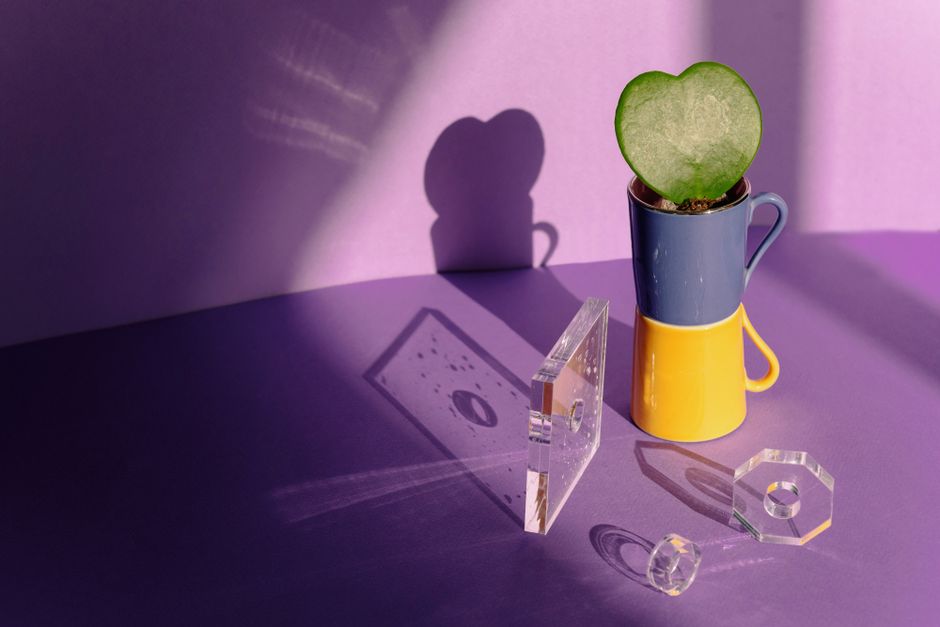
Every February a fresh wave of single-leaf hoya kerrii pots hits the checkout aisle, wrapped in cellophane and sold as a living valentine. I have bought a few myself over the years, and I have also grown a full vining specimen from a rooted cutting for close to seven summers now. Those two experiences taught me almost everything I know about this plant, and most of it contradicts what the gift-shop tag suggests.
So this is the guide I wish someone had handed me the first time I brought a wax heart home. Nothing fancy, no marketing gloss, just what actually keeps Hoya kerrii alive, thick-leaved, and eventually flowering in an ordinary apartment.
What you actually bought
Hoya kerrii is a slow-growing epiphytic vine native to parts of Thailand, Laos, Cambodia, Vietnam, and southern China, where it clambers up tree trunks in seasonally dry forest. The succulent, valentine-shaped leaves are a water-storage adaptation, not a decorative accident. In cultivation it can eventually push vines of 2 to 4 meters if you give it years and something to climb.
The catch is that most people never meet the vining plant. They meet a single leaf, cut just below the node, rooted in a 6 cm pot, and sold as a self-contained novelty. That leaf can live for a decade without ever producing a new stem, because there is no growth meristem attached. If your gift plant looks exactly the same three years later, that is why. It is not dying. It is not thriving either.
Single leaf, or full plant? Know before you shop
If you want a plant that will actually grow, you need a cutting that includes at least one node, ideally two, with a bit of stem visible above the soil. Ask the seller, or look for these signs before you pay:
- A short length of woody or green stem sticking up between the leaves.
- Two or more leaves emerging from that stem, not a lone heart wedged into moss.
- A visible bump or nub where a new vine could push, usually at the leaf axil.
- Aerial roots or a small nodal swelling on the stem itself.
I keep both kinds in my collection. The single leaves live on a shelf as sculptural objects, and I water them maybe six times a year. The nodal cuttings live on a trellis in the east window and put out one or two new vines each warm season.
Light: brighter than the label admits
Garden-center tags love the phrase “low light tolerant.” For hoya kerrii, that means it will survive shade. It will not grow, thicken, or flower there. My best specimen sits about 40 cm from an unobstructed east window and picks up two hours of soft direct sun each morning. A south or west window works too, with a sheer curtain during the hottest months.
If you rely on grow lights, aim for around 200 to 400 micromoles per square meter per second (PPFD) at the leaves, on a 12 to 14 hour cycle. Leaves grown in stronger light develop the faint silver flecking many collectors chase, and the plant is far more likely to bloom.
Watering without killing it
This is where most hoya kerrii die. The succulent leaves make people underestimate how quickly roots rot in soggy media. My rule, refined over years of loss and recovery: water thoroughly when the top 3 to 4 cm of mix is bone dry and the pot feels light in the hand. In a bright room during summer that is often every 10 to 14 days. In winter I stretch to three or four weeks.
Two habits that changed everything for me:
- Bottom-water for 15 minutes rather than pouring from above, so the chunky mix actually rehydrates evenly.
- Empty the saucer within 30 minutes. No exceptions. Wet feet is the fastest way to kill this plant.
- Skip watering entirely if the leaves still feel firm and plump. A slightly wrinkled leaf recovers in a day. A rotted stem does not.
- Use tepid water. Cold tap water on warm roots shocks them and shows up as leaf drop a week later.
The right pot and mix
Hoyas resent being overpotted. I keep mine in the smallest container that holds the root ball plus a centimeter of space, almost always terracotta because it dries evenly. A four-leaf cutting is happy in a 10 cm pot for two or three years.
My working mix, refined against several other collectors’ recipes:
| Component | Proportion | Why it matters |
|---|---|---|
| Orchid bark, fine grade | 40% | Air pockets, mimics epiphytic anchoring |
| Perlite or pumice | 30% | Drainage, prevents compaction |
| Coco coir or peat | 20% | Moisture buffer without waterlogging |
| Horticultural charcoal | 10% | Sweetens the mix, resists sourness |
If you can only find a generic aroid mix, add an extra handful of perlite per liter and you will be close enough.
Temperature, humidity, and where to place it
Hoya kerrii is comfortable anywhere between 18 and 29 degrees Celsius. It will tolerate a brief dip to 12 degrees but sulks below that, dropping leaves if a cold draft catches it near a winter window. Keep it well away from air-conditioning vents and unheated porches.
Humidity matters less than the internet suggests. Mine grows and blooms at 40 to 50 percent household humidity. Above 60 percent you may see faster new growth, but you also invite fungal issues if airflow is poor. I would rather have a small fan running than a humidifier fogging the leaves.
Feeding, and why less is more
An epiphyte living on a tree trunk in Thailand is not eating much nitrogen. I feed a quarter-strength balanced liquid fertilizer, roughly 5-5-5 or 7-9-5, every third watering from March through September, then nothing at all in the cool months. Once buds appear I switch to a bloom-boosting formula with slightly higher phosphorus for two feedings only.
Yellow lower leaves on a well-watered plant almost always mean overfeeding, not deficiency. Flush the pot with plain water twice and pause fertilizer for a month.
How to actually get it to flower
The waxy, star-shaped umbels are the reason to grow this plant. They emit a light caramel scent at night and drip clear nectar that hardens into little amber beads. Bloom triggers, in the order I found them useful:
- Give the plant at least two years to build a mature vine of 60 cm or more.
- Push light gradually higher until leaves show slight bronzing at the edges.
- Allow a mild dry period of three weeks in late winter, watering only enough to keep leaves from wrinkling.
- Resume normal watering and add phosphorus-forward feed as spring warms.
- Never cut the old flower peduncle. Hoyas re-bloom from the same spur, often for years.
My oldest plant took four years to produce its first cluster and now blooms twice each summer from the same two peduncles. Patience is not optional here.
Pests, problems, and quick fixes
Mealybugs are the primary enemy, hiding in leaf axils and along the stem. I inspect monthly with a headlamp, which sounds absurd until you catch an infestation early. A cotton swab dipped in 70% isopropyl alcohol wipes them out on contact. For anything larger than a few insects, a horticultural soap spray weekly for three weeks breaks the life cycle.
Other issues I see in reader messages:
- Wrinkled leaves that will not plump up after watering: root damage from prior overwatering. Unpot, trim mush, repot in dry mix, wait a week before watering.
- Black spots at leaf tips: usually fluoride or salt burn from tap water. Switch to filtered or rainwater.
- New leaves smaller than old ones: insufficient light. Move closer to the window before assuming a nutrient problem.
- Sudden leaf drop in winter: cold shock. Check the window at night with your hand.
A note on pet safety
Hoyas are generally listed as non-toxic to cats and dogs by the ASPCA plant database, though the sticky latex can cause mild stomach upset if a pet chews on a stem. I still keep mine out of reach because the dripping flower nectar attracts curious noses, and I would rather not clean sugar off the floor.
Propagation, if you want more
Take a cutting with at least one node and two leaves in late spring. I root in a mix of half perlite, half sphagnum, kept barely moist, in a clear cup so I can watch progress. Roots typically appear in four to eight weeks at 24 degrees Celsius. Water propagation also works but the transition to soil is harder, so I skip it.
For deeper species background, the RHS plant finder is a decent starting point, though for hoya-specific taxonomy I trust the International Hoya Association more.
Frequently asked questions
Will my single-leaf hoya kerrii ever grow into a vine?
Almost never. If the cutting was made without a node, there is no meristem tissue to produce new stems. In roughly one case in a hundred a dormant bud at the leaf base does activate, but I would not buy a single leaf hoping for that lottery ticket. Buy a nodal cutting instead.
Why are the leaves on my hoya kerrii turning yellow?
Ninety percent of the time it is overwatering, followed distantly by overfeeding. Check the roots first. If they are brown and mushy, unpot, cut back to firm white tissue, dust with cinnamon or sulphur, and repot in fresh dry mix. Hold water for a week.
How long until a hoya kerrii blooms indoors?
From a rooted nodal cutting, plan on three to five years of steady bright light before the first flower cluster. Mature imported plants can bloom in their first summer with you if conditions are right. Never cut the flower stalk after blooms fade, because the same peduncle produces future flushes.
Can I keep hoya kerrii in a bathroom?
Only if the bathroom has a proper window with several hours of bright light. The humidity does not compensate for gloom. In a dim windowless bath the plant simply stalls and slowly declines over a year.
Is the variegated hoya kerrii harder to grow?
Slightly. The cream-splashed cultivars, often sold as “Splash” or “Variegata,” photosynthesize less efficiently and grow more slowly. They also scorch faster in direct afternoon sun. I give mine a spot with the same total light but no unfiltered midday exposure, and they hold their color beautifully.
Final thoughts from the shelf
Hoya kerrii rewards restraint. Small pot, chunky mix, bright light, sparing water, patient hands. If you can resist the urge to fuss, this plant will outlast most of the fashionable tropicals that pass through your collection. The wax-heart leaf is a nice gimmick, but the mature vine dripping caramel-scented nectar on a July night is the real payoff, and it is worth every quiet year of waiting.