My first Anthurium clarinervium arrived in a courier box with two leaves and a lot of promises. Six years later, the same plant sits in a north-facing corner of my flat with nine leaves, one of them the size of a dinner plate, and I have finally stopped apologising for how slow it grew to get there. Most of what I read online in the first year was either breathless (grow bigger leaves in weeks) or vague (just give it high humidity). Neither helped. What follows is what I would tell a friend who just bought one and wants it to still be alive, and still growing, five years from now.
What clarinervium actually is, and why that matters for care
Anthurium clarinervium is a lithophyte from the limestone hills of Chiapas, Mexico. In the wild it wedges its roots into pockets of leaf litter on shaded rock faces, not deep soil, and not the crown of a tree. That single fact rewires almost every care decision. Its roots want air, grit, and a substrate that drains in seconds. They do not want to sit in peaty compost that stays wet for a week. Every long-term problem I have had with this species traces back to soil that held too much water for too long.
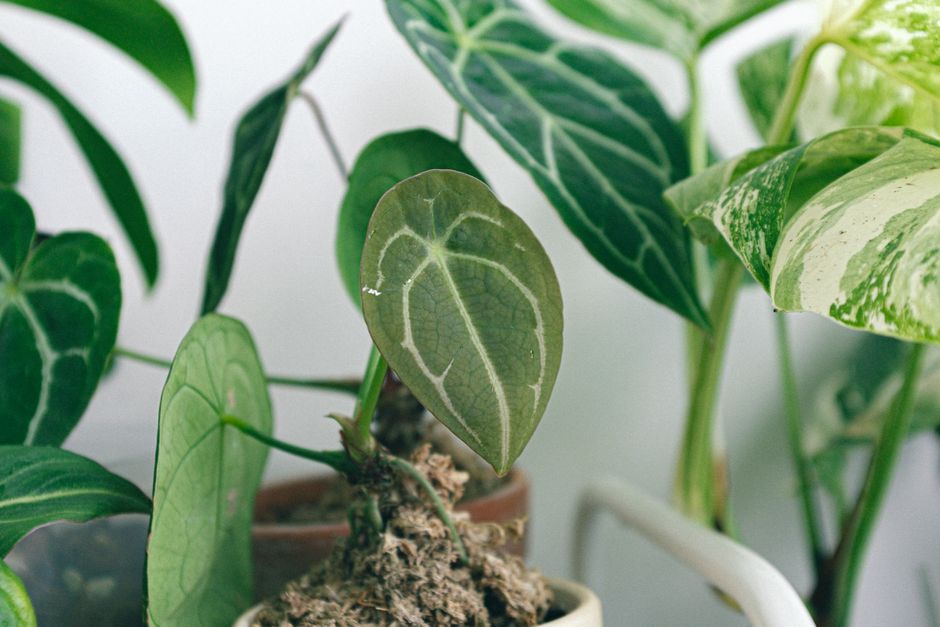
The leaves are the reason most people buy it: heart-shaped, deep matte green, with silver veins that look painted on. New leaves emerge bronze and take about three weeks to harden off to their adult colour. That colour change is a reliable milestone. If a leaf stays bronze and floppy past week four, something in the environment is off.
Light: brighter than most guides admit
The old advice was low light. That is wrong for anything other than survival. My clarinervium sulked in a genuinely low-light corner for two years, producing one small leaf a year. I moved it to a spot about 4 feet from an east window, behind a sheer curtain, and it started pushing a new leaf every 8 to 10 weeks. A cheap PAR meter reads 150 to 250 PPFD at leaf height in that spot for about 6 hours a day. That is the sweet spot in my experience.
Signs the light is wrong:
- New leaves smaller than the previous one, even with good humidity: not enough light.
- Yellow patches or bleached silver veins on the sun-facing side: too much direct sun.
- Long petioles that flop and cannot hold the leaf up: reaching for more light.
The substrate I actually use
After trying five recipes I settled on a chunky aroid mix that stays open for at least two years before it collapses. This is what goes into a 6 inch nursery pot for one adult plant:
- 40% orchid bark, medium grade (roughly 1/2 inch pieces)
- 20% perlite, chunky, not the dusty stuff
- 15% coco chips, soaked and rinsed twice to leach salts
- 15% pumice, 1/4 inch grade
- 10% high-quality worm castings for slow nutrition
I add a handful of horticultural charcoal on top of that, mostly for peace of mind about anaerobic pockets. The mix should feel like a bowl of muesli, not a brownie batter. When you pour water through, it should exit the drainage holes within about 5 seconds.
Watering by weight, not by schedule
I killed my second clarinervium by watering it every Sunday because a spreadsheet said so. What actually works is lifting the pot. A freshly watered 6 inch pot in my mix weighs about 900 grams. When it drops to around 500 grams the substrate is dry enough that the roots are pulling air, and it is time to water again. In my flat that is roughly every 7 days in summer and every 12 to 14 days in winter, but the number on the calendar is not the signal. The weight is.
When I water, I water thoroughly, at the sink, until water runs freely from the base for a full 30 seconds. This flushes accumulated fertiliser salts, which clarinervium is genuinely sensitive to. Tap water in my area sits around 180 ppm dissolved solids and the plant tolerates it, but I collect rainwater for it when I can, and the newest leaves are visibly cleaner when I do.
Humidity: helpful, not magical
Every forum will tell you clarinervium needs 70% humidity. Mine lives happily at 55% average, dropping to 40% on cold winter nights when the heating runs. What matters more than the number is stability. Big swings from 80% down to 30% in a few hours cause leaf edges to crisp. A cheap hygrometer near the plant and a small humidifier on a timer during dry months keeps things in a workable range without turning the room into a cave.
I stopped misting years ago. It wets the leaves without meaningfully changing ambient humidity, and on a velvet-textured leaf like clarinervium the droplets can leave mineral spots that never fully clean off.
Temperature, feeding, and the boring middle years
Comfortable room temperature is fine. The plant grows fastest between 68 and 78 degrees Fahrenheit, slows visibly below 62, and starts showing stress cracks in new leaves below 55. Do not let it sit against a cold window in winter.
For feeding I use a balanced liquid fertiliser at quarter strength (about 100 ppm nitrogen) every second watering during active growth, spring through early autumn. Nothing in the depths of winter. Every third month I flush the pot with plain water for two full waterings in a row to reset the salt load. The leaves respond within a growth cycle if you have been overfeeding: pale, thin leaves mean too much nitrogen; dark leaves with brown tips mean salt buildup.
Repotting: less often than you think
I repot every 24 to 30 months, or when the mix has visibly broken down and holds water too long. Root-bound is not a crisis for this plant. It flowers and pushes leaves happily in a snug pot. When I do repot, I go up one pot size only, and I tease out the outer roots gently rather than disturbing the root ball. Any mushy or hollow roots come off with sterile snips.
What goes wrong, and what it means
| Symptom | Most likely cause | What I do |
|---|---|---|
| Yellow lower leaf, evenly | Natural leaf turnover | Nothing; let it drop |
| Multiple yellow leaves at once | Overwatering, root rot beginning | Unpot, inspect roots, refresh mix |
| Crispy brown leaf edges | Humidity swing or salt buildup | Flush pot; stabilise humidity |
| New leaf tears as it unfurls | Humidity drop during unfurling | Local humidifier for 2 weeks |
| Silver veins fading | Insufficient light | Move closer to window over 2 weeks |
| Sticky clear droplets on petiole | Guttation, harmless | Wipe off, no action needed |
The most useful diagnostic habit I have built is photographing every new leaf as it hardens off and comparing sizes across a year. A trend is far more informative than any single leaf.
The honest part
This is not a fast plant. In a year of attentive care mine produces four to six leaves. Some collectors on forums claim monthly leaves; I have never seen that outside of a proper greenhouse with 80% humidity, supplemental lighting, and warmth held at 75 degrees Fahrenheit day and night. In a normal home you will get slow, deliberate growth and one absolutely gorgeous leaf every couple of months. That is the deal. Once I accepted it, I stopped tinkering, and the plant relaxed.
Useful further reading: the Missouri Botanical Garden entry on Anthurium covers general genus care well, and the International Aroid Society has photographs of wild clarinervium in habitat that are worth looking at before you commit to a substrate recipe.
Frequently asked questions
Is Anthurium clarinervium the same as Anthurium crystallinum?
No, though they are often confused and sometimes hybridised. Clarinervium leaves are thicker, stiffer, and more heart-shaped, with pronounced quilting between the veins. Crystallinum leaves are thinner, more elongated, and hold themselves flatter. Care requirements overlap almost entirely, but crystallinum is slightly more forgiving of lower light in my experience.
Why did my new leaf come out deformed?
Deformed new leaves almost always trace to a stress event that happened 3 to 6 weeks earlier, when the leaf was forming inside the sheath. Common culprits are a sudden humidity drop, a cold draft, or root disturbance from an ill-timed repot. The next leaf will usually emerge normally once conditions stabilise.
Can I grow it in pure sphagnum moss?
You can, and many nurseries do to accelerate root development, but long-term I would move any semi-mature plant to a chunky aroid mix within a few months. Sphagnum breaks down, compacts, and holds too much water for the roots of a settled plant. It is a starter substrate, not a lifetime one.
Does it need a moss pole?
No. Clarinervium is a lithophyte, not a climber. It grows outward from a central rhizome rather than upward. A pole gives it nothing to grip and adds no benefit. Save the pole for your philodendrons and climbing anthuriums.
How do I know when to worry about root rot?
Two signs matter: a sudden musty smell from the pot after watering, and multiple leaves yellowing within the same week. If you see both, unpot immediately, rinse the roots, cut anything hollow or brown, and repot into fresh dry mix. Withhold water for 5 to 7 days after that to let cut surfaces callus over.
Frequently asked questions
Is my Alocasia dying or just dormant?
Check the tuber. Press it gently — if firm, the plant is dormant and will return. If soft, hollow, or mushy, the tuber has rotted and the plant is dying. Firm tuber = patience. Soft tuber = act immediately.
Should I water a dormant Alocasia?
Less, not none. Water every two to three weeks during dormancy, just enough to keep the substrate barely damp. Overwatering during dormancy is the most common cause of tuber rot.
How long does Alocasia dormancy last?
Generally late autumn through early spring — roughly October to March in temperate climates. The exact timing depends on light hours, temperature, and individual plant. New growth in spring signals the end of dormancy.
Can I prevent Alocasia from going dormant?
In some cases, yes — with consistent warmth, light supplementation, and humidity. A greenhouse cabinet or fully controlled environment can keep many Alocasias actively growing year-round. In a normal apartment, accepting dormancy is usually easier.