My first melanochrysum arrived with two leaves the size of playing cards, and for three months it did absolutely nothing. No new spear, no root movement, no drama. Then I moved it onto a properly damp sphagnum pole, dropped the room to a steadier 68 to 72 degrees Fahrenheit, and within six weeks the third leaf came in nearly double the size of the previous one. That single change taught me more about this plant than any care sheet ever had, and it is the reason I now talk about melanochrysum less as a species and more as a relationship with vertical, moist substrate.
This is the plant that made me stop treating philodendrons like interchangeable green things. The velvet finish is not just cosmetic; it hints at how the leaf handles light, water, and physical contact, and every care decision downstream flows from that texture.
Why the velvet matters more than the color
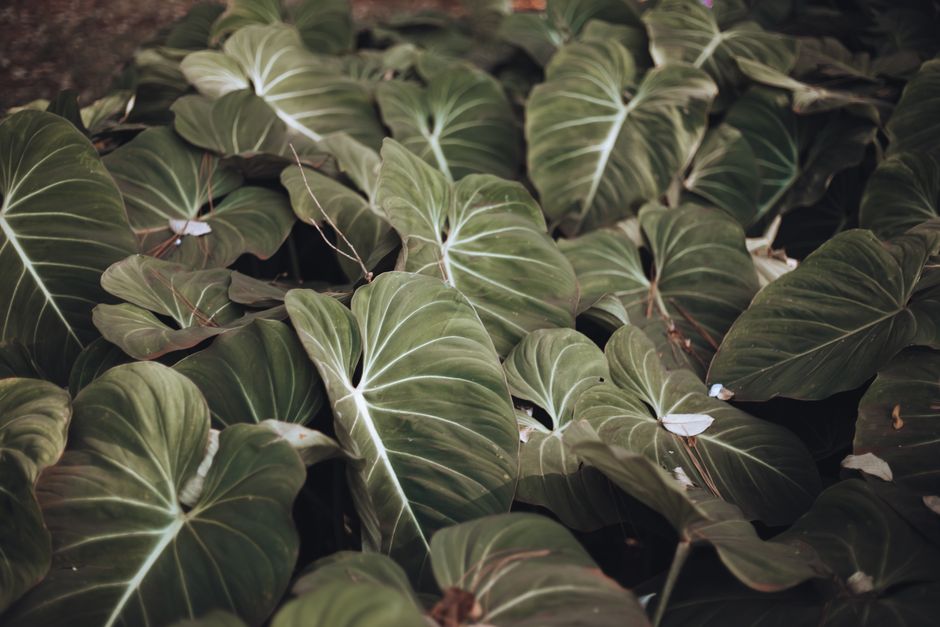
Melanochrysum leaves are covered in microscopic papillae that scatter light and give the surface its dark, almost black-green sheen with a faint golden dust in strong sidelight. Those same papillae are why the leaf resents hard water spots, aggressive leaf shine sprays, and any casual wipe with a paper towel. I learned this the expensive way on a mature leaf I tried to clean before a photo. The dulled patch never fully recovered.
Practically, the velvet also means the leaf holds moisture against its own surface longer than a glossy philodendron would. In a stagnant, cool room that becomes a problem fast. Airflow is not optional here, even when humidity is high.
Light that earns you bigger leaves
I keep mine roughly four feet from an east-facing window, with a sheer between the glass and the plant for the two hours of direct sun that sneak in around 9 a.m. In footcandle terms that reads around 250 to 400 during the working day, climbing briefly to 600. Below about 150 sustained, growth stalls and new leaves come in half the size of their predecessor, which is the tell-tale sign that this plant is stretching, not thriving.
Under artificial light I have had good results with a full-spectrum LED bar around 30 watts running a 12-hour photoperiod, hung about 18 inches above the crown. I would rather run a modest fixture longer than blast a stronger one for eight hours. Consistency reads as confidence to a climbing aroid.
Humidity, temperature, and the honest numbers
I have seen this plant survive at 45 percent humidity and refuse to size up until I put it back into the 65 to 80 percent range. It will keep old leaves, it just will not grow new impressive ones. If you cannot commit to that band year-round, plan on running an enclosure for the cold months or accept that your leaves will plateau around the size of your palm.
Temperature sweet spot in my home sits at 68 to 78 degrees Fahrenheit during the day and no lower than 63 at night. Cold roots are the single fastest way to trigger a stall followed by root rot on this species, so I keep the pot off tile floors in winter with a small cork mat.
The moss pole is not optional
People sometimes ask if they can grow this one as a hanging plant to skip the pole entirely. You can, but you will get juvenile leaves forever: small, thinner, with less of the metallic drama that made you buy the plant in the first place. Climbing triggers maturation, and a well-prepared pole gives the aerial roots something to sink into and drink from.
Here is the pole setup that finally clicked for me:
- Choose a sphagnum pole at least 24 inches tall and 3 inches in diameter. Cedar plank alternatives work but demand higher ambient humidity.
- Soak the pole in dechlorinated water for 20 minutes before installation until it is heavy and evenly damp all the way through.
- Seat the pole against the back of the pot before planting, wedged down to the drainage layer so it cannot tip once the plant leans forward with a new leaf.
- Anchor the existing stem with soft plant ties or strips of nylon stocking, snug but not cinched, at two points along the current growth.
- Mist the pole itself, not the leaves, once daily for the first three weeks so aerial roots have a reason to find it.
- Top up the pole with a squeeze bottle of room-temperature water every three to four days after the roots have latched on, aiming for damp not saturated.
Within two months you should see aerial roots visibly gripping the moss. That is the moment I usually see the next leaf come in noticeably larger.
Substrate, watering, and root health
My current mix is roughly 40 percent orchid bark, 25 percent coco chips, 15 percent perlite, 10 percent worm castings, and 10 percent charcoal. It drains fast, holds enough moisture to keep fine roots happy for two or three days, and never compacts down into the anaerobic mud that kills so many young melanochrysums.
I water when the top two inches of that mix read dry to the touch and the pot lifts noticeably lighter than it did fresh from watering. In a 6-inch nursery pot that ends up being roughly every 5 to 7 days in summer and 10 to 14 in winter. I water thoroughly enough that runoff comes through the drainage holes, then let it drain completely before returning it to a decorative cachepot. Standing water at the bottom is the fastest route to the root rot conversation nobody wants to have.
Feeding without burning the velvet
I keep feeding light and frequent rather than heavy and occasional. A balanced liquid fertilizer at roughly a quarter of the label strength, applied with every second watering during active growth, has kept my leaves dark and clean-margined for two years running. I flush the pot with plain water once a month to keep salts from building up in that bark-heavy mix.
Signs I have gone too heavy: brown, crispy leaf tips that appear within a week of a feeding cycle, and a subtle yellowing between the veins of older leaves. Signs I have gone too light: pale new growth and a general slowdown that no amount of humidity fixes.
Common problems and how I actually fix them
| Symptom | Likely cause | My fix |
|---|---|---|
| New leaves smaller than the last | Low light or unhydrated pole | Move closer to light source; soak pole for 30 minutes |
| Yellow lower leaf, mushy petiole | Overwatering, cold roots | Unpot, trim mush, repot in fresh airy mix, warm the base |
| Brown crispy leaf edges | Humidity crash or fertilizer salts | Flush pot, raise humidity to 65 percent minimum |
| Aerial roots not gripping pole | Pole too dry or too far from stem | Re-tie stem tight against pole, mist pole daily for two weeks |
| Faint webbing under leaves | Spider mites, common in dry rooms | Rinse foliage weekly, treat with a soap spray, raise humidity |
| Pale washed-out new growth | Underfeeding or spent substrate | Resume dilute feeding; consider top-dressing with fresh mix |
A quiet seasonal rhythm
Melanochrysum reads the seasons even indoors. I have kept careful notes for three years and the pattern is consistent: strong growth from late March through October, one or two token leaves through the darker months, and a distinct pause around the shortest days. I stop pushing it in November. I water less, feed once at half strength in early December, and let it coast until the day length lifts again. Fighting that rhythm with grow lights and heavy feeding has never given me better spring growth, only more brown-tipped leaves.
The University of Florida IFAS Extension has a useful overview of tropical aroid physiology that maps to this species reasonably well; you can read their notes on tropical foliage plant care for the horticultural background. For taxonomic grounding, the International Aroid Society maintains species notes that helped me distinguish true melanochrysum from a few common lookalikes.
Distinguishing melanochrysum from its lookalikes
Two plants are constantly mistaken for this one in the trade. The first is Philodendron gigas, which has slightly rougher, more matte foliage and pinker new growth. The second is Philodendron verrucosum, which shows red undersides and fuzzy petioles that melanochrysum never develops. If you buy a young plant, look at the petiole cross-section: melanochrysum petioles are round to slightly D-shaped and smooth, never bristly. Getting this right at purchase saves you months of confused care decisions later.
- Petiole smooth and rounded, not bristly
- New growth flushes coppery bronze then deepens to velvet green
- Mature leaf shape becomes distinctly elongated with a heart base
- Undersides pale green, never pink or red
- Leaf feels dry-velvet to the touch, not fuzzy
Frequently asked questions
How fast does Philodendron melanochrysum actually grow?
In good conditions I get one new leaf roughly every four to six weeks during the growing season, with each leaf usually 20 to 40 percent larger than the last until it plateaus around 18 to 24 inches long on a mature climb. Slower growth almost always traces back to light, pole moisture, or root temperature rather than fertilizer.
Can I mist the leaves directly?
I avoid it. Water sitting on the velvet surface can leave mineral spots that never buff out, and in still air it invites fungal blemishes. I mist the pole and the surrounding air instead, or run a small humidifier a few feet away. If you must clean a leaf, use a soft brush and dry it immediately.
Is melanochrysum safe around cats and dogs?
No. Like all philodendrons it contains insoluble calcium oxalate crystals that cause oral irritation and drooling if chewed. I keep mine on a plant shelf well above cat height and treat any accidental nibble as a vet call worth making. This is not a species to negotiate with a curious pet.
Should I repot every year?
I repot every 18 to 24 months, or sooner if I see roots circling the bottom of the pot or the substrate has broken down into fines. Going up one pot size is usually enough; jumping two sizes tends to hold too much unused moisture and stall the plant while it grows into the volume.
My leaves keep coming in small even with the pole. What am I missing?
Nine times out of ten it is light intensity, not humidity. Move the plant closer to the window or add a supplemental LED before you change anything else. The second most common cause I see is a pole that dried out unnoticed behind the foliage; check by squeezing the moss near the base for actual dampness.
Frequently asked questions
Why is my Calathea white fusion losing variegation?
Most often insufficient light. The white sections cannot photosynthesize, so the plant produces less variegation when it lacks energy. Move it to brighter filtered light and watch the next three new leaves for improvement.
Does white fusion need more light than other Calatheas?
Yes — meaningfully more. Bright filtered light from a close east-facing window or near a west-facing window with sheer curtain. Direct sun still scorches the leaves, but the threshold is higher than for fully green Calatheas.
Can I propagate Calathea white fusion?
Yes, by division when the plant is mature. Carefully separate the rhizome into sections, each with at least one growing point and a portion of healthy roots, and pot up. White fusion is harder to propagate than green Calatheas — handle the roots carefully.
Why does my white fusion drop leaves frequently?
Most often it is reacting to recent stress — temperature changes, light shifts, substrate problems, water quality. Identify the most likely cause, change one variable, and give the plant six to eight weeks to respond before changing anything else.