My first Philodendron billietiae arrived in a padded box in late February, one rooted node with a leaf the size of my palm and a petiole the color of raw butternut. The seller warned me it would look sulky for a month. It did. Then it climbed a slab, threw a 14 inch leaf in July, and taught me most of what I now believe about this plant. Almost every care guide I read before that first purchase overpromised the petiole color and undersold the pole. I want to write the version I wish I had found.
Why the orange petioles usually disappoint
The signature of P. billietiae is the ropey, tangerine-orange petiole that props up an elongated, wavy-margined leaf. In the wild, on trees in French Guiana and the Guianan Shield, those petioles are almost neon. Indoors they tend toward a duller pumpkin, sometimes a plain green-with-a-blush. Two things drive that color: light quantity and leaf maturity. A juvenile leaf on a small plant simply cannot carry the pigment load a mature climbing leaf does, and low light suppresses the anthocyanins that make the orange read as orange rather than tan.
My brightest specimen sits about 20 inches from a full-spectrum bar light running 14 hours a day, measuring roughly 350 to 450 PPFD at leaf level. The petioles on the last three leaves are noticeably more saturated than on the sibling plant I keep in an east window that peaks around 180 PPFD. Same clone, same pot mix, different light budget, different color.
The setup I actually use
After trying pots on shelves, pots on the floor, and moss poles that toppled at the first big leaf, I settled on a simple rig I would recommend to anyone starting out.
- A 6 inch net pot inside an 8 inch nursery pot, so I can lift the plant to check roots without disturbing the substrate.
- A 30 inch sphagnum-wrapped PVC pole, wired into a heavier ceramic cache pot for ballast. Billietiae leaves get long-lever heavy fast.
- A pin-style humidifier on a smart plug set to run whenever ambient humidity drops under 55 percent, targeted at the pole rather than the leaves.
- A grow light on a mechanical timer for 14 hours in winter, 12 in summer when the window contributes more.
- A single soil-moisture probe pushed halfway down the pot, which I read by feel and eye rather than trusting the numeric display.
None of that is exotic. The point is to make the environment boring and repeatable so the plant is the only variable.
Substrate that drains but still holds a node
Billietiae is a hemiepiphyte. In practical terms, its roots want air but not desert. A pure bark mix drains too fast for most home routines; a peat-heavy nursery mix stays wet for days and invites edema and root loss. I mix by volume, in a plastic bin, and store the surplus dry.
| Component | Proportion | What it does |
|---|---|---|
| Fine orchid bark | 40% | Structure and air pockets |
| Coco chips (soaked, rinsed) | 25% | Steady moisture, slow to break down |
| Perlite, coarse | 20% | Drainage, keeps the mix from packing |
| Worm castings | 10% | Gentle nutrients, microbial life |
| Horticultural charcoal | 5% | Absorbs excess salts, keeps roots sweet |
I water when the top 2 inches feel dry to a wooden skewer and the pot has lost noticeable weight. In my apartment that averages every 6 to 8 days in summer, every 10 to 14 in winter. Yours will differ. What matters is that the substrate has a wet-then-drying cycle, never sitting soggy and never bone dry against the roots for long.
Light, temperature, and the humidity question
Bright indirect is the standard advice and it is not wrong, but it is vague. In real numbers I aim for 200 to 400 PPFD across the canopy for 12 to 14 hours a day. A cheap PAR meter or a smartphone lux app (multiply lux by roughly 0.015 for a rough PPFD estimate under a full-spectrum LED) will get you close enough to make decisions.
Temperature is easy: it wants what you want. Anything between 65 and 82 F suits it, with growth slowing noticeably under 60 F. I moved a plant next to a drafty patio door in December, saw one leaf yellow within 10 days, and never made that mistake again.
Humidity gets oversold. My plant grows fine at 50 to 55 percent ambient, provided the moss pole stays damp. New leaves unfurl cleaner and larger in the 65 to 75 percent range, but you do not need a glass cabinet to keep the plant alive and looking respectable. The RHS growing guide for philodendron gives a reasonable temperate-climate baseline, and the Missouri Botanical Garden entry covers the wider genus habits well.
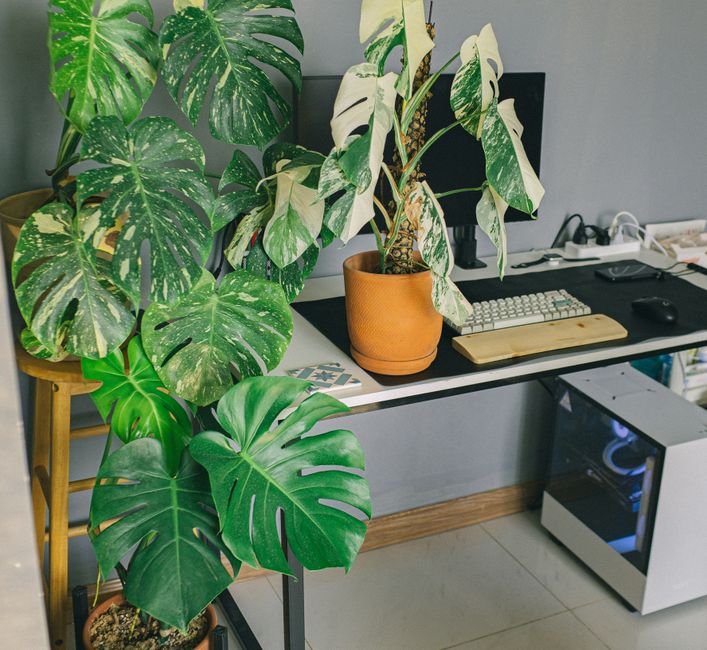
Training the plant up a pole (the part everyone skips)
A billietiae grown as a hanging or sprawling plant will stall at juvenile-looking leaves. Given a damp climbing surface and a chance to sink aerial roots into it, the same plant will step up leaf size roughly 30 to 50 percent per node for the first several nodes. This is the single biggest lever you have.
My routine, tested across three plants:
- Wet the pole thoroughly once a week with a spray bottle, top to bottom, until water runs.
- Tie each new petiole to the pole with a soft plant tie about 2 inches below the node, never tight enough to dent the tissue.
- Refuse to prune unless a leaf is truly dying. Every leaf is feeding the next one.
- Repot only when roots exit the drainage holes and circle. Billietiae hates root disturbance and will pause growth for weeks after a repot.
- Fertilize weakly weekly during active growth: quarter-strength balanced liquid feed, every third watering.
Problems I have had, and what actually fixed them
Yellowing on the oldest leaf is almost always fine, especially after a growth spurt. Yellowing on new leaves is a warning. In my notes, three causes show up over and over: cold roots after a chilly watering, salt buildup from tap water plus fertilizer with no flush, and a pot that has quietly gone anaerobic in the bottom third.
Brown crispy leaf edges usually trace back to a dry pole, not dry air. When the aerial roots have nothing to grip and drink, the plant compensates by pulling harder through the soil roots, and the leaf margins are the first to suffer.
Small pale flecks that turn into stippling are almost always spider mites, which love the underside of billietiae leaves. I check the undersides every Sunday with a jeweler’s loupe and treat at the first sign with a wipe-down and a horticultural oil spray, following the UC IPM guidance on spider mites.
Is it toxic, and is it worth it
Like other philodendrons, billietiae contains calcium oxalate crystals. Chewed leaves cause oral irritation in cats, dogs, and humans, sometimes severe drooling and swelling. I keep mine on a plant shelf my cat has learned to ignore, but if you have a plant-tasting pet, this is not the aroid to compromise on.
Worth it, though. A well-grown billietiae reads across a room: those tangerine petioles and long, slightly wavy blades are unmistakable, and unlike some of the trendier rare aroids, it grows quickly enough to reward attention within a single season. Three years in, I have propagated four plants from one, given two away, and still have my original climbing steadily toward the ceiling.
Frequently asked questions
How fast does Philodendron billietiae grow indoors?
On a damp pole in bright light, expect one new leaf every 3 to 5 weeks during the growing season and near-dormancy from November through February in a temperate home. My best year produced 11 leaves; my worst, in a darker apartment, produced 4.
Why are my petioles green instead of orange?
Almost always insufficient light and immature growth. Juvenile leaves on small plants often lack strong pigment. Increase PPFD to at least 250 to 300 for several months and watch the newest leaves rather than the old ones; existing petioles will not change color retroactively.
Can I grow it without a moss pole?
You can grow it, but it will stay small and produce juvenile-form leaves indefinitely. If you want the dramatic mature leaves and the orange petiole color that made you buy the plant, a damp climbing surface is not optional.
How often should I water Philodendron billietiae?
There is no fixed schedule. Water when the top 2 inches of substrate are dry and the pot feels light. In my chunky mix that lands around every 6 to 8 days in summer and every 10 to 14 in winter. Overwatering kills more billietiae than underwatering.
Is Philodendron billietiae still considered rare?
Not in the way it was a few years ago. Tissue culture has made it widely available, with small plants often selling for under 40 USD in 2026. Well-grown mature specimens with strong petiole color still command a premium, but the plant itself is now approachable for most collectors.
Frequently asked questions
How big should a tropical plant corner be?
Whatever space allows for ten to fifteen plants without leaf-to-leaf contact. A meter square is plenty for a starter corner; two meters by two meters allows for substantial layering and depth. Both work.
Do I really need a fan in the corner?
In high humidity, yes. Without air circulation, fungal issues and pest problems develop more easily. A small fan on low setting, not blowing directly on plants, prevents most of these problems and improves overall plant health.
Can I mix Calatheas and Alocasias in the same corner?
Yes, with the caveat that Alocasias prefer slightly drier substrate and slightly more light than Calatheas. Plant Alocasias toward the front (lighter) and Calatheas toward the back, and water each individually.
Will a humidifier damage my walls or furniture?
Ultrasonic humidifiers can deposit mineral dust on surfaces if you use hard water. Use distilled water in the humidifier to prevent this. Place the humidifier on a tray or waterproof surface in case of spills.