My north-facing hallway is the room that taught me to distrust the phrase “low light tolerant.” A meter held at plant height there reads about 60 foot-candles at noon in July, and closer to 20 in December. That is not low light in the marketing sense. That is a shady bookshelf, and most of what plant tags call low-light will slowly starve there. After five years of moving specimens in and out of that hallway, I have a much shorter list of tropicals that actually hold up, and a clearer sense of what “hold up” is even supposed to mean.
The confusion starts with the label itself. Nurseries grow stock under 2,000 to 4,000 foot-candles of filtered greenhouse light. When a grower calls something low-light adaptable, they usually mean it will not immediately die at 200. That is a wide gap, and it is where most of the disappointment happens.
What “low light” actually means at plant height
I stopped guessing when I bought a cheap lux meter. Any phone light meter app is close enough for this. The readings that matter are the ones taken at leaf height, pointed up toward the brightest part of the sky the plant can see, at the sunniest hour of the day. Not on the windowsill. Not on a cloudless afternoon in June. The dimmest working hour in the dimmest month.
Here is the rough map I use, translated between the units you will see on labels and meters.
| Bracket | Foot-candles | Lux | Real-world example |
|---|---|---|---|
| Bright indirect | 400-800 | 4300-8600 | Two feet from an unobstructed east window |
| Medium | 150-400 | 1600-4300 | Six feet into a bright room |
| Low (workable) | 75-150 | 800-1600 | Interior wall of a bright room |
| Low (survival) | 25-75 | 270-800 | Hallway with a distant window |
| Too dim | under 25 | under 270 | Bathroom with no window, closet |
Almost nothing tropical grows in the last bracket without supplementary lighting. The bracket above it, 25 to 75 foot-candles, is where honest low-light performers live, and there are maybe eight species I would trust there long term. The rest of what gets recommended for “low light” actually wants 150 foot-candles minimum to stay looking like the photo on the tag.
The species that genuinely hold up under 75 foot-candles
These are the plants I have kept alive and looking presentable for at least two years in dim spots, verified with meter readings, not vibes.
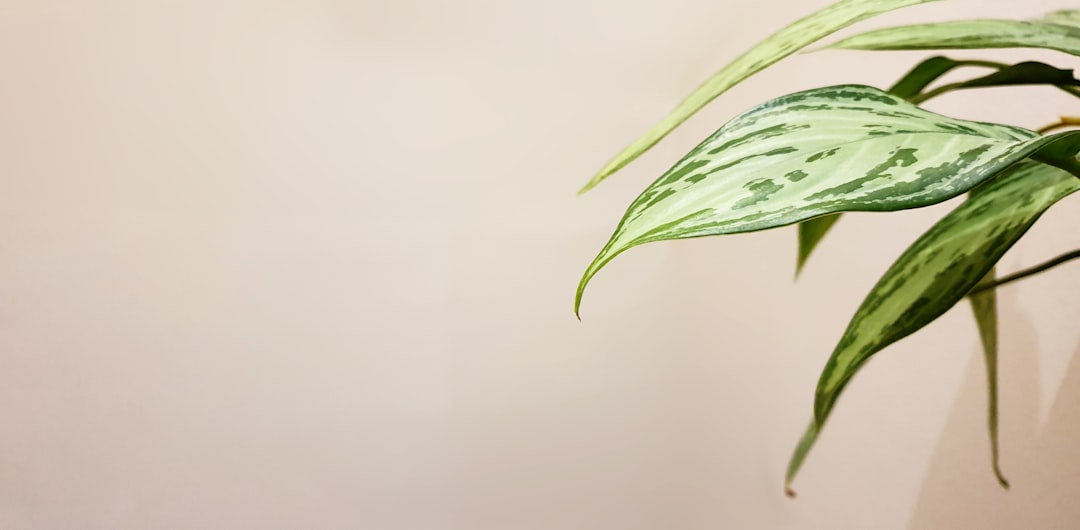
Aglaonema commutatum and the older cultivars like Silver Bay and Maria are the closest thing to a cheat code. The Chinese Evergreen line has been bred for interior conditions since the 1960s and the variegated forms surprise me by holding their pattern down to about 40 foot-candles. Newer red and pink cultivars like Siam Aurora need more light to keep color, closer to 150, so if the room is truly dim, stay with the silver and green forms.
Zamioculcas zamiifolia, the ZZ plant, is technically not a foliage tropical in the calathea sense but it deserves the mention. Mine sat in a 30 foot-candle stairwell for three years and grew one new stem per year. That is not thriving, but it looked identical to the day I bought it, and that is a fair definition of tolerance.
Sansevieria trifasciata, now Dracaena trifasciata botanically, is the other survivor at that light level. It will not put out new pups but the existing leaves stay firm and colored.
Philodendron hederaceum, the heartleaf, tolerates surprisingly low light if you accept that the vines get leggy and the leaves shrink. A 4-inch leaf in a bright window becomes a 2-inch leaf six feet away, and the internodes stretch to about 4 inches from a typical 1.5.
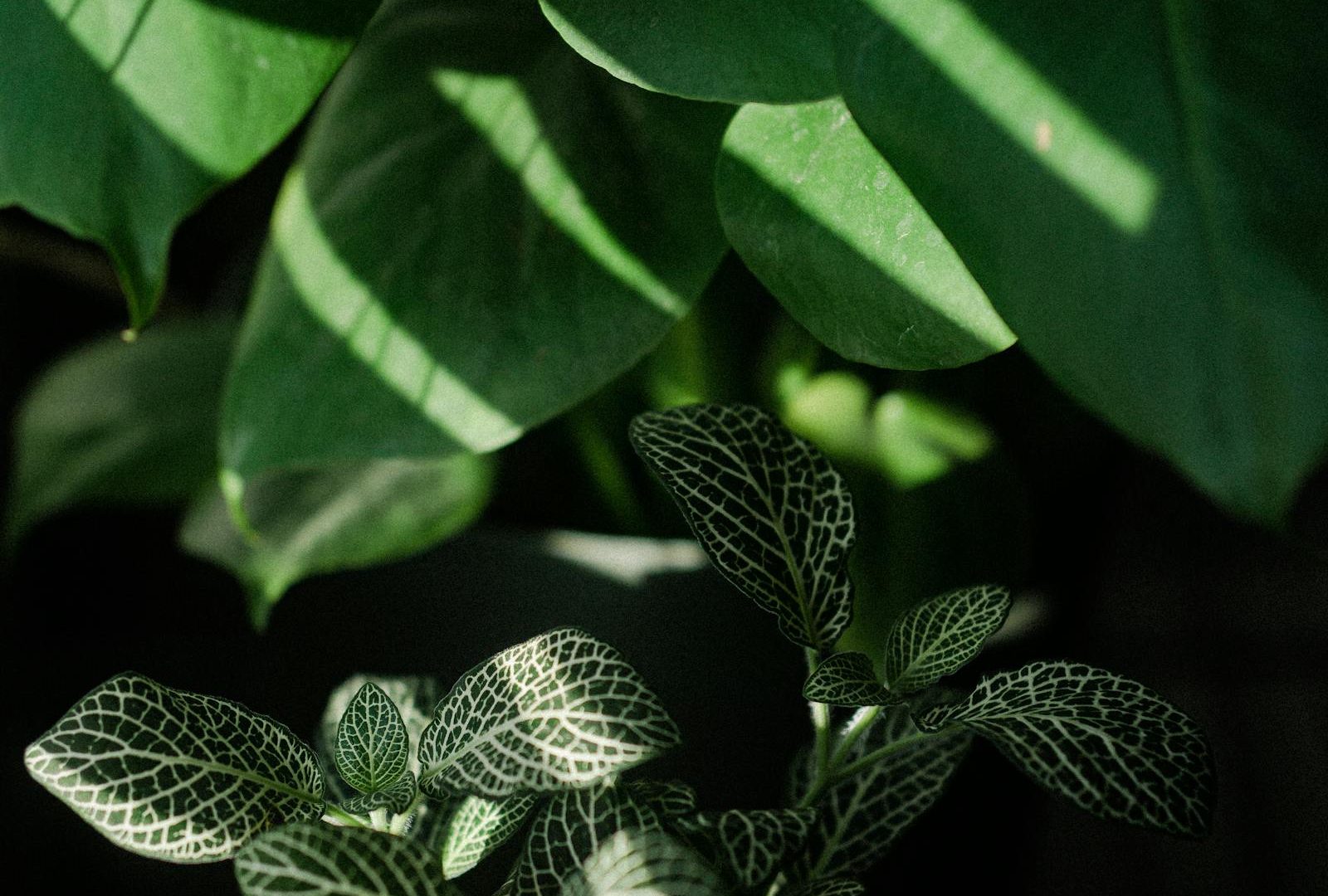
Epipremnum aureum, plain golden pothos, does the same thing. The variegation almost completely disappears below 100 foot-candles, and what you end up with is a plain green vine. Marble Queen and other high-variegation cultivars actively suffer in low light because they have less chlorophyll to work with.
The plants that need more light than their tags claim
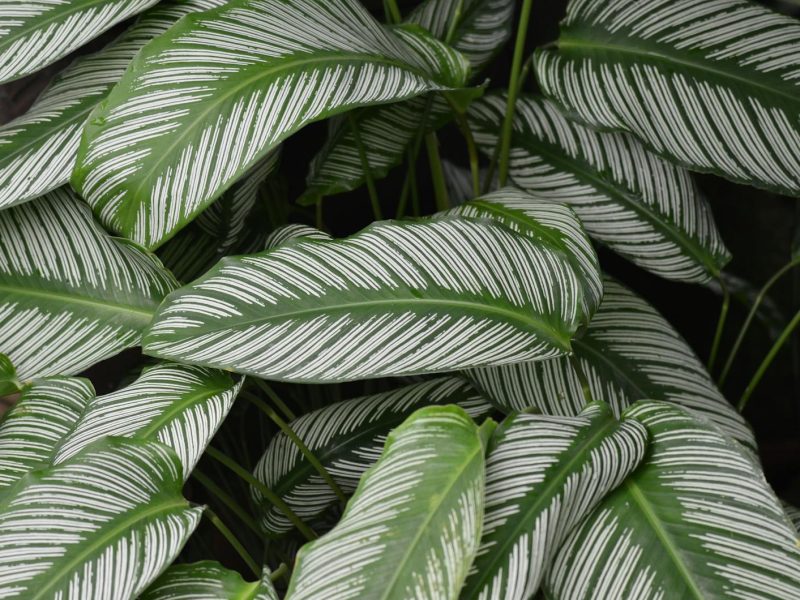
This is where I got burned early. Calatheas and marantas get sold as low-light plants because they scorch in direct sun. That is a completely different problem from dim rooms. A Calathea orbifolia at 50 foot-candles will hold on for months, then start dropping older leaves, then decline in a way that is hard to reverse. They want 200 to 400 foot-candles of consistent bright indirect light, and they show it within weeks if they are not getting it.
Alocasias are worse. The polly and amazonica hybrids that fill every big-box store come from understory positions in the wild that still receive dappled bright light through canopy gaps. Below 150 foot-candles they enter a slow decline, drop leaves one by one, and often go dormant permanently. I have watched three Alocasia frydeks die politely in the same 60 foot-candle corner where an aglaonema thrived.
Ferns are a mixed case. The nephrolepis Boston fern types want more light than people think, around 200 foot-candles minimum. The exception is the aspidistra, the cast iron plant, which really does tolerate 40 foot-candles and has for the last hundred years of Victorian parlor plant history. It is boring in the best way.
What tolerance actually looks like month by month
A plant in genuinely marginal light does not die dramatically. It does something more depressing: it stops. New growth slows to nothing, then the oldest leaves begin to yellow one at a time, spaced weeks apart. The plant is cannibalizing itself for the mobile nutrients in mature tissue.
Watch for these signals in the first six months, in order of appearance:
- Internodes on new growth stretch noticeably longer than existing sections, sometimes double.
- New leaves emerge smaller than the ones already on the plant, sometimes 40 to 50 percent of normal size.
- Variegation on new leaves shrinks or disappears entirely.
- Petioles lengthen and weaken, so leaves droop or hang.
- The oldest leaves yellow and drop, one every few weeks.
- Growth stops entirely. No new leaves for three or more months.
If you see steps 1 through 3 within a month of moving a plant, the light is inadequate. Move it or add a grow light. Waiting for stage 5 means the plant has already spent its reserves.
Watering changes completely in low light
This is the part almost nobody warns about. Photosynthesis drives transpiration, and transpiration is what pulls water up through the roots. In a dim room, a plant uses a fraction of the water it would in bright light. I have a pothos in a bright window that dries out every 5 days and an identical pothos in the hallway that stays wet for 3 weeks. Same pot, same soil, same volume.
Root rot is the leading killer of low-light houseplants, not lack of light directly. The soil stays wet, oxygen at the roots drops, anaerobic conditions set in, and the fine feeder roots die. Then when you finally water again the plant cannot take it up, and you assume it needs more water, and the cycle accelerates.
- Use a chunkier substrate than you would in bright light, with 20 to 30 percent perlite or pumice added to standard potting mix.
- Weigh the pot when freshly watered and again when the plant is thirsty. That weight difference is your true watering signal, not a moisture meter that reads only the top inch.
- Terracotta pots help in dim rooms because they lose water through the walls. Plastic or glazed ceramic holds moisture too long.
- Skip fertilizer entirely from October through February in low light. There is no growth to fuel and salts accumulate in the wet soil.
- Check for fungus gnats weekly. Their presence is the earliest sign your soil is too wet for the light level.
When a grow light is the honest answer
I resisted grow lights for years because I liked the aesthetic of a plant living naturally in a room. Then I put a small 15-watt LED bar over the hallway shelf and every plant there started actually growing. The University of Maryland Extension has a useful overview of indoor plant lighting that covers photoperiod and intensity in plain terms.
A modest 20-watt full-spectrum LED positioned 12 to 18 inches above the plants, running 10 to 12 hours a day on a timer, adds roughly 300 to 500 foot-candles at leaf height. That single change moves a dim shelf from the survival bracket into the medium bracket, which is where most tropicals actually want to live. The Missouri Botanical Garden’s guide to light requirements for houseplants is worth reading if you want to match specific species to bracket.
The bill is trivial. A 20-watt fixture running 12 hours a day at average US electricity rates costs roughly 90 cents a month.
The rooms where nothing tropical belongs
Windowless bathrooms, interior closets, basements without windows, offices with only overhead fluorescents. I have tried. The overhead fluorescent case is the most interesting failure: standard office ceiling lights read 25 to 40 foot-candles at desk height, which sounds workable, but the spectrum is heavy in the wrong wavelengths and plants use very little of it. A pothos on an office desk survives on the ambient daylight from distant windows, not the overhead tubes.
The honest answer for those rooms is a small LED grow light, or artificial plants, or accepting the room is not a plant room. Trying to force a calathea into a dim corner because the corner needs greenery is how you kill plants and blame yourself.
Frequently asked questions
Can artificial light from a lamp count as plant light?
A standard household LED bulb produces roughly 20 to 60 foot-candles at typical distances, which is not enough alone but genuinely adds to whatever daylight is present. If a plant sits under a desk lamp that runs 8 hours in the evening, the cumulative daily light integral goes up meaningfully. It is not a replacement for a window, but it is not nothing either.
Why did my low-light plant do fine for a year and then decline?
Seasonal light change is usually the answer. Winter light in most of the northern hemisphere is 50 to 70 percent dimmer than summer light in the same room. A plant that was borderline in July drops below its survival threshold by January and starts using reserves. The decline shows up in February or March. Rotate marginal plants to brighter rooms from October through February, or add supplemental light for those months only.
Is a north-facing window low light?
Not usually. A large unobstructed north window can read 200 to 400 foot-candles right at the glass, which is medium bright. The confusion is that north light lacks direct sun, so it feels dimmer to the eye. Most so-called low-light plants are perfectly happy at a north window. The dim spots are interior walls, hallways, and rooms with small or obstructed windows.
Will a variegated plant lose its variegation in low light and get it back later?
The leaves that already exist will not change. New leaves that grew during the low-light period stay reduced in variegation permanently. Once you move the plant back to brighter conditions, new emerging leaves will express their original pattern again. So the plant does recover, one new leaf at a time.
Do smart light meters or apps actually work?
The free light meter apps on a modern phone are accurate within about 20 percent of a dedicated meter, which is fine for this purpose. The important thing is comparing readings over time in the same spot, not the absolute number. Take a reading in your brightest spot and your dimmest spot on the same day and you have a working map of your home’s light.
Frequently asked questions
What is the best tropical foliage plant for low light?
Among tropical-style plants, Pothos and Heartleaf Philodendron are the most reliable in low light. For genuinely low-light positions, Aspidistra, ZZ plants, and Snake plants are even better — though not strictly tropical.
Will Calathea grow in low light?
Most Calatheas struggle in low light. They survive but produce smaller, paler leaves, often lose patterning, and decline over time. They need at least moderate filtered light to thrive.
Can I use a grow light to make low light spaces work?
Yes — a moderate LED grow light running ten to twelve hours daily effectively converts low-light spaces into moderate-light territory. This is the most reliable way to grow tropical foliage in dim spaces.
Why do plants lose their variegation in low light?
Variegated plants need more light because their white or pale sections cannot photosynthesize. The plant produces less variegation in low light to maximize energy production. Restoring light usually restores variegation gradually.