My Philodendron atabapoense arrived in a soggy plug of peat with two leaves and a fresh scar where a third had abscised in transit. Nothing about it looked like the photos that convinced me to spend the money. The undersides were a dull maroon, the petioles were bent, and the growth point had that pale, waterlogged look that usually precedes a rot call. Two years later that same plant is throwing 22 inch leaves with a saturated orange reverse, and I have opinions about how it got there.
Atabapoense is one of the more forgiving of the elongate-leaf Venezuelan philodendrons, but forgiving is not the same as easy. It will tolerate a lot, and then quietly stop growing for six months if you get one variable wrong. Most of the underwhelming plants I see in collector groups are not sick. They are simply not climbing, not warm enough, or drinking out of a substrate that went anaerobic in month three.
What atabapoense actually is
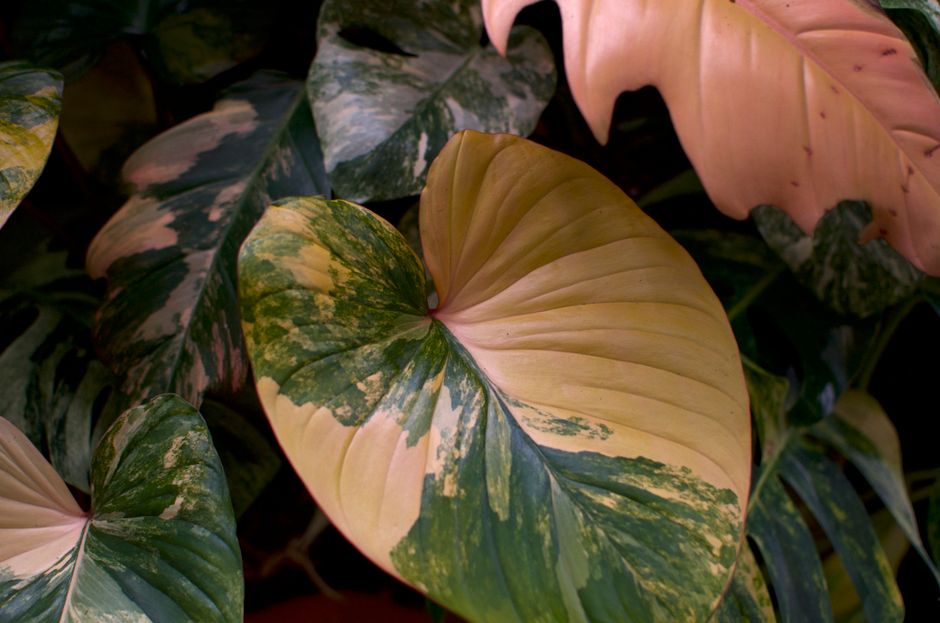
Philodendron atabapoense was described from the Rio Atabapo drainage on the Venezuela-Colombia border, and the type material shows the same features growers prize: a lance-shaped blade, a slight sinuate margin on mature leaves, and a striking anthocyanin flush on the abaxial surface that ranges from burnt orange to plum depending on light and clone. It is a hemiepiphyte, meaning it germinates on the forest floor and climbs, so the leaves you get on a windowsill in a nursery pot are juvenile. The plant does not show its adult character until it is anchored to something vertical and reaching for canopy light.
This matters more than any care advice. I kept mine as a hanging trailer for eight months out of stubbornness and got small, dull leaves with barely any color on the reverse. The week I strapped it to a moss pole, the next leaf came in almost double the size, and the underside deepened by two full shades within a month of hardening off. If you want the orange, you need a support. That is not optional.
Light that produces the color
The anthocyanin pigments responsible for that orange reverse are, in part, a stress response to bright light. Grown too dim, atabapoense leaves come in muddy and green-backed. Grown too bright, they bleach and the tops crisp. The window is narrower than for a heart-leaf philodendron.
In my apartment, the plant sits about 30 inches off an east-facing window with a sheer panel, and it gets a supplemental Sansi 24 watt bulb on a timer from November through February. Measured with a cheap meter, that works out to roughly 250 to 400 foot-candles at leaf level for 12 hours a day. Under those conditions the new leaves emerge lime green on top and a translucent salmon underneath, then deepen over about three weeks. Push the light much higher and the color intensifies, but so does water demand, and any lapse in humidity shows up as a burned tip within days.
Substrate that stays open for a year
I have re-potted this plant three times, and each mix taught me something. The current recipe has held for 14 months with no compaction and no rot, which is longer than any peat-based blend I tried before.
| Component | Ratio | What it does |
|---|---|---|
| Fine orchid bark (1/4 inch) | 4 parts | Structure, air, slow breakdown |
| Perlite (chunky) | 2 parts | Drainage, root channels |
| Coco chips, rinsed | 2 parts | Water retention without waterlogging |
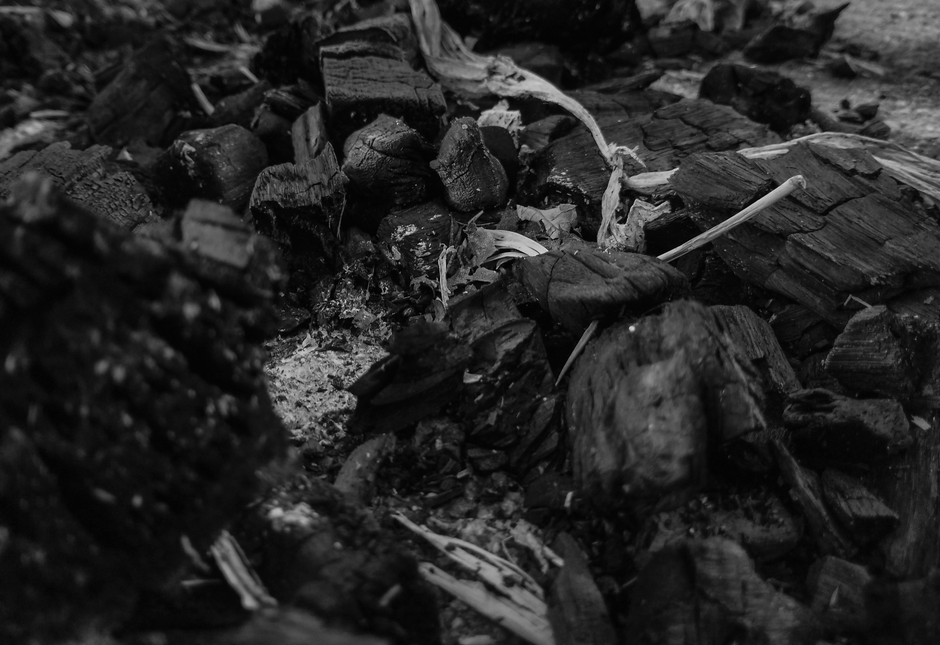
| Horticultural charcoal | 1 part | Buffering, keeps things sweet |
| Worm castings | 0.5 part | Slow nitrogen, microbial life |
The pot is a 6 inch nursery pot with extra side holes cut with a soldering iron. I water when the top two inches read dry on a wooden skewer, which in summer is every four days and in winter closer to every nine. The mix drains in under 15 seconds when I flush it, and that speed is the single best indicator that the roots are still getting oxygen.
Humidity, temperature, and the moss pole
Atabapoense wants warmth. Below 62 F it sulks, and I have watched a leaf that was two weeks from unfurling simply stall for a month when a cold snap dropped my grow shelf to 58 F overnight. The comfortable range in my notes is 68 to 82 F, with the best growth between 74 and 78.
Humidity is where most people undershoot. Ambient room humidity of 45 percent will keep the plant alive, but leaves come in smaller and the aerial roots refuse to attach to the pole. I run a small ultrasonic humidifier on a hygrostat set to 65 percent, and the plant returns the favor by rooting into the sphagnum within about ten days of a new leaf hardening off. The pole itself is a stack of two 24 inch sphagnum modules, and I mist the top of the pole (not the leaves) every morning to keep it damp enough for the roots to grip.
Fertilizer and water quality
I feed dilute, often, and with an eye on the runoff. My schedule from March through October:
- Weekly watering with Dyna-Gro Foliage Pro at 1/4 teaspoon per gallon (roughly 100 ppm nitrogen).
- Every fourth watering is plain water only, to flush accumulated salts.
- Once a month I add a pinch of Osmocote Plus to the top of the pole where the aerial roots are feeding.
- In winter I halve the concentration and skip the pole feed entirely.
Tap water in my building runs about 180 ppm with moderate chloramine, and atabapoense tolerates it, but new leaves come in noticeably larger when I switch to filtered water for a month. If you are on well water above 300 ppm, I would filter as a default.
Troubleshooting from my notebook
These are the problems I have actually seen on this plant, in the order they show up for most people:
- Small new leaves, dull backs. Not climbing, or light too low. Give it a pole and move it closer to the window.
- Brown crispy edges on new growth. Humidity crashed while the leaf was still soft. Check your humidifier reservoir, not your watering.
- Yellow lower leaf, no other symptoms. Normal senescence after a new leaf hardens. Only worrying if two or more go at once.
- Black petiole at soil line, mushy base. Root rot from a compacted mix. Unpot immediately, cut to clean tissue, re-root in damp sphagnum.
- Aerial roots refusing to attach. Pole is dry or the plant is not tied close enough. Use plant velcro, not twine.
- Pale, stretched petioles. Etiolation from insufficient light. Add a supplemental bulb before you lose the next leaf to weak structure.
Propagation and long-term shape
I have propagated atabapoense twice, both from single-node cuttings taken above an active aerial root. The cuttings went into a deli container of damp long-fiber sphagnum with the lid cracked, sat on a heat mat at 78 F, and both had two inches of new root within three weeks. Water propagation works but the transition to soil is harder, and I have lost cuttings that way that would have made it in sphagnum.
Long-term, this is a plant that wants to keep climbing. Mine is on its second pole extension and will need a third by next spring. When it eventually outgrows the wall, I plan to top it, root the top, and start the mother over from the base. The stump almost always throws a new growth point within a season, so you rarely lose a mature plant when you cut it back. For general aroid climbing guidance the International Aroid Society has a useful set of cultivation notes, and the Missouri Botanical Garden profile on the genus is worth reading if you want the botanical background.
Is it worth the money
Prices on atabapoense have come down considerably from where they were three years ago, and a rooted cutting now sits in the range of a nice monstera adansonii rather than a rare aroid. For the price, you get a plant that grows steadily, holds interest through its color, and rewards attention to the fundamentals without demanding a Wardian case. That is a rare combination in this hobby, and I would recommend it over most of the trendier philodendrons for a collector who wants to actually see leaves get bigger over time.
Frequently asked questions
Why is the underside of my atabapoense green instead of orange?
The orange reverse is a light-driven anthocyanin response. If your plant is producing green-backed leaves, it is almost certainly getting too little light, and the pigmentation will develop over the following one or two leaves once you brighten the position. Juvenile leaves also show less color than mature ones, so a young plant just off a cutting may take three or four new leaves before the reverse deepens.
Can Philodendron atabapoense grow without a moss pole?
It can survive as a trailer but it will not mature. The leaves stay small, the internodes lengthen, and the color on the underside remains muted. Any vertical support with a damp surface for the aerial roots to grip works, but a sphagnum pole gives the fastest and most dramatic size progression.
Is atabapoense the same as Philodendron billietiae?
They are related but distinct species. Billietiae has bright orange petioles and a wavier leaf margin, while atabapoense has darker petioles and its color feature is the leaf reverse rather than the stem. The two are sometimes confused in the trade, and a few sellers have marketed hybrids as either species, so buy from a source that photographs mature growth.
How often should I repot?
Every 12 to 18 months in a chunky aroid mix, or as soon as the substrate starts breaking down and staying wet longer than three days. Do not size up more than one pot diameter at a time, since atabapoense roots prefer to fill their space rather than sit in surplus wet mix.
Is it toxic to pets?
Yes, like all philodendrons it contains insoluble calcium oxalate crystals that cause oral irritation if chewed. Keep it out of reach of cats and dogs, and rinse hands after handling cut stems, since the sap can irritate sensitive skin as well.
]]>Frequently asked questions
Why is my aroid's new leaf smaller than the previous one?
Most often light, humidity, climbing support, or substrate health. Check these in order. A single smaller leaf may be noise; three smaller leaves in a row is a clear signal to act.
Will the small leaves stay small forever?
Existing leaves do not grow larger after they harden off. But future leaves will reflect improved conditions. If you address the cause, leaf size will return to normal over two to three growth cycles.
Can a moss pole really change leaf size that much?
For climbing aroids, yes. Without a support, climbing species produce juvenile-form leaves indefinitely. With a damp moss pole and proper attachment, leaves transition to mature form and increase in size within a few growth cycles.
Does fertilizer make aroid leaves bigger?
Moderately and only when the plant is otherwise well-supplied. Fertilizer is not a substitute for adequate light, humidity, or substrate. Over-fertilizing causes salt buildup that hurts root function and can produce smaller leaves over time.