My Philodendron splendid arrived in a wet sphagnum bag with two leaves and a single aerial root the length of my little finger. That was long enough ago that the original leaves have since browned and dropped, replaced by four generations of larger, glossier, more veined foliage. Living with this hybrid has taught me more about matching a plant to a room than any pristine specimen ever did.
The splendid is a cross between Philodendron verrucosum (the fuzzy-petioled, velvet-leaved climber from Ecuador) and Philodendron melanochrysum (the long, sooty-black velvet from Colombia). It inherits size from one parent, patterning from the other, and a strong preference for warm, humid air from both. What it does not inherit is the fragility people expect. Mine has survived a broken humidifier, a week of 55F night temperatures, and an accidental repotting into pure coir. It sulked, but it did not die.
Why the splendid earned a spot in my shelves
I chose it over a straight verrucosum for a practical reason: the hybrid leaves harden faster. My verrucosum has always needed 80% relative humidity to unfurl a leaf without pinholes. The splendid, in my experience, will push a full leaf at a steady 65% as long as night temperatures stay above 62F. That gap matters when you live in a place with dry winters and no dedicated grow tent.
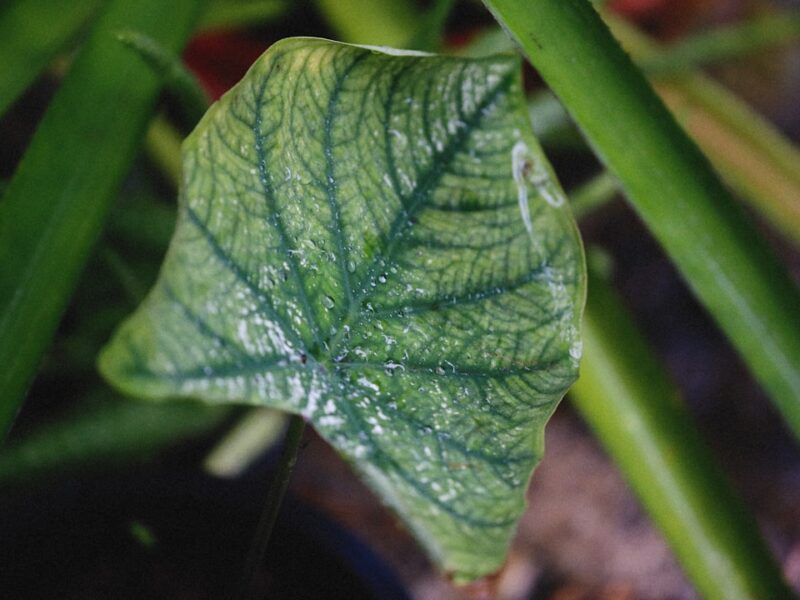
The leaf itself is what sells the plant. New growth emerges a coppery pink, then hardens to a deep matte green with pale cream primary veins that stand up under raking light. The petiole keeps a faint red fuzz from the verrucosum parent, which I find charming and my cats find fascinating.
Light: bright, but never direct after 10 a.m.
Velvet-leaved philodendrons scorch at levels a pothos would shrug off. My splendid sits about 40 inches east of a north-facing window in summer, and I move it to within 18 inches of the same window from October through March. When I metered it during a bright July afternoon, the leaves were receiving roughly 180 to 220 foot-candles, which sounds low but is exactly where the plant seems happiest.
If you rely on grow lights, aim for around 100 to 150 PPFD at the top leaf for a 12-hour photoperiod. I use a single 24W full-spectrum bar suspended 22 inches above the pole. When I once dropped it to 14 inches, the newest leaf came in half-sized and the older velvet looked bleached within three weeks.
The moss pole did more than any fertilizer
For the first year, I grew this plant on a bare bamboo stake and got leaves the size of a playing card. Switching to a 4-inch-diameter sphagnum pole, kept damp with a top-watering routine, roughly tripled the size of subsequent leaves. Aerial roots grip the moss within a week if the surface stays consistently moist but not sopping.
My watering rhythm on the pole looks like this:
- Every third morning, I pour about 150 ml of room-temperature rainwater slowly over the top of the pole.
- I wait five minutes for the sphagnum to swell.
- I feel the base of the pole; if it is merely damp rather than wet, I add another 50 ml.
- Once a week I include a quarter-strength balanced fertilizer (around 50 ppm nitrogen) in the pole water so the roots feed as they climb.
The plant has put out a new leaf every 26 to 34 days on this schedule, measured from cataphyll emergence to fully hardened lamina.
Substrate and the pot itself
I keep the roots in a chunky aroid mix that drains within seconds. My current recipe is four parts orchid bark, two parts perlite, one part coco chips, and one part horticultural charcoal, with a small handful of worm castings mixed through. The pot is a 6-inch net pot sitting inside a taller ceramic cover pot, which lets me lift the whole root ball out and inspect it monthly without repotting stress.
Root temperature matters more than people credit. When my winter floor dropped to 60F, I set the cover pot on a small seedling heat mat and the growth rate visibly recovered within two weeks. The mat only pulls 8 watts, so the electricity cost is negligible.
Splendid versus its parents at a glance
| Trait | P. verrucosum | P. melanochrysum | P. splendid (hybrid) |
|---|---|---|---|
| Mature leaf length | 10 to 14 inches | 24 to 36 inches | 18 to 26 inches |
| Ideal humidity | 75 to 85% | 70 to 80% | 60 to 75% |
| Petiole texture | Densely fuzzy, red | Smooth, slightly grooved | Lightly fuzzy, pink-red |
| Vein contrast | Cream over green | Pale gold over black-green | Cream over deep green |
| Beginner tolerance | Low | Medium | Medium-high |
Those humidity numbers come from my own hygrometer readings across three winters, cross-referenced with the general velvet-philodendron guidance published by the Missouri Botanical Garden and the culture notes at the Royal Horticultural Society.
What tends to go wrong, and what actually fixes it
Most splendid problems I have caused myself, and they cluster around three mistakes.
- Pinhole leaves. Air was too dry during unfurling. I now run a small ultrasonic humidifier on a timer from 4 a.m. to 10 a.m. so the humidity is highest during the plant’s active growth window.
- Crispy leaf edges. Almost always fertilizer salt build-up. I flush the substrate with three pot-volumes of plain water every eight weeks.
- Yellow lower leaf with a black petiole base. Root damage from a soggy pocket in the mix. I let the top two inches dry to bone, then unpot and inspect. If the roots smell sour, I trim, dust with cinnamon, and repot into fresh, drier bark.
- Aerial roots refusing to grip. The pole surface is too dry. Misting daily rarely fixes it; top-watering the pole does.
- Faded, washed-out velvet. Too much light. I move the plant six inches back and the color deepens within a month.
For pest pressure, thrips are the enemy of every velvet philodendron I own. A weekly leaf inspection under a hand lens catches them before they scar the newest leaf. When I find them, I wipe both leaf surfaces with a soft cloth dipped in 0.5% insecticidal soap, repeat in five days, and again in ten. Predatory mites work too, but only if humidity stays above 60%.
Propagation notes from actual attempts
I have taken three cuttings from my splendid over the years. The most reliable method has been a single-node cutting with one leaf, laid horizontally on damp sphagnum inside a clear takeaway container, lid cracked open a finger’s width. Roots appeared in 18 to 22 days at 74F. I have never had success rooting a splendid cutting in water; the petiole rotted every time before roots formed.
Once roots reach about two inches, I pot the cutting into a small net pot of pure long-fiber sphagnum and keep it inside a clear bag for another three weeks, opening the bag longer each day to acclimate the young leaf to room humidity.
Frequently asked questions
Is Philodendron splendid the same as Philodendron verrucosum x melanochrysum?
Yes, splendid is the informal name for that specific hybrid cross. It is not a registered cultivar with a trademarked designation, which is why you will occasionally see it sold under either parent’s name at inflated prices. Ask a seller for a clear leaf photo showing the pale cream veining and the faintly fuzzy petiole before you buy.
Will it survive without a humidifier?
It will survive, but new leaves will often emerge with pinholes or torn edges below about 55% relative humidity. If you cannot add a humidifier, group it with other tropical plants and place a wide tray of pebbles and water beneath the pot. That combination raises local humidity by roughly 10 percentage points in my apartment.
How fast does it grow indoors?
On a damp moss pole with adequate light, expect one new leaf every four to five weeks during the growing season and one leaf every eight to ten weeks in winter. Each new leaf is usually 15 to 25% larger than the previous one until the plant reaches the top of its support.
Is it toxic to pets?
Yes, like all philodendrons, the leaves contain insoluble calcium oxalate crystals that irritate the mouth and throat if chewed. The ASPCA lists philodendron as toxic to cats and dogs. I keep mine on a shelf my cats cannot reach and have never had an incident.
Can I keep it in a bathroom?
A brightly lit bathroom can work well if temperatures stay above 65F at night and the plant is not sprayed with soap or shampoo residue. The higher ambient humidity reduces the need for a humidifier considerably. Just make sure the window is not east or west facing with unfiltered afternoon sun.
What I keep coming back to with this plant is how forgiving it is compared to its reputation. Give it a damp pole, moderate light, and a mix that drains fast, and the splendid will reward small attentions with leaves that look almost embossed.
Frequently asked questions
Why are my Monstera adansonii leaves so small?
Usually low light, no climbing support, or low humidity — sometimes all three. Adansonii produces small juvenile leaves indefinitely in suboptimal conditions. Improve the conditions and new leaves will come in larger within a few growth cycles.
Why does my adansonii have no holes?
Fenestrations develop only on mature growth, which requires sufficient light and a climbing support. Hanging basket adansoniis rarely fenestrate. Move the plant to a moss pole with better light and watch for holes to appear over time.
Can I grow adansonii in a hanging basket?
You can, and many people do. The plant survives but does not mature — leaves stay small, no fenestrations form. If you want the dramatic mature foliage, grow it on a moss pole instead.
How much light does Monstera adansonii really need?
Bright filtered indirect light at minimum — more than many "easy care" plants. About a meter from an east or west window with sheer curtain, or two to three meters from a south-facing window. A grow light works if natural light is insufficient.