My first Dragon Scale arrived in November, wrapped in three layers of paper and a heat pack that had gone cold somewhere over Ohio. I unboxed a plant with two perfect leaves and a corm the size of a hazelnut, and within eleven days it had dropped both leaves and gone dormant. I spent the next four months convinced I had killed a 65 dollar plant. In March it pushed a cataphyll, then a leaf, and it has not stopped growing since. That plant taught me more about Alocasia baginda than any care guide I had bookmarked, and most of what it taught me contradicts what beginners are told online.
This is the article I wish someone had handed me before that first order. I collect roughly forty aroids, four of them Dragon Scales at different maturity stages, and I want to give you a plainspoken account of what this plant actually needs, where the common advice gets it wrong, and how to tell the difference between a plant that is dying and one that is simply doing what Alocasias do.
What you are actually buying
Alocasia baginda “Dragon Scale” is a lithophytic aroid from the limestone karsts of Borneo, first described in the botanical literature in 2013. In the wild it grows on shaded rock faces where its roots run through leaf litter and moss rather than deep soil, and its leaves are held nearly horizontal to catch dim, filtered light. That single sentence explains almost every quirk of its care.
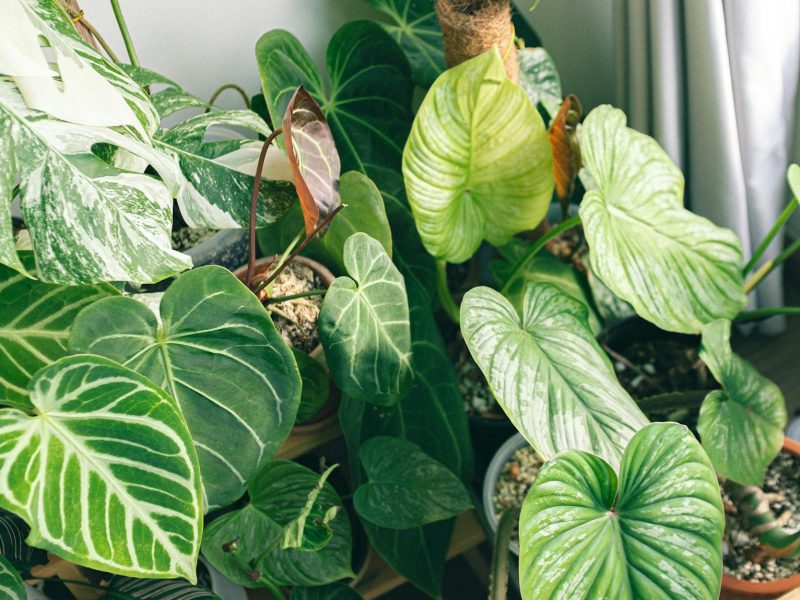
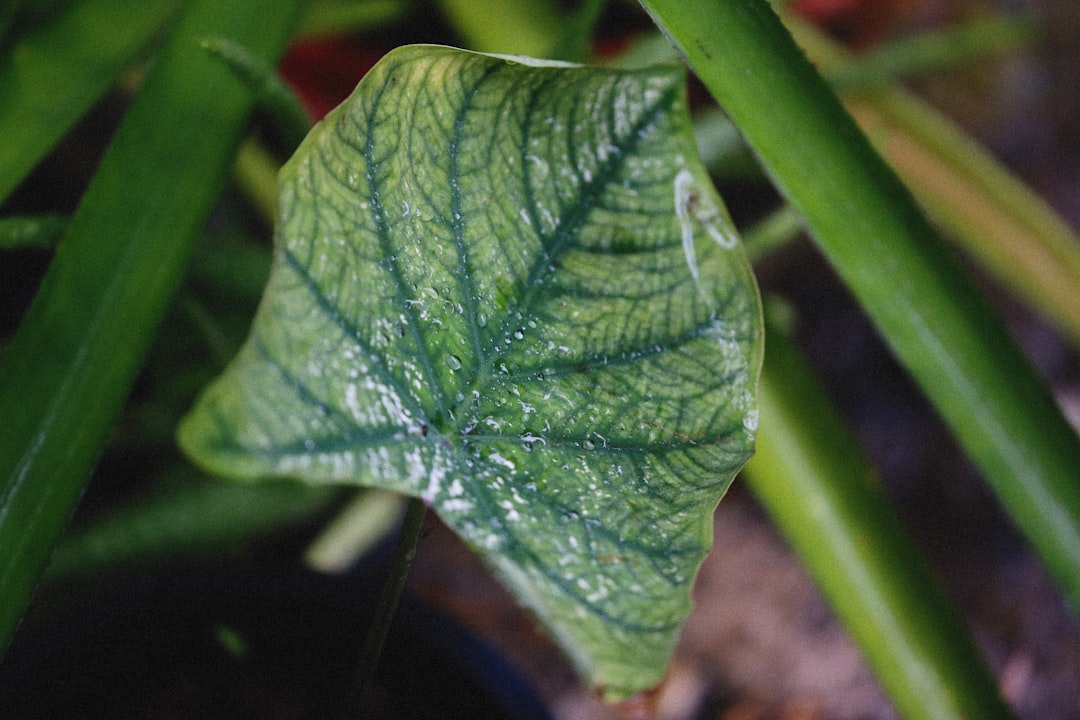
The silvered, quilted leaves that make the plant famous are the mature form. Young plants often produce two or three plain-looking green leaves before the scaling appears, and I have seen new collectors return perfectly healthy juveniles because they assumed the vendor sent the wrong species. Give it four to six leaves before you judge the pattern.
The five conditions that actually matter
Forget the generic “bright indirect light and well-draining soil” line. Dragon Scale is fussier than that, and it is fussy in specific, testable ways. Here is what I check before I even unbox a new one.
- Root temperature above 65 F (18 C) at all times. Cold roots are the single most common killer. A room at 72 F can still have a substrate sitting at 60 F near a window in January.
- Humidity of 65 percent or higher, stable. Spikes and crashes stress this plant more than a steady 60 percent would.
- A chunky, mineral-heavy substrate that dries in 5 to 7 days. Not peat. Not standard aroid mix out of the bag.
- Filtered light at roughly 150 to 300 PPFD. Bright shade, not the sunny window most guides suggest.
- Water that is neither cold nor heavily chlorinated. Room-temperature rainwater or dechlorinated tap, always.
Miss any two of these and the plant will go dormant on you. Miss three and the corm will rot before you notice.
The substrate I have settled on after four tries
I have killed enough Dragon Scales in peaty mixes to speak with some authority here. What works for me, measured by volume:
| Component | Proportion | Why it earns its place |
|---|---|---|
| Pumice, 6 to 10 mm | 35 percent | Weight, drainage, mineral surface for roots to grip |
| Orchid bark, fine grade | 25 percent | Air pockets, slow breakdown, mild acidity |
| Coco chips, rinsed | 15 percent | Moisture buffering without compaction |
| Perlite, chunky | 15 percent | Aeration insurance |
| Worm castings | 5 percent | Slow nutrient release, microbial life |
| Horticultural charcoal | 5 percent | Odor control, minor cation exchange |
Rinse the coco chips twice in warm water before mixing. Unrinsed coir carries sodium and potassium salts that push potted Alocasias toward tip burn within a month. This mix drains fully in under ten seconds when I water, and it dries top-down over about six days in my 68 percent humidity room.
Light, honestly
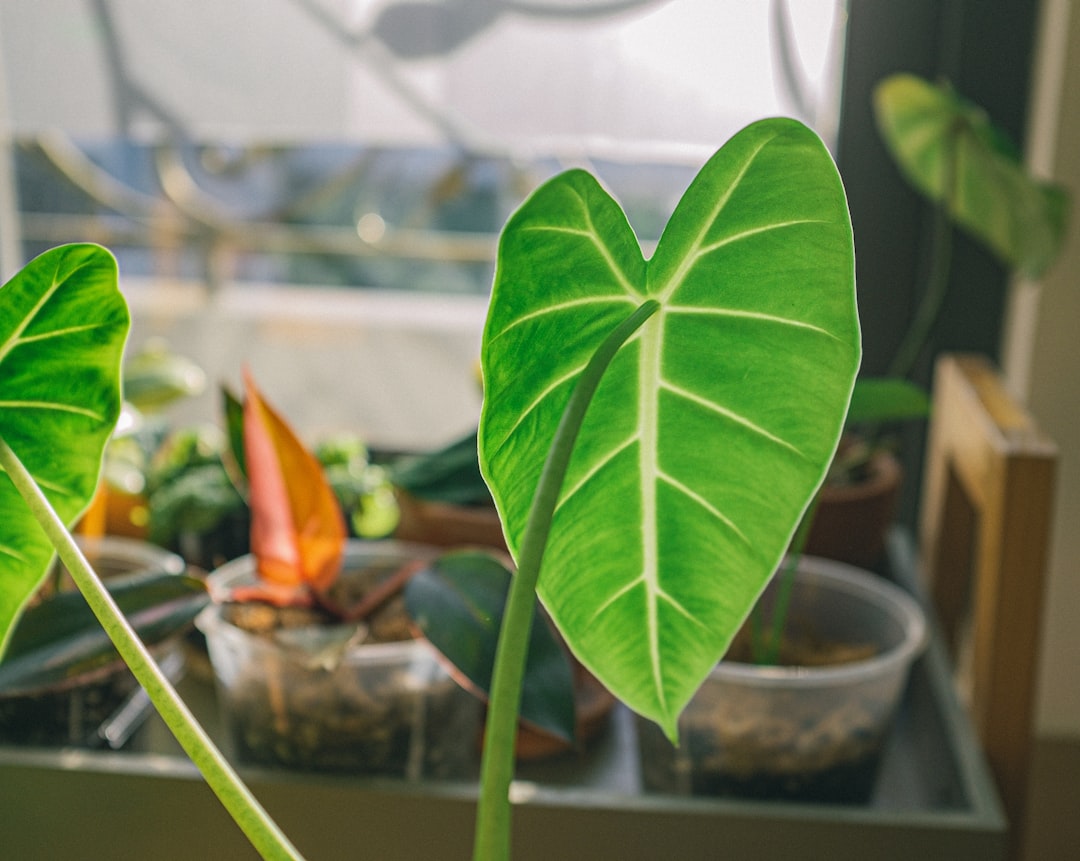
The single most repeated bad advice online is that Dragon Scale wants “bright indirect light.” That phrase is meaningless without a number. In practice, my healthiest specimens sit at roughly 200 to 250 PPFD measured with a cheap Apogee-style meter, which corresponds to two or three feet back from an east window with a sheer curtain, or directly under a 30 watt LED bar running twelve hours a day.
Below about 120 PPFD the plant survives but leaves emerge smaller each cycle and the silver scaling looks flat. Above 400 PPFD the leaf surface bleaches to a pale silver-green and the edges crisp within a week. There is a real, narrow window, and finding it is worth the twenty dollars a meter costs.
Water, the way this plant actually likes it
Dragon Scale does not want to dry out completely and it does not want to sit wet. That sounds impossible until you feel the substrate. I water when the top third of the pot is dry to a bamboo skewer but the bottom third still holds cool moisture. In a 4 inch nursery pot in my conditions, that lands at roughly day 5 or 6 after a thorough soak.
Water temperature matters more than most people realize. Cold water hitting a warm root system triggers the same shock response as a cold snap outdoors, and repeated cold waterings are what push otherwise healthy plants into unexplained dormancy in winter. I keep a jug of rainwater on the shelf below the plant so it comes to ambient temperature naturally.
- Water at or near room temperature, never straight from a cold tap
- Flush the pot fully every third watering to prevent salt buildup
- Empty the saucer within twenty minutes; no exceptions
- Skip a watering rather than force one when the plant is between leaves
- Never mist the foliage; the silvered surface holds droplets that invite fungal spotting
Fertilizer and the corm question
I feed at quarter strength with a balanced synthetic liquid, roughly 5-5-5 or 3-1-2 with micronutrients, every second watering during active growth. Full strength scorches the fine root hairs within two feedings, and I have seen it happen even with reputable brands. In winter I drop to a monthly feed at eighth strength, or nothing at all if the plant has slowed.
The corm is worth understanding. Below the soil line, Dragon Scale stores energy in a small, potato-like structure that can survive complete leaf loss and regrow the plant months later. If yours drops every leaf, do not throw the pot away. Reduce watering to once every two to three weeks, keep the substrate barely damp and warm, and wait. Guidance from the International Aroid Society on Alocasia dormancy is consistent with what I have observed at home: patience recovers more plants than intervention does.
The pest that will find you
Spider mites love this plant. The quilted leaf surface gives them shelter from wiping and from most contact miticides, and the low airflow that keeps humidity high is exactly what they thrive in. I inspect the underside of every leaf under a jeweler’s loupe once a week, looking for the pale stippling that shows up before you can see the mites themselves.
My working protocol, refined over three infestations:
- Isolate the plant the moment you see stippling, not after you confirm mites
- Shower the foliage with room-temperature water, top and bottom, to knock down the population
- Apply a systemic containing spirotetramat or a rotation of horticultural oil and insecticidal soap every 5 days for three cycles
- Raise humidity above 70 percent during treatment; mites tolerate dryness better than the plant does
- Quarantine for a full 21 days after the last visible mite, because eggs hatch on that timeline
Thrips are the secondary concern, and they leave silvery scars that mimic natural variegation until you look closely. The UC IPM guide on thrips is my reference when I need to identify the species and match a treatment.
Repotting without triggering dormancy
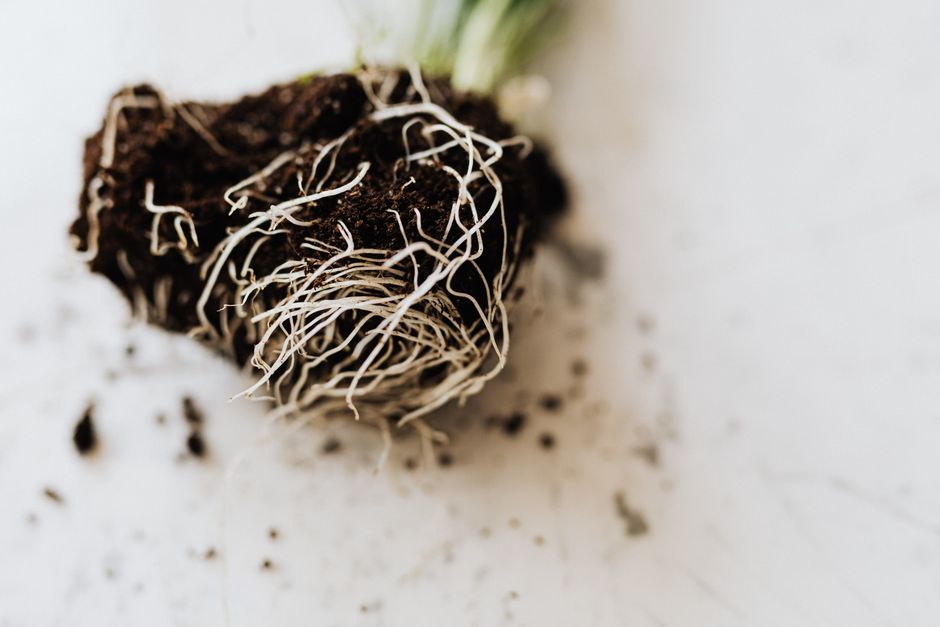
Dragon Scale hates root disturbance. I repot only when I see roots circling the drainage holes or when the substrate has broken down enough to stay wet longer than a week. My last repot moved a plant from a 4 inch to a 5 inch nursery pot, and I lost one leaf a week later even with careful handling. That is normal. The plant compensated within a month.
Repot in late spring when growth is active and warmth is reliable. Slip the root ball out gently, tease away only the substrate that falls off on its own, and set it into fresh mix at the same depth. Do not water for 48 hours; the small tears in the fine roots need time to callus, and immediate watering invites bacterial soft rot.
A note on toxicity and household placement
All Alocasias contain insoluble calcium oxalate crystals throughout the leaves, stems, and corm. Chewing any part causes intense oral irritation, drooling, and swelling in pets and small children, and the ASPCA lists Alocasia as toxic to cats and dogs. I keep mine on a shelf my cat cannot reach, and I have never regretted that caution.
Reading the plant’s signals
| What you see | What it usually means | What I do |
|---|---|---|
| Oldest leaf yellows evenly | Normal turnover as a new leaf emerges | Let it drop on its own |
| New leaf smaller than the last | Insufficient light or nutrition | Move closer to light, resume feeding |
| Brown crispy edges | Low humidity or salt buildup | Flush the pot, raise humidity |
| Wet, translucent yellowing at the base | Corm rot from cold or overwatering | Unpot immediately, inspect corm |
| All leaves drop within a week | Shock, cold, or seasonal dormancy | Reduce water, keep warm, wait |
| Sticky residue on leaf undersides | Guttation or scale insects | Wipe, inspect with loupe |
Is Dragon Scale a beginner plant? Honestly, no
I want to end here because most guides dodge this question. Dragon Scale is not impossible, but it is not a starter aroid. If you have kept a Philodendron gloriosum or a Monstera adansonii alive and thriving for a year, you have the observational habits this plant needs. If your last houseplant was a pothos that survived by luck, buy a smaller, cheaper Alocasia baginda in the plainer form first, or start with Alocasia zebrina, which is more forgiving.
The plant rewards attention. Once it settles, it will push a new leaf every three to five weeks in warm months, and the mature leaves will hold for six to nine months before yellowing. That is a slow return on a fast investment of care, and I think that is exactly the point of collecting rare aroids in the first place.
Frequently asked questions
Why is my Dragon Scale not showing the scaled pattern yet?
Juvenile leaves are almost always plain green with faint veining. The characteristic quilted silver pattern typically emerges on the fourth to sixth leaf as the plant matures, and it deepens with each subsequent leaf. Sufficient light also matters; plants in dim corners produce flatter, less pronounced scaling even on mature foliage.
Can I grow Dragon Scale in a semi-hydro setup like LECA?
Yes, and many collectors have excellent results with it. LECA solves the drainage question completely, but you must maintain water temperature above 65 F and use a proper hydroponic fertilizer with calcium and magnesium included. The transition from soil to LECA is when most losses happen; do it in warm months and expect to lose a leaf or two while the plant grows water roots.
How do I know if my Dragon Scale is dormant or dying?
Gently unpot and look at the corm. A dormant corm is firm, cream to pale tan, and shows no soft spots or foul smell. A dying plant has a mushy, discolored corm and often a sour or fermented odor. If the corm is firm, repot into barely damp substrate, keep it at 70 F or warmer, and wait; new growth can take two to four months.
Is bottom watering better for this plant?
I bottom water occasionally to encourage deep root growth, but not exclusively. Bottom-only watering concentrates salts at the top of the substrate over time, and Alocasias are sensitive to that buildup. Alternate: bottom water twice, then top water with a full flush the third time.
How much should I expect to pay for a healthy specimen?
As of my last purchases, small rooted plants with three to four leaves run between 35 and 75 US dollars from reputable sellers, and larger established specimens with fully scaled leaves reach 150 dollars or more. Avoid extremely cheap listings from mass marketplaces; they are often unrooted cuttings or corms with no established root system, and the survival rate is poor for anyone still learning the plant.