I bought my first Philodendron serpens as a rooted cutting with three small leaves and a petiole that felt, honestly, like a pipe cleaner. Three years later it has climbed roughly 42 inches up a moss pole in my north-facing plant room, and I have opinions. Most of what gets written about this species leans on the same recycled sentences about it being a “rare climber from the Andes.” That is technically true and practically useless. What follows is what I actually observed, what tripped me up, and what I would tell a friend before they spent $80 on a two-node cutting.
What Philodendron serpens actually is
Serpens is a hemiepiphytic climbing philodendron native to cloud forests in Colombia and Ecuador, generally sitting between 1,200 and 2,200 meters of elevation. The defining feature is the petiole, which is densely covered in soft red-brown hairs that catch the light in a way photographs never quite capture. The leaves themselves are simple, cordate, and matte green with a slightly quilted texture on mature growth. It is often confused with Philodendron nangaritense, which has darker, stiffer bristles, and with several unnamed hybrids sold under the serpens label.
If you want the technical description straight from the source, the Missouri Botanical Garden aroid research pages are the most reliable public reference for the genus. I check them anytime a seller’s photos look suspiciously off-type.
Growth rate: slower than you have been told
Sellers describe serpens as a “moderate grower.” In my conditions it pushes roughly one leaf every 5 to 7 weeks during the warm months (April through September, when my room sits at 74 to 78°F) and effectively stalls from November through February. The plant is not sulking during that pause. It is simply cool enough at night, around 62°F, that it stops committing energy to new growth. When I moved it briefly to a warmer south room in winter one year, it did push a leaf, but that leaf was smaller and thinner than the summer leaves. I do not recommend forcing the issue.
Expect roughly 6 to 9 new leaves per calendar year on a healthy, climbing specimen in a domestic setting. Anyone promising faster growth is either running a greenhouse at 85% humidity year-round or selling you something.
The humidity number that actually matters
You will read that serpens “prefers high humidity.” I want to be more specific because that phrase is why so many collectors kill it. My plant does fine at 55 to 65% ambient humidity as long as the substrate stays consistently moist and the aerial roots have a damp surface to grip. Below 45%, the newest leaf will emerge crumpled, with brown edges that never smooth out.
I stopped chasing 80% humidity after the first year because the trade-off with airflow was worse than the benefit. My current setup:
- Room humidifier set to maintain 60% with a hygrometer placed at pot height, not shelf height (there is often a 10 to 15 point gap between the two)
- A small clip fan running 8 hours a day on the lowest setting to move air across the leaves
- Moss pole misted at the base twice a week, never the leaves
That combination has produced steadier growth than the enclosed cabinet I tried in year one, which gave beautiful leaves and then a bacterial spot outbreak I spent six weeks treating.
Light, soil, and the moss pole question
Serpens takes bright indirect light happily. Mine sits about 4 feet from a north window, supplemented with a 24-watt full-spectrum LED bar running 11 hours a day. Direct afternoon sun through unshaded glass will scorch the leaves within a week; I learned this on a leaf I still have pressed in a notebook as a warning.
Substrate is where I diverge from most care sheets. I use a chunky aroid mix: roughly 40% coconut husk chips, 30% orchid bark, 15% perlite, 10% worm castings, and 5% horticultural charcoal. It drains fast and stays airy for about 18 months before I refresh it. Peat-heavy mixes hold water in a way that suffocates the fine roots serpens produces.
The moss pole is not optional if you want typical mature leaves. This is a climber; a hanging or unsupported specimen will stall and produce progressively smaller leaves. I use a sphagnum-wrapped PVC pole roughly 3 inches in diameter and keep the moss lightly damp. Aerial roots attach within 2 to 3 weeks when conditions are right.
What can go wrong, and what it means
Most problems I have seen (my own and in the collector groups I follow) fall into a short list of patterns. Here is what to look for and what has actually worked:
| Symptom | Likely cause | What to do |
|---|---|---|
| New leaf emerges crumpled with brown edges | Humidity dropped below 45% during unfurling | Raise ambient humidity; do not cut the leaf, it will harden off |
| Yellowing of oldest leaf, firm petiole | Normal senescence, especially in winter | Nothing; remove once fully yellow |
| Yellowing plus mushy petiole base | Overwatering, often in dense substrate | Unpot, inspect roots, repot in chunky mix |
| Small black or brown lesions with yellow halos | Bacterial leaf spot, often from wet leaves and stagnant air | Isolate, remove affected leaves, improve airflow, avoid overhead water |
| Fine webbing on leaf undersides | Spider mites, common in dry winter rooms | Rinse foliage, apply insecticidal soap weekly for 3 weeks |
| New growth pale and small | Insufficient light or exhausted substrate | Move closer to light source or refresh top 2 inches of mix |
Root rot is the single most common cause of death I hear about with this species. The extension service at UW-Madison horticulture has good general guidance on diagnosing root health that I still refer people to when they message me photos of a wilting specimen.
Fertilizing without overdoing it
Serpens is not a heavy feeder. I use a balanced 3-1-2 liquid fertilizer diluted to quarter strength, applied every third watering from April through September, and nothing in the cool months. Once a year, usually in May, I top-dress with a thin layer of worm castings. That is the entire feeding program. I have watched people burn beautiful plants with weekly full-strength synthetic feeds; the leaves develop a dull, papery texture and the roots turn brown at the tips.
Propagation and what to expect from cuttings
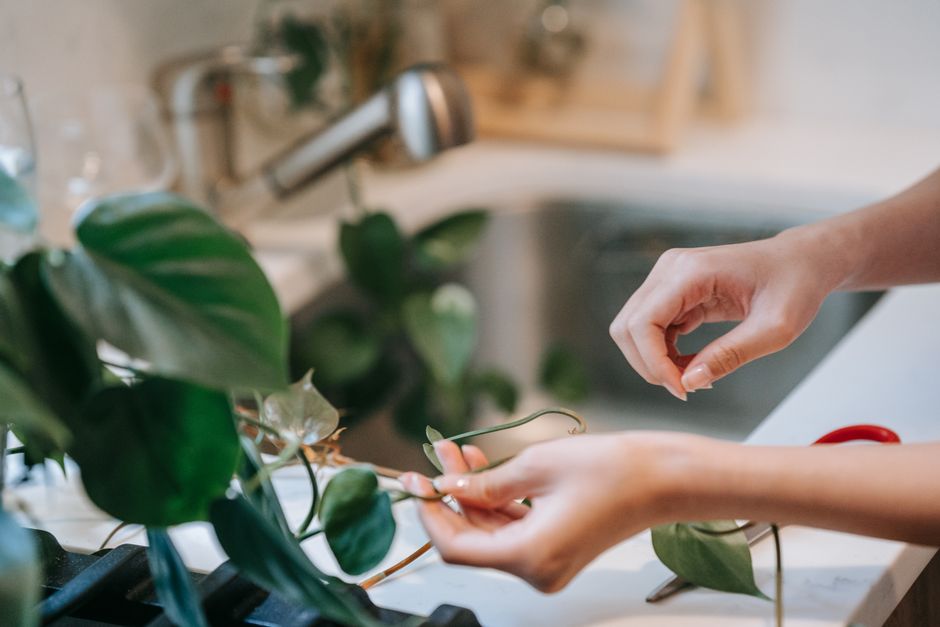
Node cuttings root reliably in sphagnum moss inside a clear container with the lid cracked for airflow. My last cutting rooted in 18 days at 74°F. What people undersell is how long the cutting sulks before it produces a leaf that resembles the mother plant. My propagations typically push two small, thin leaves before reverting to normal-sized growth around the fourth or fifth leaf. That is normal. Do not panic and repot repeatedly.
- Cut just below a node with at least one aerial root nub visible
- Let the cut callus for 2 hours in open air
- Wrap the node in damp (not wet) sphagnum moss
- Keep at 72 to 78°F with bright indirect light
- Pot up only when roots reach 2 inches, not before
Is it worth the price
Prices have softened considerably since the 2021 peak, and a reasonable rooted cutting now runs $40 to $80 depending on leaf count and seller reputation. For a collector who enjoys the specific pleasure of hairy petioles and a slow, deliberate climber, it is a genuinely rewarding plant. For someone hoping for a fast-growing statement piece, look at Philodendron gloriosum or a well-grown Monstera adansonii instead. Serpens rewards patience and punishes shortcuts, which is exactly why I still have mine.
Frequently asked questions
Why are the hairs on my Philodendron serpens sparse compared to photos online?
Petiole hair density varies with the plant’s age, its clone origin, and to some extent its humidity during leaf development. Juvenile leaves often have thinner, shorter hairs, and full density typically appears once the plant is climbing on a moist pole and producing leaves larger than about 5 inches. Some clones sold as serpens are also hybrids with reduced pubescence.
Can Philodendron serpens tolerate lower humidity if I acclimate it slowly?
Somewhat. I have kept mine at a steady 55% for over two years without issue. Below 45% you will see consistently deformed new leaves and dry aerial roots. Acclimation helps at the margins but does not change the plant’s fundamental preference for a moist forest environment.
How do I tell a true serpens from a mislabeled hybrid?
Look at three features together: soft red-brown (not black or wiry) petiole hairs, matte cordate leaves with a slightly quilted mature texture, and a climbing habit that produces noticeably larger leaves as it ascends. If the seller has photos of the mother plant on a pole, that is your best evidence. Cuttings from tissue-cultured stock are more consistent than seed-grown juveniles.
Does Philodendron serpens flower indoors?
Occasionally, on very mature and well-established plants, but the inflorescence is not particularly showy compared to related species. In eight years of watching collector forums, I have seen maybe a dozen confirmed indoor blooms. Do not buy this plant for the flowers.
Is Philodendron serpens toxic to pets?
Yes, like all philodendrons it contains calcium oxalate crystals that cause oral irritation and drooling if chewed. Keep it out of reach of cats and dogs. This is standard for the genus and worth planning your shelf placement around before the plant arrives.
Frequently asked questions
Why do velvet aroid leaves look duller over time?
Most often low humidity, accumulated dust, or trichome damage from touching or misting. Restore humidity, gently clean the leaves with a soft dry brush, and avoid touching the surface — new leaves will come in with proper sheen.
Can I clean a velvet aroid leaf?
Yes, but only with a soft dry brush — never water, never leaf shine. Brush gently in one direction to lift dust without flattening the trichomes. Water sitting on velvet leaves can cause spots or surface damage.
Why does my velvet aroid have brown leaf edges?
Almost always low humidity or salt buildup from over-fertilizing. Below forty percent humidity, velvet aroids show crispy edges first. Flush the substrate every three months and run a humidifier in the room.
Are velvet aroids slow growers?
Yes — generally one new leaf every four to eight weeks in good conditions, slower in winter. This is normal, not a sign of distress. Forcing growth with extra fertilizer or water produces stress, not more leaves.