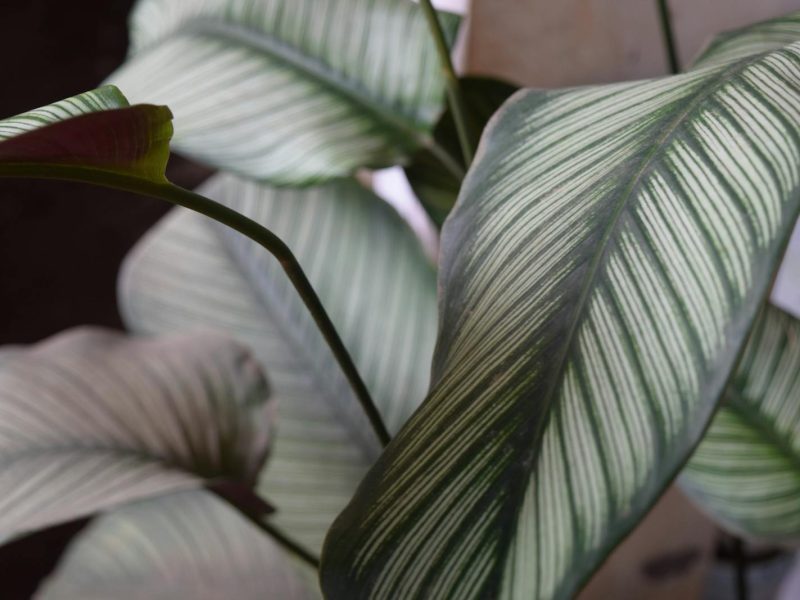
My White Princess arrived in a cardboard sleeve on a February afternoon that was still below freezing outside, and the first thing I did after unwrapping her was apologize. Half the newest leaf had crisped brown at the tip. The other half was that impossible cream-and-mint variegation that made me buy her in the first place. Three years later she sits on a north-facing shelf under a supplemental grow bar, throwing out a new leaf roughly every 5 to 6 weeks, and I finally feel like I understand what she actually wants rather than what the seller’s care card said.
This is a plant that rewards patience and punishes assumptions. If you want a philodendron that fills a corner in a season, buy a Brasil. If you want to watch a single leaf unfurl over ten days and gasp when the sectoral variegation lands right, keep reading.
What she actually is, and why the price
Philodendron White Princess is a self-heading (non-climbing in youth, technically hemi-epiphytic) hybrid whose parentage is disputed but generally attributed to a cross involving Philodendron erubescens. The variegation is chimeric, meaning the white-tissue cells and green-tissue cells sit side by side without blending. That is why you can get a leaf that is 90% cream one month and 90% green the next. Nothing you do with fertilizer changes this. The plant is drawing from whichever meristem happens to be active.
The three sister cultivars people confuse her with:
- White Knight, darker stems, often with pink or purple flushes, thicker petioles.
- White Wizard, green stems, larger leaves, larger mature form, generally more stable variegation.
- White Princess, green stems with a pink stripe on new growth, smaller leaves, the most likely to revert.
Prices at the time I am writing this hover around 60 to 140 USD for a rooted starter with two or three leaves. I have seen a 4-leaf specimen with heavy half-moon variegation sell for over 400 USD at a specialist nursery in the Pacific Northwest. Pay for the roots and the growth point, never the current leaves.
Lighting: the number I wish someone had given me
Every care blog says “bright indirect light” and then walks away. What that phrase actually means for this plant, measured with a cheap lux meter I keep clipped to my shelf, is 400 to 800 foot-candles for at least 10 hours a day. Below 300 foot-candles the white sections start to yellow and thin, and the plant preferentially pushes green leaves to compensate. Above roughly 1200 foot-candles of direct sun the white tissue scorches within an afternoon because it has no chlorophyll to dissipate the light energy.
My working setup: 24 inches under a 30-watt full-spectrum LED bar, 12-hour photoperiod, no direct window sun. If you do not want to buy a meter, a decent proxy is a bright bathroom window with frosted glass, or 3 to 4 feet back from an east-facing window with a sheer curtain.
Humidity and temperature, in real ranges
She tolerates 45% relative humidity but sulks. Below 40% the new leaves emerge crumpled and the edges of white sections go papery within a week. My winter target sits at 60 to 65% using a small evaporative humidifier on a timer, and summer floats around 55% naturally. Temperature range that has kept mine happy is 65 to 82°F. Below 60°F growth stops entirely and any leaf touching a cold windowpane will develop translucent chill damage overnight.
Soil, pot, and the watering question
The mix I settled on after two failed attempts:
- 4 parts orchid bark (fine grade, 1/4 to 1/2 inch pieces)
- 2 parts coco coir, rinsed to lower salt content
- 2 parts perlite (chunky, not the dust)
- 1 part worm castings
- 1 part horticultural charcoal
The goal is a substrate that holds water for about 4 to 6 days in a 5-inch nursery pot in my conditions, then dries. I pot in clear plastic nursery pots so I can watch root color and moisture at the sides. Terracotta dries too fast for the white sections and I lost a leaf to edge burn learning that lesson.
Watering rhythm: I lift the pot. Heavy means wait. Light means water thoroughly until it runs from the drainage holes, then empty the saucer within 10 minutes. In practice this is every 7 to 9 days in summer and every 12 to 16 days in winter. I do not water on a schedule. I water on a weight.
Fertilizer and the reversion trap
Here is the counterintuitive part. Over-fertilizing a highly variegated plant accelerates green growth because green cells respond to nitrogen and white cells cannot. I feed at a diluted quarter-strength of a balanced 20-20-20 every third watering during active growth, and nothing at all from November through February. A calcium-magnesium supplement once a month has visibly improved new leaf structure in my plant, though I cannot promise it is causal.
When she throws a fully green leaf, and she will, do not panic and do not immediately cut. Wait for the next leaf. If two consecutive leaves come in fully green, trace the stem back to the last node that produced variegated tissue and cut just above it. The plant will activate a dormant bud from that node and the new growth usually returns to variegation. I have done this twice. Both times worked.
Troubleshooting the problems I actually hit
| Symptom | Likely cause | What I do |
|---|---|---|
| Brown crispy edges on white sections only | Humidity below 45% or salt buildup | Flush pot with distilled water, raise humidity to 60% |
| New leaf emerges pale yellow then browns | Not enough light or magnesium deficiency | Move closer to light source, add cal-mag foliar spray |
| Two green leaves in a row | Reversion at the growth point | Cut back to last variegated node, wait 4 to 6 weeks |
| Stems soft and dark at the base | Root rot from wet feet | Unpot, cut rotted roots, repot in fresh chunky mix |
| Small holes in new leaves | Thrips (check with sticky trap) | Spinosad spray, 3 applications 5 days apart |
| Leaves curling downward | Underwatering or cold draft | Water thoroughly, move away from windows or vents |
Propagation, and why I finally stopped
Stem cuttings root in sphagnum moss or water within 3 to 5 weeks at 75°F with a humidity dome. The catch: because variegation is chimeric, a cutting taken from a heavily green section will produce a mostly green plant, and a cutting from a mostly white section rarely survives because it cannot photosynthesize enough to sustain root growth. The sweet spot is a node with a leaf that is roughly 40 to 60% variegated. Even then, results are a lottery.
I stopped propagating mine after my third cutting turned into a beautiful but plain green plant. I would rather have one exceptional mother than four mediocre children. That is a personal call and other collectors feel differently.
Toxicity and pets
All parts of the plant contain calcium oxalate crystals and are toxic to cats, dogs, and humans if chewed. My cat has never touched an aroid in 8 years, but I still keep the White Princess on a shelf she cannot reach. The ASPCA lists philodendron as toxic to companion animals, and I take that seriously even with a well-behaved pet.
Frequently asked questions
Why is my Philodendron White Princess turning all green?
Chimeric variegation is unstable, and green cells outcompete white cells because they can photosynthesize. Under low light or heavy nitrogen feeding the plant favors green growth. Move to brighter (not direct) light, reduce fertilizer to quarter strength, and if two consecutive leaves come in fully green, cut back to the last variegated node to force new growth from a dormant bud.
How often should I water a Philodendron White Princess?
There is no schedule. Lift the pot and water when it feels light and the top 2 inches of substrate are dry, which for me lands at 7 to 9 days in summer and 12 to 16 days in winter. Water thoroughly until it drains, then empty the saucer. Use a chunky aroid mix so excess water leaves quickly and roots get oxygen between waterings.
What is the difference between White Princess, White Knight, and White Wizard?
White Princess has green stems with a pink stripe on new growth and smaller leaves. White Knight has darker stems often flushed pink or purple with thicker petioles. White Wizard has fully green stems, larger leaves, and generally more stable variegation. All three are chimeric and can revert, but Wizard tends to hold variegation the longest in my experience.
Is Philodendron White Princess a beginner plant?
Not really. She is not fussy in a dramatic way, but she punishes inattention. If you cannot commit to checking humidity, watching light levels, and pruning for reversion, you will end up with a plain green philodendron that cost you 100 dollars. A Philodendron Brasil or a Pothos N’Joy will give you variegation with a fraction of the maintenance.
Can I keep her in a semi-hydroponic setup?
Yes. Several collectors I trade cuttings with grow White Princess in LECA with a diluted hydroponic nutrient solution, and the roots adapt well after a 4 to 6 week transition. The upside is fewer fungus gnats and more predictable moisture. The downside is that any nutrient imbalance shows up in the leaves fast, so it demands more monitoring, not less. The RHS growing guide for philodendrons is a useful sanity check on baseline requirements before you experiment.
Frequently asked questions
Can Philodendron gloriosum climb a moss pole?
No. Gloriosum is a natural crawler, not a climber. Its rhizome grows horizontally along the ground. Pinning it to a moss pole will stress the plant and damage the rhizome.
What kind of pot is best for gloriosum?
A long, shallow planter — window-box style is ideal. Length matters far more than depth, because the rhizome creeps horizontally across the substrate.
Why are my gloriosum leaves coming in smaller than the previous ones?
Most often a light or humidity issue, or the rhizome has reached the edge of the pot and the plant is conserving energy. Check pot length first, then light. The plant is honest — if conditions improve, the next leaf will reflect it.
How often should I repot Philodendron gloriosum?
Every year to eighteen months, or whenever the rhizome reaches the end of the planter. When you repot, give the plant fresh chunky substrate and a longer container if possible.
Does gloriosum need a humidifier?
In dry homes — especially in winter — yes. The plant prefers fifty to sixty-five percent humidity. It will tolerate forty percent but show crispy leaf tips below that.