Every so often a plant develops a reputation that outruns the plant itself, and Monstera obliqua is the clearest case I have watched in the aroid world. Somewhere between the “more hole than leaf” photographs on collector forums and the eBay listings offering “obliqua Peru” for four figures, the actual species got buried under wishful thinking. I have owned two plants sold to me under that name. Only one of them turned out to be what the label claimed, and even then the story was more complicated than I expected. This is the version I wish someone had handed me before I started spending money.
What the species actually is
Monstera obliqua is a real botanical species, described from South and Central American rainforest understory, with several regional forms botanists have documented from Peru, Brazil, Ecuador, Panama, and further afield. The plant is genuinely small: mature leaves on the wild-collected Peru form often sit under 15 cm long, on a stem thinner than a pencil, with tissue so thin you can read through it if you hold it to a window. When people talk about the fenestrations that swallow most of the leaf blade, they are almost always talking about that one form, and specifically about older specimens grown in high humidity and dappled light.
The rest of the obliqua complex looks nothing like the internet legend. The Panama form has modest holes or none at all. Several forms hardly fenestrate in cultivation. In other words, “obliqua” on a label tells you very little about what will actually show up in the pot.

Why almost every plant sold as obliqua is not
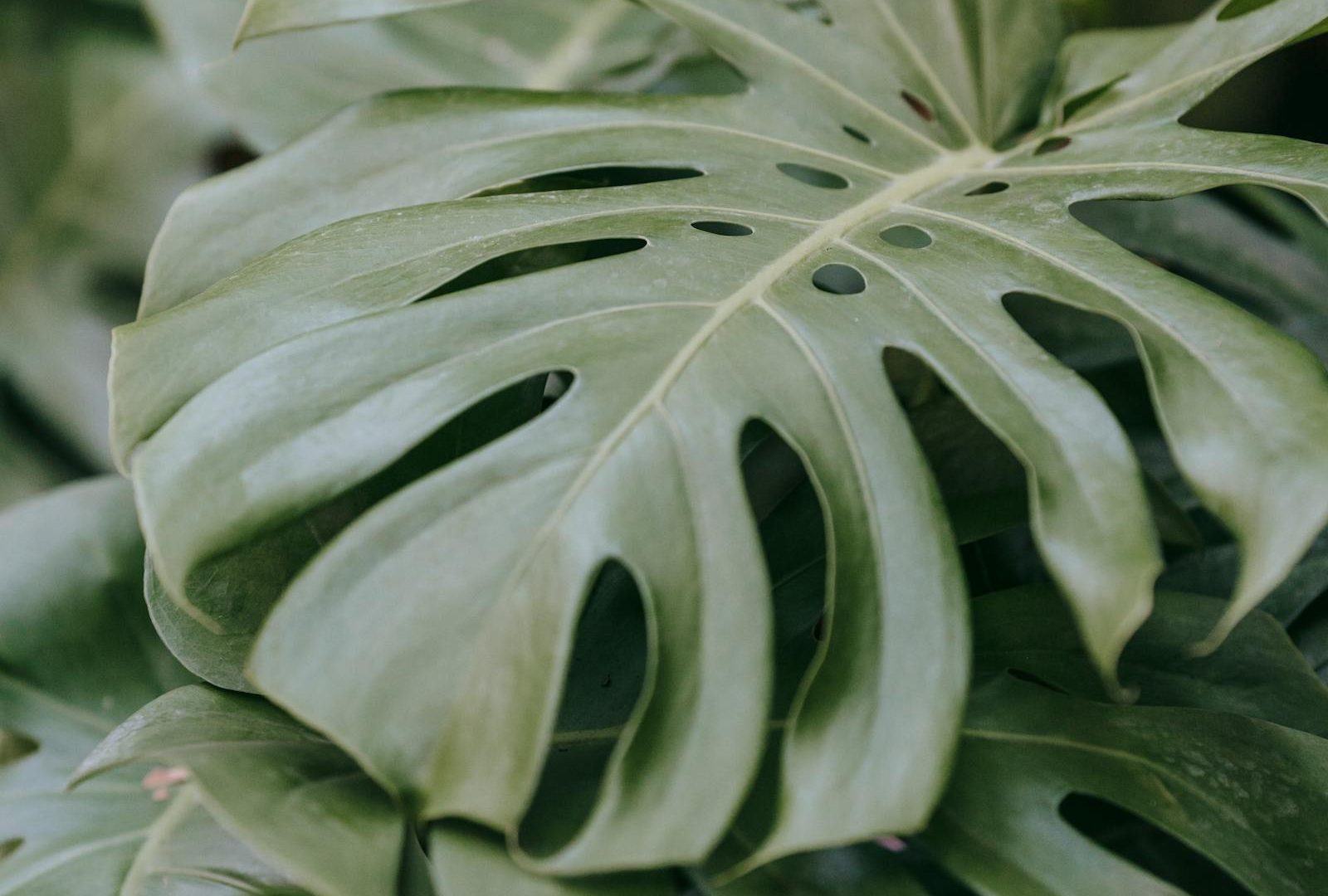
The plant that most sellers ship, and that most beginner collectors buy expecting the holey wonder, is Monstera adansonii. Adansonii is a fine plant. It is vigorous, forgiving, easy to root, and produces the recognisable Swiss-cheese leaves that made the whole genus famous outside collector circles. It is also cheap, which is exactly why unscrupulous sellers relabel it. If a nursery is offering a “juvenile obliqua” for under $50, in a normal nursery pot, with leaves that already look substantial and glossy, the odds it is really obliqua are close to zero.
I made this mistake early. My first “obliqua” arrived in a 4-inch pot with three thick, waxy leaves on a stem I could not have snapped between my fingers. Within six months it was climbing the wall and producing leaves the size of my hand. Beautiful plant. Not obliqua. When I compared it side by side with a genuine Peru form a friend eventually sold me, the differences were embarrassingly obvious.
How to tell the two apart
Once you know what to look for, you can rule out most fakes from a listing photograph alone. These are the checks I run before I even ask a price.
| Trait | M. obliqua (Peru) | M. adansonii |
|---|---|---|
| Leaf thickness | Paper-thin, almost translucent | Firm, semi-glossy, opaque |
| Mature leaf length | Usually 6 to 15 cm | Commonly 20 to 40 cm |
| Stem diameter | Under 3 mm, wiry | 5 to 10 mm, firm |
| Internode spacing | Long and stretchy, often 10 cm plus | Compact, 3 to 6 cm |
| Fenestration at maturity | Can exceed 90 percent of blade | Typically 20 to 40 percent |
| Growth rate | Painfully slow, weeks per leaf | Fast, sometimes a leaf a week |
| Roots | Fine, hair-like, sparse | Thick, ropey, abundant |
The thickness test is the one that ends the argument fastest. Hold a leaf up to a bright window. Real Peru obliqua looks like tracing paper. Adansonii looks like a leaf. There is no in-between.
What owning one is actually like
I want to be honest about this part because it is where the internet legend goes quietest. A well-grown obliqua Peru is a slow, delicate, fussy plant that spends long stretches doing nothing visible. My oldest cutting pushed four leaves in its first calendar year with me, and I considered that a good year. The tissue is so thin it tears if you brush it with a sleeve. A single hot afternoon near a bright window crisped an entire leaf in about six hours. Fungus gnats seem to find it faster than any other plant on the shelf.
Even the appearance is a slower reveal than photographs suggest. Juvenile obliqua leaves are often unfenestrated or hold only two or three small holes. The dramatic skeleton-leaf look develops only on mature growth, and only when the plant is climbing something and enjoying stable, high humidity. Grown on a tabletop in a 40 percent living room, you will see modest, unremarkable leaves for years.
The conditions that actually work
After trialing mine in three different setups, this is the range I settled on. The plant survives outside these numbers; it does not thrive.
- Humidity 75 to 90 percent. A closed cabinet or IKEA-style glass display with a small fan is the honest answer. On my open shelf at 55 percent, leaves aborted before opening.
- Temperature 68 to 82 F. Above 85 F the thin blades scorch quickly; below 60 F growth stalls for months.
- Light 100 to 200 PPFD. Bright, filtered, never direct. A 20 watt grow bar 40 cm above the plant is roughly right in a cabinet.
- Substrate: chunky and open. I use roughly 40 percent orchid bark, 30 percent perlite, 20 percent sphagnum, 10 percent charcoal. Straight potting mix rotted my first plant in under a month.
- Support: a slim moss pole or damp cork slab. The plant is a climber that wants to press its aerial roots against something moist. Without a pole, leaves stay small forever.
- Fertiliser: dilute and constant. Around 100 to 150 ppm nitrogen at every watering works for me. Full-strength feeds burn the fine roots.
Buying without getting burned
If you have read this far and still want one, that is a reasonable decision. Just protect yourself before the money moves.
- Ask the seller for a clear, in-focus photo of a leaf held against a window. Translucent tissue is non-negotiable.
- Ask which form it is. A seller who cannot tell you Peru, Panama, Ecuador, or Bolivia is guessing.
- Ask for a photo of the growing setup. A vendor keeping obliqua on an open bench in a dry showroom is not growing obliqua for long.
- Prefer node cuttings from known collector sources over unrooted “wet stick” imports. Import losses on this species run high.
- Check plant import rules in your country. In the United States, most aroid imports need a phytosanitary certificate through the USDA APHIS system.
- Budget realistically. A well-rooted juvenile from a trusted collector in 2026 typically runs $200 to $600 depending on form. Anything drastically cheaper deserves scrutiny.
The Missouri Botanical Garden’s Angiosperm Phylogeny site and the Royal Horticultural Society’s plant database are both useful reality checks when a seller’s naming feels off. For the underlying taxonomy of the genus, Tom Croat’s monograph work at Missouri Botanical is still the reference collectors quote.
Would I recommend it
Honestly, only to a specific kind of grower. If you already run a stable cabinet, enjoy the small daily rituals of tropical plant keeping, and take satisfaction in slow, incremental progress, obliqua rewards that patience with something no other plant in the trade quite matches. If you want a fast-growing statement plant that fills a corner in a season, buy a healthy adansonii and put the difference toward a good grow light. There is no shame in the second answer. My adansonii, three years in, is easily the most photographed plant in the house, and it never gave me a moment’s grief.
Frequently asked questions
Is Monstera obliqua really more hole than leaf?
Only the mature Peru form, and only under near-greenhouse conditions. Juvenile leaves and other regional forms show far more solid tissue. If you buy a plant expecting a skeleton leaf on day one, you will be disappointed for at least a year, often longer.
Can I grow it without a humidity cabinet?
Technically yes, practically no. I tried for four months in a room held at 55 percent humidity with a large ultrasonic humidifier running most of the day. Leaves aborted, tips crisped, and growth stopped. The plant lived, but it was going nowhere. Above 75 percent humidity in an enclosure, it started producing again within six weeks.
Why is my obliqua producing leaves without any holes?
Almost always because the plant is still juvenile, is not climbing anything, or is short on light. Give it a damp moss pole, get PPFD into the 150 to 200 range at the leaf, and be patient across three or four leaf cycles. Fenestration is a maturity signal, not a switch you can flip.
Is the plant I bought as obliqua actually adansonii?
If the leaves are thick and glossy, the stem is firm, and the plant is growing quickly, the answer is almost certainly yes. Compare it against the trait table above. There is no scientific dishonour in owning adansonii, and there is real value in knowing what is on your shelf so you can care for it correctly.
Is Monstera obliqua toxic to pets?
Like other Monstera species it contains insoluble calcium oxalate crystals, which can cause oral irritation and drooling if chewed by cats or dogs. Keep it out of reach, especially given the delicate tissue is easy for a curious animal to shred.
Frequently asked questions
How long do rare aroid cuttings take to root?
Most root in two to four weeks in damp sphagnum moss or water. Some species — particularly velvet aroids — can take six to eight weeks. Roots emerging earlier than expected sometimes indicate accidental wet conditions; very slow rooting usually means temperature or humidity are too low.
Should I use rooting hormone on aroid cuttings?
It is not necessary for most aroids — they root readily without it. If your cuttings have struggled to root in the past or you are working with a particularly stubborn species, hormone can help marginally. Use a small dab on the cut end before placing in substrate or moss.
Why did my aroid cutting rot before rooting?
Almost always because the cut was not calloused before propagation, or because the moss was too wet, or because temperatures were too low. Let the cut air-dry for one to two days before propagating, keep substrate damp not soaking, and maintain twenty to twenty-five degrees Celsius.
Can I propagate from a leaf without a node?
For most aroids, no. Aroids root from the node, not the leaf. A leaf cutting without a node will stay alive briefly but cannot generate new growth. Always include at least one node in your cutting.