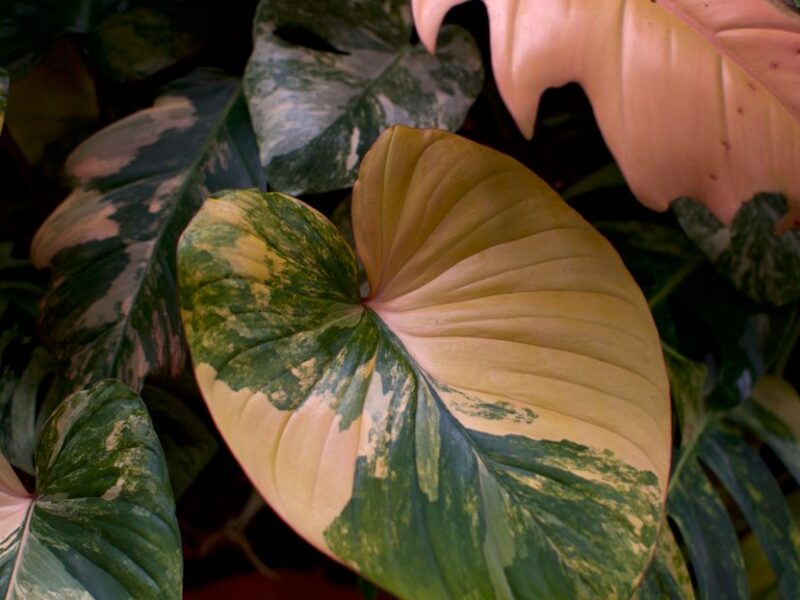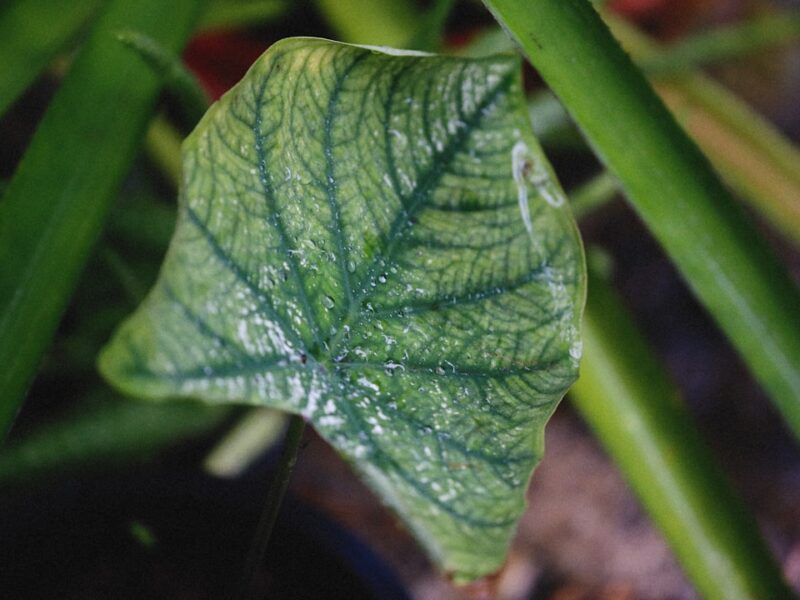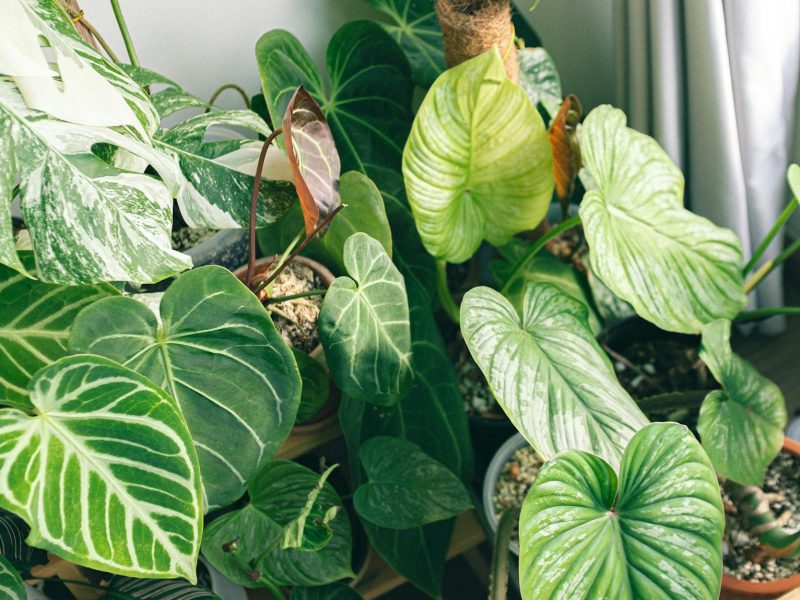

My Philodendron caramel marble arrived on a Tuesday in a wet sphagnum plug, three leaves, one of them the color of butterscotch with a green midrib that looked painted on. I had wanted the plant for two years, watched prices settle from absurd to merely expensive, and then finally paid. What I did not expect was how much the plant would teach me about patience, because caramel marble is a slow grower that rewards steady conditions and punishes fiddling. The pattern is genetic, but whether it holds, deepens, or reverts back toward plain green depends almost entirely on what you give it in the first year.
This is a record of what has worked in my collection over four leaf cycles, what I got wrong, and the specific numbers I would give a friend who was about to unbox one for the first time.
What caramel marble actually is
Caramel marble is a variegated cultivar in the Philodendron erubescens complex, closely related to the pink princess but expressing a warmer, apricot-to-caramel pigmentation instead of pure pink. The variegation is chimeral, which means each new leaf is a fresh gamble: cells at the growing tip can drift toward more green, more cream, or the coveted caramel wash. My plant has produced one nearly all-caramel leaf (thin, floppy, doomed within eight weeks) and one leaf that came in half green, half caramel with a clean line down the midrib. Both are normal. Neither is guaranteed to repeat.
The genetics matter because they set the ceiling. No amount of fertilizer will force variegation onto a stem that has drifted green, and no shade cloth will save a leaf that came in with zero chlorophyll. The best you can do is keep the plant healthy enough that it keeps producing nodes, and prune strategically when the balance tips too far in one direction.
Light: the single variable that matters most
The caramel pigment shows up best under bright indirect light. In my east-facing plant room I measured 250 to 400 foot-candles at leaf height in the morning, dropping to 120 by afternoon, and the caramel sections stayed saturated. When I moved a cutting to a dimmer corner (60 to 90 foot-candles all day), the next two leaves came in noticeably paler with more olive undertones instead of butterscotch.
If you use a grow light, I have had good results with a full-spectrum LED at roughly 150 to 200 PPFD measured at the canopy, running 12 hours a day. Direct sun is a mistake I only made once: two hours of unfiltered western sun in July bleached a caramel patch to translucent tan within four days, and that section eventually crisped and had to be trimmed. A sheer curtain fixes this.
Humidity, temperature, and airflow
The plant tolerates average home humidity better than the internet suggests. Mine has lived through winter drops to 38% relative humidity without leaf damage, though new leaves opened smaller and more slowly. In the 55 to 70% range the leaves emerge fuller and the caramel color develops with more depth. I run a cool-mist humidifier in the plant room from November through March.
Temperature preference sits between 65 and 82°F. Below 60°F growth stops entirely and the roots become vulnerable to rot if the substrate stays wet. Above 90°F the plant can survive but leaf size shrinks. Airflow is the quiet third variable: a small clip fan on low, aimed at the ceiling rather than the plant, has done more to prevent fungal issues in my humid cabinet than any spray I have tried.
Substrate and watering
Caramel marble hates wet feet and hates bone-dry roots equally. The mix I settled on after three revisions:
| Component | Proportion | Why |
|---|---|---|
| Orchid bark (fine to medium) | 40% | Structure and air pockets |
| Coco coir or peat | 25% | Steady moisture retention |
| Perlite (chunky) | 20% | Drainage, prevents compaction |
| Worm castings | 10% | Slow-release nutrition |
| Horticultural charcoal | 5% | Filters, keeps mix sweet |
I water when the top two inches feel dry to a wooden skewer, which in my conditions works out to every 6 to 9 days in summer and every 12 to 14 in winter. Bottom watering for twenty minutes in a tray of tepid rainwater has produced the most even hydration. Tap water works if you let it sit uncovered overnight to off-gas chlorine, though I have noticed slight leaf-tip browning when I get lazy and skip that step for a month.
A first-month routine that actually works
The riskiest window with a mail-order caramel marble is the first four weeks. This is the sequence I now follow every time:
- Unbox in a shaded room within one hour of delivery. Photograph every leaf for later comparison.
- Leave the plant in its shipping medium for 48 hours in a humidity tent (clear plastic bag with a chopstick propping it open) to recover from transit stress.
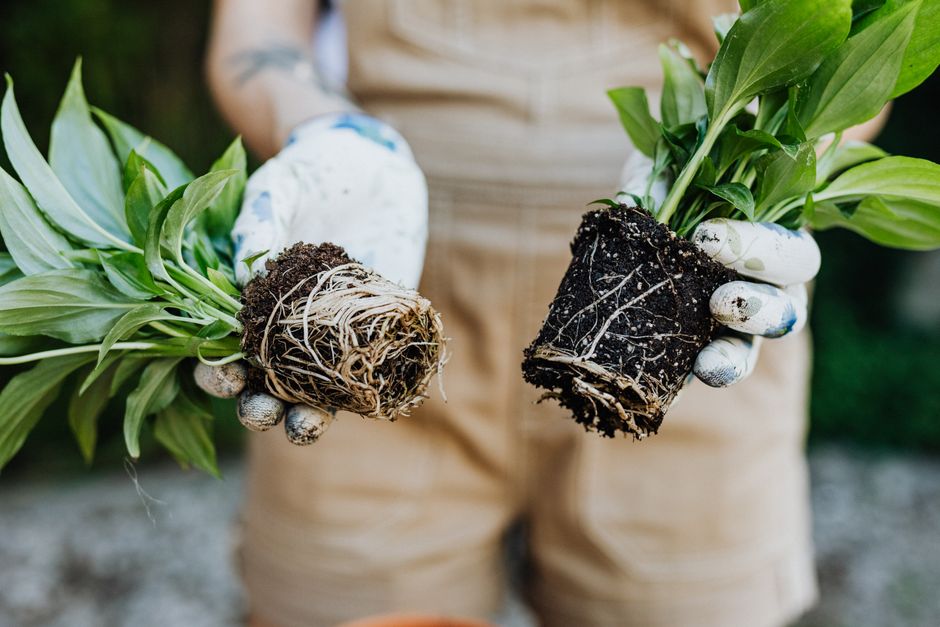
- Inspect roots gently. Rinse only if you see mealybugs or rot; otherwise leave the root ball undisturbed.
- Pot into the substrate mix above, one pot size up maximum. Water lightly, do not fertilize.
- Place in a spot with 150 to 300 foot-candles, 60% humidity if possible, and do not move for two weeks.
- Begin quarter-strength balanced fertilizer at week three. I use a 3-1-2 ratio at 100 ppm nitrogen.
- Introduce a moss pole or wooden plank support at week four, once you see new root activity.
Signs your plant is happy, and signs it is not
Reading a caramel marble takes some practice because the variegation itself can mimic distress. A creamy patch that stays firm and matte is normal. A creamy patch that turns papery, translucent, or develops a brown wet edge within days is dying tissue and should be trimmed back to green.
- New petioles emerging red-tinged and firm: excellent sign, active growth.
- Aerial roots reaching toward the pole: the plant wants to climb, give it something to grip.
- Leaves getting smaller with each cycle: usually low light, sometimes rootbound.
- Caramel sections yellowing while green stays healthy: too much direct sun.
- Stem going soft and black at the base: root rot, act within 24 hours.
- All-green leaves for three cycles running: reversion, prune back to the last variegated node.
Propagation and preserving the pattern
I have propagated caramel marble twice, both times from single-node cuttings with one leaf attached. Sphagnum in a clear deli cup with the lid cracked worked better for me than water propagation, which produced weaker roots that struggled to transition to soil. Roots appeared in 18 to 25 days at 75°F with a heat mat set to 72.
The key propagation decision is which node to cut. I always take from a section where the last two or three leaves showed strong caramel expression, because the axillary bud tends to inherit the pigmentation balance of the nearby leaves. Cutting from a green-drifted section usually produces a green-drifted plant, which is fine if you want a fuller specimen but disappointing if you paid collector prices for pattern.
For deeper reading on chimeral variegation and why it behaves this way, the Royal Horticultural Society overview of variegated plants is a solid starting point, and the Missouri Botanical Garden plant finder has useful entries on Philodendron erubescens parent care.
What I would tell someone about to buy one
Do not buy the pretty leaf. Buy the healthy node. A cutting with two green leaves and a firm, plump growth point will produce more collectible foliage over a year than a stunning half-caramel cutting whose next node has already drifted. Ask the seller for a photo of the entire mother plant if you can, and look at the last five leaves in sequence to gauge whether the variegation is stable or trending in one direction.
Expect slow. In my conditions, caramel marble puts out one new leaf every 5 to 7 weeks during active growth and essentially nothing from December through February. If you want fast, this is the wrong plant. If you want a decade-long conversation with a single organism whose surface changes leaf by leaf, this is one of the best you can keep.
Frequently asked questions
Is Philodendron caramel marble the same as pink princess?
They are cousins in the Philodendron erubescens group but not the same cultivar. Pink princess expresses cool pink to magenta pigmentation, while caramel marble skews warm: apricot, butterscotch, and cream tones on a similar leaf shape. Care requirements overlap almost completely, so if you have kept a pink princess successfully you already know most of what you need for caramel marble.
Why did my caramel leaf turn brown around the edges?
Variegated tissue has no chlorophyll and therefore no ability to repair sun damage or dehydration, so it browns faster than green tissue under the same stress. The two most common causes are direct sun through a window and inconsistent watering that lets the substrate dry out completely between drinks. Move the plant to filtered light and switch to a more predictable watering rhythm before assuming pests or disease.
How much should I pay for a rooted cutting?
Prices fluctuate with fashion and supply from tissue-culture labs. As of writing, a rooted single-node cutting with one variegated leaf typically sells for a fraction of what the same plant cost two years ago, and the trend is downward as more labs release stock. Buy from a seller who will show you the mother plant, and be suspicious of any listing that only shows the single best leaf at an unusual angle.
Does it climb, and does it need a pole?
Yes to both, eventually. Young plants trail happily for a year or two, but leaf size and variegation both improve noticeably once the plant is climbing a moss pole or wooden plank. Mine roughly doubled its leaf diameter within three growth cycles of getting a proper support. Sphagnum-wrapped poles work better than coir in my experience because they hold moisture longer and encourage aerial roots to embed.
Can I keep it in a terrarium or cabinet long-term?
Short answer: yes, and it will thrive there, but plan for eventual height. Cabinets with 70 to 80% humidity, 78°F daytime temperatures, and full-spectrum LEDs produce the fullest leaves I have ever grown on this plant. The limitation is vertical space, since a happy climber will hit the ceiling of a typical cabinet within eighteen months and force you to top and restart the process.
Frequently asked questions
Do all climbing aroids benefit from moss poles?
Most do — Monstera, climbing Philodendron, Rhaphidophora, Epipremnum. Anthurium and other non-climbers do not need a pole. Crawling aroids like Philodendron gloriosum specifically do not benefit and should not be pinned to one.
How often should I water a moss pole?
Most poles need daily misting in a normal home, or every other day if your humidity is high and the pole is in a humid room. The moss should always feel slightly damp.
My aerial roots are not attaching to the moss pole. Why?
Almost always because the pole is too dry. Aerial roots only attach to consistently damp surfaces. Mist the pole daily and wait a few weeks — they should attach in time.
Can I use a coir pole instead of a moss pole?
Yes. Coir is cheaper, firmer, and easier to attach to, but holds less moisture than sphagnum moss. For especially demanding climbers like Monstera or Philodendron melanochrysum, sphagnum gives better results.
When should I extend my moss pole?
When the plant reaches within fifteen to twenty centimeters of the top. Adding a section in time prevents the plant from leaning or detaching when it runs out of pole to climb.