My first Philodendron verrucosum arrived in a wet sphagnum plug, wrapped in a bag that had been sealed for four days in transit. The cutting was a single node with one battered leaf, and the moment I unwrapped it the leaf hinged downward and stayed there. I remember thinking the plant looked embarrassed. That was the beginning of a year I spent learning what this species actually asks for, as opposed to what care cards and product listings pretend it needs.
Verrucosum has a reputation for being finicky, and it earned that reputation honestly. It is not impossible in a home, but it will not forgive the same casual treatment a heartleaf philodendron shrugs off. What follows are the first-year observations I trust, the ones I would give to a friend before they spent three figures on a rooted cutting.
What actually changed once I stopped treating it like a regular philodendron
The turning point came around week ten. I had been misting daily, watering when the top inch felt dry, and watching new leaves emerge smaller and paler than the one before. When I finally moved the plant into a converted Ikea greenhouse cabinet with a small fan and a repurposed hygrometer, the next leaf pushed out at nearly twice the size of the previous one, and the velvet nap on the surface was denser and cooler to the touch. Nothing about my watering or feeding changed that week. Only the air did.
That was the lesson: verrucosum is a cloud-forest climber from the western Andes, and its leaves have evolved to sit inside a permanently humid, gently moving air column. Everything I read afterward on the Missouri Botanical Garden’s plant finder and in aroid taxonomy papers confirmed it. Once I gave it that column, most other problems shrank.
Light: brighter than you think, gentler than you fear
My verrucosum lives about 30 inches from a 45 watt full-spectrum LED bar, running 12 hours a day. A PAR meter reading at leaf height sits between 150 and 200 umol per square meter per second. On a windowsill with unfiltered morning sun through east glass, I measured brief peaks of 400 and watched the velvet dull within a week, so I moved it back.
The practical target I settled on:
- Bright, indirect light equivalent to a healthy Anthurium clarinervium’s spot.
- No direct sun through unfiltered glass past 9 a.m.
- A minimum of 10 hours of usable light per day, extended with a grow light in winter.
- Leaves rotated a quarter turn weekly so growth stays symmetrical on the pole.
Under too little light, new leaves emerge on longer, thinner petioles and the internodes stretch. Under too much, the velvet flattens and the deep green fades toward olive. The plant is not shy about telling you which mistake you are making.
Humidity, and why 60 percent is the floor, not the goal
Every care guide I read before buying said “high humidity, 60 percent or above.” That framing misled me for months. Sixty percent is the point below which verrucosum stops producing full-size leaves in my house. It is not a target. The plant grows visibly better at 75 to 85 percent, and best above 85 with steady air movement.
My cabinet holds a stable 82 percent day and night, measured with a Govee hygrometer I cross-checked against a calibrated Extech unit. A small USB fan on the lowest setting runs 24 hours to keep air moving over the leaf surface. Without that fan, I saw the first spots of what looked like early bacterial leaf infection within three weeks. With it, none.
Substrate: the recipe I stopped tinkering with
I tried six different mixes in the first six months, including pure sphagnum, pure Pon, and a chunky aroid mix from a well-known online shop. What worked best in my conditions was a blend I now mix in bulk:
| Component | Ratio | Purpose |
|---|---|---|
| Coarse orchid bark (medium) | 4 parts | Structure, air channels |
| Perlite (chunky, not dust) | 2 parts | Drainage, root aeration |
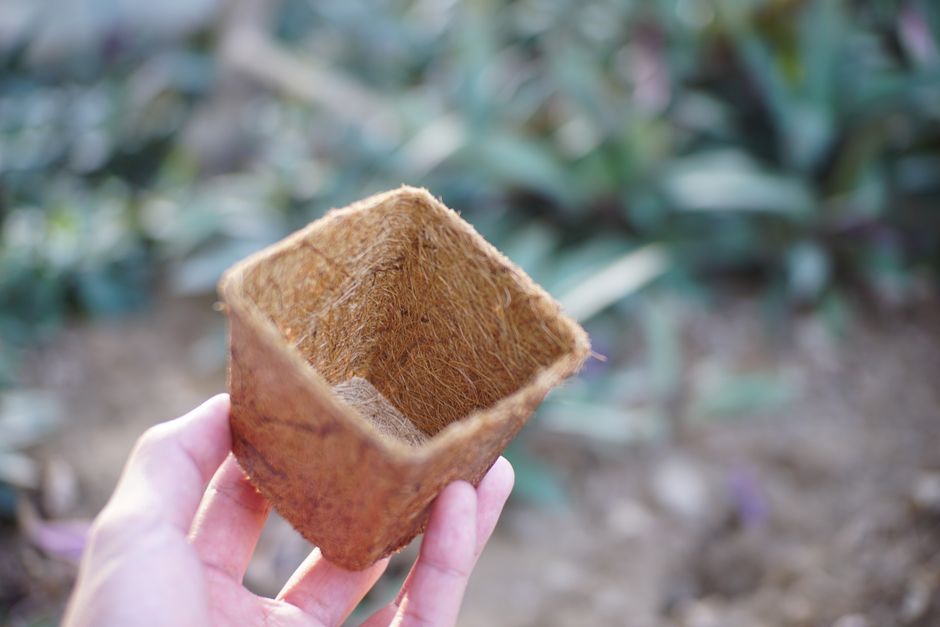
| Coco chips (rinsed) | 2 parts | Moisture retention without compaction |
| Long-fibered sphagnum | 1 part | Localized moisture around fine roots |
| Horticultural charcoal | 1 part | Filters, resists sourness |
| Worm castings | 0.5 part | Slow background nutrition |
In a 4 inch net pot with this mix, I water about every 5 to 6 days in the cabinet. The mix dries from the outside in, and I water again when a wooden skewer inserted to the bottom comes out barely damp. If I let it fully dry, aerial roots along the pole crisp within 48 hours.
Climbing: the moss pole is not optional
Verrucosum is a hemiepiphytic climber. Left to trail, the leaves stay small and the plant becomes leggy within months. I mounted mine on a 24 inch sphagnum pole wrapped in plastic mesh, kept damp with a top-down drip line I rigged from an aquarium air pump and a timer. The pole stays around 70 percent moisture, and the aerial roots grip it within two weeks of contact.
Since attaching to the pole, each new leaf has been measurably larger than the last. I keep a simple spreadsheet:
- Leaf 1 (arrival): 4.2 inches long
- Leaf 4 (post-cabinet): 6.8 inches
- Leaf 7 (post-pole): 9.1 inches
- Leaf 10 (twelve months in): 11.4 inches, first true velvet with red reverse
Watering, feeding, and the temperature range that matters
I water with rainwater collected off the garage roof, filtered through a paint strainer, at room temperature. Tap water in my area sits around 220 ppm and left mineral crust on the pole within a month. Rainwater tests at 18 ppm and the crust never returned.
Feeding is a quarter-strength balanced liquid fertilizer (roughly 100 ppm nitrogen) at every second watering, flushed with plain water once a month to prevent salt buildup. Temperatures stay between 65 and 78 degrees F. Below 60 F the plant sulks and stops pushing new growth, which matches guidance from the RHS growing guide for Philodendron.
The first-year mistakes I would spare you
- Buying a huge specimen instead of a rooted single-node. The small one adapted; the large one dropped four leaves before stabilizing.
- Trusting a room hygrometer instead of one at leaf height inside the growing space. My room read 55 percent while the leaf zone read 38.
- Using dense potting soil “just to hold it while it roots.” It rotted in eleven days.
- Ignoring air movement. Stagnant humid air is where bacterial and fungal problems begin.
- Fertilizing aggressively to push growth. Verrucosum grows slowly on purpose; forcing it burned root tips.
How verrucosum compares to two philodendrons people confuse it with
| Trait | P. verrucosum | P. gloriosum | P. melanochrysum |
|---|---|---|---|
| Growth habit | Climber | Crawler (rhizome) | Climber |
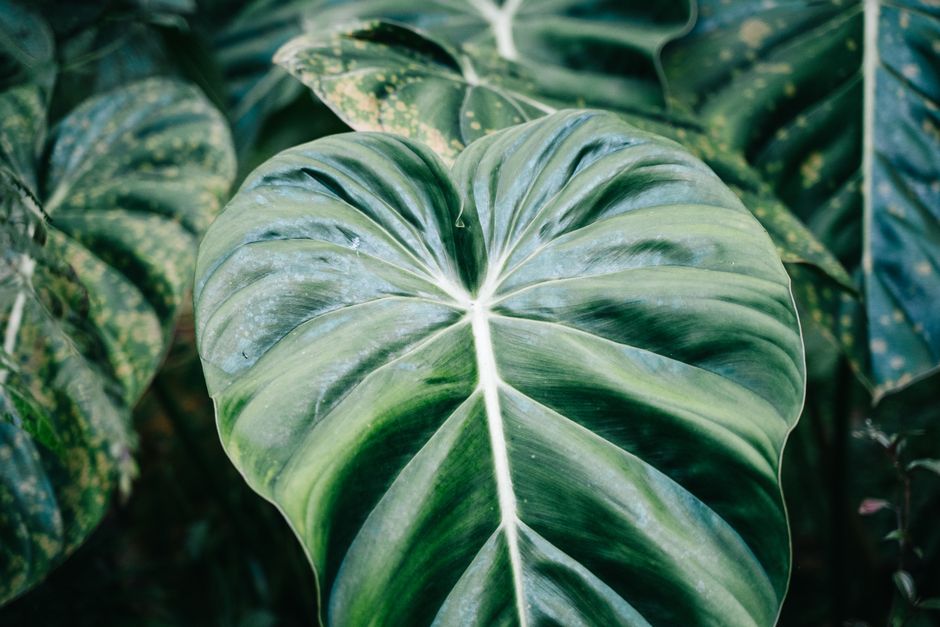
| Leaf texture | Velvet, quilted | Velvet, flatter | Deep velvet, elongated |
| Petiole | Hairy, red-tinged | Smooth, striped | Smooth, long |
| Humidity floor | 60 percent | 55 percent | 65 percent |
| Beginner-friendly | No | Moderate | No |
Frequently asked questions
Why are my Philodendron verrucosum leaves getting smaller?
Almost always a light or humidity issue, in that order. If the plant is on a pole and receiving 150 to 250 umol PAR at leaf height with humidity above 70 percent, new leaves should get progressively larger. Shrinking leaves usually mean the plant is running on stored energy while conditions fall short.
Can Philodendron verrucosum survive without a humidity cabinet?
Yes, in the right microclimate. A bright bathroom with a warm shower routine, a pebble tray plus a nearby ultrasonic humidifier, or a grouping of plants under a plastic dome can all hit the 60 to 70 percent range. The plant will grow more slowly and leaves will be smaller than cabinet specimens, but it will not decline.
How often should I water it?
Not on a schedule. In my chunky mix and 82 percent cabinet, roughly every 5 to 6 days. In a drier room with denser substrate, it might be every 10 days. Insert a wooden skewer to the pot’s base; water when the tip is barely damp, not wet and not bone dry.
Is the velvet supposed to feel cool?
Yes. Healthy verrucosum leaves feel noticeably cooler than the surrounding air because the dense trichomes on the surface trap a thin layer of humid air. If the leaf feels warm and dry to the touch, ambient humidity is too low for the plant to transpire properly.
Are the leaves toxic to pets?
Yes, like other philodendrons, verrucosum contains insoluble calcium oxalate crystals that irritate mouths and digestive tracts if chewed. I keep mine on a shelf my cat cannot reach, and I would treat any philodendron the same way regardless of species.
A year in, my original single-leaf cutting has become a nine-leaf climber pushing its first mature-size foliage with the red reverse the species is prized for. Nothing about the process was fast, and almost none of it was intuitive. But once the conditions were right, the plant asked for very little beyond consistency, and I found the quiet weekly rhythm of tending it more rewarding than any faster-growing houseplant I have owned.
Frequently asked questions
What's the difference between Monstera Albo and Thai Constellation?
Albo has unstable chimeric variegation in large white blocks that can revert or produce all-white leaves. Thai Constellation has stable, finely speckled cream-yellow variegation from tissue culture and does not revert. Thai is more predictable; Albo is more dramatic.
Why is my variegated Monstera reverting?
Chimeric variegation (Albo, Aurea) is genetically unstable. Low light makes reversion more likely because the green sections outcompete the variegated ones. Improving light helps, but if a node has fully reverted you may need to cut back to the last variegated node.
Are variegated Monsteras worth their high price?
That depends entirely on your relationship with money and waiting. Plants are not investments and prices have fallen significantly as growers scaled tissue culture. If you genuinely love the plant, get one when prices feel reasonable. If you are buying to flip, plant prices are volatile and unpredictable.
Can a variegated Monstera survive in low light?
Marginally. The variegated portions do no photosynthesis, so the green sections must do more work. In low light a variegated Monstera will grow very slowly and tend to produce less variegated leaves over time.