My first collector shelf was a wire rack from a hardware store, two clip lights, and a hygrometer I checked more often than my phone. Three years later I keep four zones running across two rooms, and the useful thing I can say is this: nothing on that first rack survived unchanged. Every fixture, every pot, every strap of velcro got replaced once I understood what my plants actually wanted. This piece is the buildout I wish I had read before I spent money twice.
The premise of a collector setup is not display. It is a controlled little climate that happens to be pretty. If you plan the climate first and the aesthetics second, you avoid the common trap of a beautiful shelf full of declining plants.
Start with one shelf, not a room
The temptation, once you catch the rare aroid bug, is to convert a whole corner in a weekend. Resist that. A single shelf, roughly 24 by 48 inches, is enough to hold 8 to 12 medium plants, run one full-spectrum fixture, and teach you the microclimate math you will use for everything after. I ran my first shelf for five months before adding a second, and by month three I had already rebuilt the lighting once and swapped out three plastic pots for terracotta because I was chronically overwatering.
The other reason to start small: your first shelf will show you what actually thrives in your home. My apartment runs 62 to 68 F in winter, drier than I would like, and gets almost no direct east light. A friend two miles away runs 74 F and 55 percent ambient humidity year round. Our plant lists diverged completely within a year.
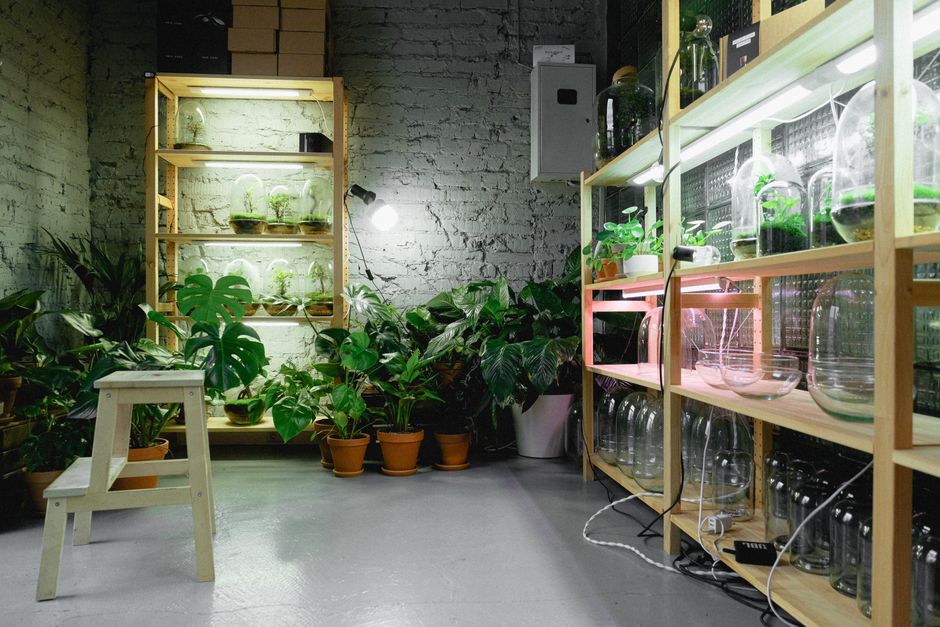
The four variables you actually control
Every serious collector setup is really a set of four dials: light, humidity, air movement, and root zone. Get those four in a workable range and most of the rest is preference.
- Light. Aim for 150 to 400 micromoles PPFD at leaf level for most aroids, roughly 12 hours a day. In fixture terms that usually means a 24 to 40 watt full-spectrum LED bar mounted 10 to 14 inches above the canopy per 2 feet of shelf.
- Humidity. 55 to 70 percent suits almost everything I grow. Below 45 percent, thin-leaved calatheas crisp within a week. Above 80 percent without airflow, you invite bacterial spotting.
- Air movement. A small clip fan on low, cycling on a timer 15 minutes per hour, prevents most of the fungal problems I used to blame on humidity.
- Root zone. Chunky, aerated mix. My default is 40 percent orchid bark, 30 percent perlite or pumice, 20 percent coco coir, 10 percent worm castings, and it has cut my root rot losses to nearly zero.
Choosing the shelf itself
Wire shelves get recommended constantly and they are fine, but they are not free. The wire grid marks plastic saucers, wobbles under a heavy pot, and forces you to buy separate plastic mats. If you can spend a bit more, a solid-shelf metal unit with 14 to 18 inches of clearance between shelves is worth it. Fourteen inches is my minimum for anything climbing; anything less and the top leaves burn on the light bar within a month.
Here is the comparison I ran when I upgraded my second unit.
| Shelf type | Typical cost | Weight capacity per shelf | Real drawback |
|---|---|---|---|
| Chrome wire, 5-tier | $60-90 | 250 lb (rated) | Marks saucers, no built-in drip tray |
| Solid steel, 5-tier | $130-180 | 350-500 lb | Heavier to move, fewer sizes |
| IKEA glass cabinet (Milsbo, Rudsta) | $180-250 | Modest, glass shelves | Needs sealing and fixture retrofit |
| Built-in custom shelving | $400+ | Whatever you engineer | Not moving with you |
Lighting without overspending
Grow-light marketing is loud, and most of it targets cannabis growers running 600 watts over a 3 by 3 tent. You do not need that. For a 24 by 48 inch shelf holding tropical foliage, one 30 to 45 watt full-spectrum LED bar mounted 12 inches above the tallest leaves gives me healthy new growth on philodendrons, anthuriums, and scindapsus alike. I run mine on a mechanical timer, 7 am to 7 pm, and I have never had a plant complain.
Two habits that matter more than fixture brand. First, dust the bar every two weeks; a film of dust and pet hair can drop output noticeably in a month. Second, raise the fixture as plants climb. I mark my adjustable straps with a paint pen so I remember where I started, and I move up an inch whenever the top leaves are within 8 inches of the light.
For technical background on how PPFD and DLI translate into what plants actually receive, the Penn State Extension guide to light management is more useful than any manufacturer datasheet.
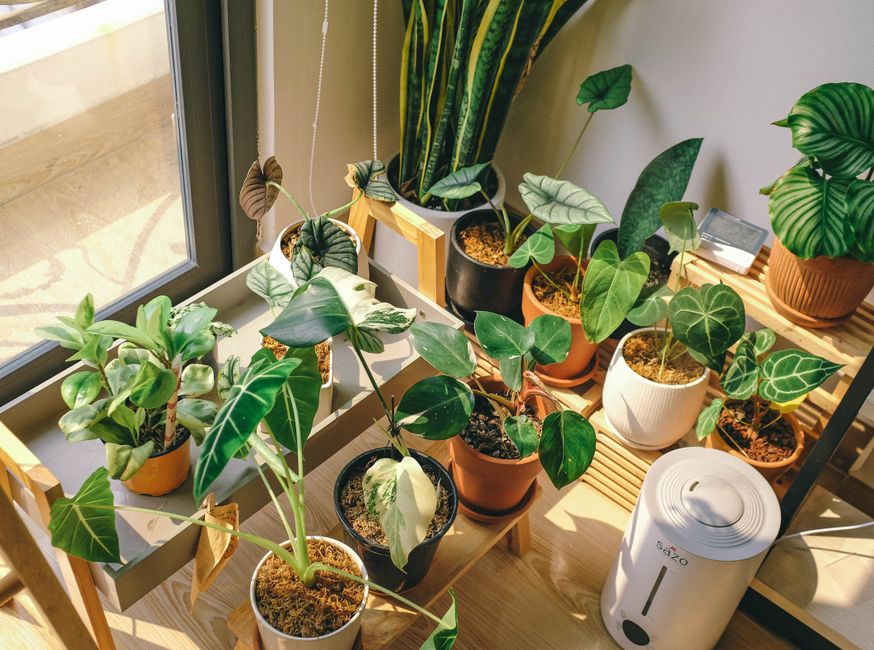
Humidity that survives winter
Ambient humidity in my apartment drops to 28 percent in January. No amount of pebble trays fixes that. What actually works, ranked by effort:
- A 4 to 6 liter cool-mist humidifier on a hygrostat, positioned 3 feet from the shelf, aimed across the room rather than at the plants.
- Grouping plants tightly so their transpiration builds a local humid bubble.
- Enclosing the shelf front with a clear vinyl curtain during the driest weeks, left open 6 inches at top and bottom for airflow.
- A dedicated cabinet (Milsbo, Rudsta, or a used display case) with a small fan and humidifier tube plumbed in.
I check humidity with two cheap hygrometers, not one, because a single sensor drifts and lies. When both read within 3 to 5 percent of each other I trust the number. When they disagree I recalibrate with the salt test.
The order I would buy things in today
If I were starting over with a modest budget, this is the sequence I would follow, and roughly what each step cost me in 2025 dollars.
- One solid-shelf metal unit, 24 by 48 inches, 4 tiers. Around $140.
- Two 30 watt full-spectrum LED bars with adjustable hangers. Around $80 total.
- Mechanical outlet timer, two clip fans on a second timer. Around $35.
- Cool-mist humidifier with external hygrostat. Around $70.
- Two calibrated hygrometers and a soil moisture meter I actually distrust. Around $25.
- Substrate ingredients bought in bulk rather than pre-mixed bags. Around $60 and enough to repot 20 plants.
That is roughly $400 to $450 for a shelf that can hold the beginnings of a serious collection. Every dollar past that should follow a specific plant’s needs, not a vague upgrade urge.
What I skipped and did not miss
Reverse osmosis water systems, expensive smart controllers, and matched decorative pots all sat on my wishlist for months. I use tap water sat out overnight, one $12 mechanical timer per zone, and mismatched nursery pots inside plain cachepots. My plants have not noticed. The one exception is a small collection of thin-leaved anthuriums that resent hard water; those get rainwater from a bucket on the balcony, and only those.
The Missouri Botanical Garden’s Plant Finder is the reference I actually use when I am debating a new species, because it gives you the light, water, and humidity ranges in one place without the drama.
How I know the setup is working
I keep a very short log. Date, plant, observation, action taken. Nothing fancy, just a shared note on my phone. After a season you can flip back and see whether the new pothos put out a leaf every 14 days or every 40, whether the anthurium clarinervium finally acclimated after the humidifier upgrade, whether the fungus gnat outbreak followed a specific bag of soil. That log has caught more problems than any sensor.
The single best predictor of a healthy shelf, in my experience, is whether the grower is bored. If nothing needs doing this week, the climate is right.
Frequently asked questions
How many plants can I put on one 24 by 48 inch shelf?
Plan for 8 to 12 medium plants in 4 to 6 inch pots, with breathing room between leaves. Crowding invites fungal issues and blocks airflow to the interior of each plant. I would rather have a half-empty shelf than a packed one that requires constant fungicide.
Do I need a separate room or grow tent?
No, and I would argue against it until you have run a single shelf for at least six months. A tent adds humidity and heat management problems that a shelf in your living space does not have. Learn the fundamentals in a forgiving environment first.
What is the minimum wattage of LED I need for aroids?
Roughly 15 to 20 true watts (not equivalent watts) per square foot of shelf, mounted 10 to 14 inches above the canopy. A 30 to 40 watt bar over a 24 by 48 inch shelf sits right in the useful range for philodendrons, anthuriums, and most patterned-leaf foliage.
Is a humidifier really necessary or can I mist instead?
Misting raises humidity for about 20 minutes and then evaporates, leaving wet leaves that invite bacterial spotting. A small humidifier on a hygrostat is the single upgrade that changed my success rate most. If you only buy one thing after the shelf itself, buy that.
How long before I should expand to a second shelf?
Wait until your first shelf has been stable for at least three months, meaning no losses, no pest outbreaks, and predictable growth. Expanding sooner just doubles the number of problems you are learning to diagnose.
Frequently asked questions
What's the first thing I should buy for my plant collection?
A humidifier (if your humidity is low) or a grow light (if your light is limited). These two pieces of infrastructure solve the most common indoor plant problems and make everything else more viable.
How much does it cost to set up a serious plant collection?
For a basic setup with humidifier, grow light, and quality substrate components: $200-400. For a more complete setup with greenhouse cabinet and additional equipment: $800-2,000+. Plants additional.
Should I buy expensive equipment from the start?
No. Start with one or two key pieces of infrastructure that solve specific problems. Add more as you discover what your collection actually needs. Don't over-invest in equipment for plants you don't yet own.
How do I organize my plant collection?
Group by light and humidity needs. Sensitive tropical plants together with humidifier coverage. Aroids near grow lights. Less demanding plants in normal room conditions. Within each group, arrange by height.