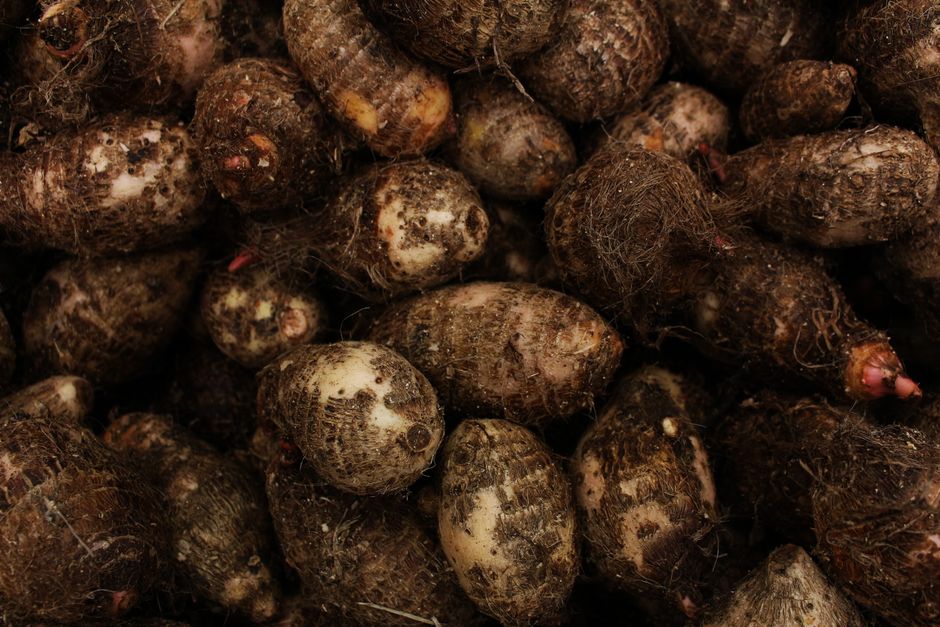
My first colocasia arrived as a fist-sized corm in a padded envelope, and within six weeks it had unfurled a leaf the size of a dinner plate on my kitchen counter. Six months later, that same plant was a limp, yellowing wreck slumped against the window frame. What I did not understand then, and what most care articles gloss over, is that colocasia is a wetland tuber that wants to grow hard for eight months and then rest. Fight the rest and you lose the plant. Work with it and you get one of the most dramatic pieces of foliage a home can hold.
This is a practical account of what I have learned keeping three cultivars (Black Magic, Illustris, and Mojito) alive year-round in a north-facing apartment where winter light drops to almost nothing. If you have been told colocasia is a garden plant that will never work indoors, that is only half right. It works, but the rules are stricter than for a pothos or a monstera.
Why colocasia struggles in most living rooms
Colocasia esculenta and its cousins evolved on the muddy edges of Southeast Asian streams. They expect three things simultaneously: standing water at the roots, warm nights above 65°F, and daylight strong enough to push a new leaf every two to three weeks during the growing season. A typical living room delivers none of these reliably. Pots drain too fast, night temperatures near a window drop into the 50s in winter, and ambient light through a single-pane window measures around 200 to 400 foot-candles, well below the 800-plus these plants want.
The result is a slow-motion decline that owners often misread as overwatering. Leaves yellow from the outer edge inward, new leaves emerge smaller than the last, and eventually the corm goes soft. In almost every case I have troubleshot for friends, the plant was actually starving for light and warmth, not drowning.
Light: the non-negotiable variable
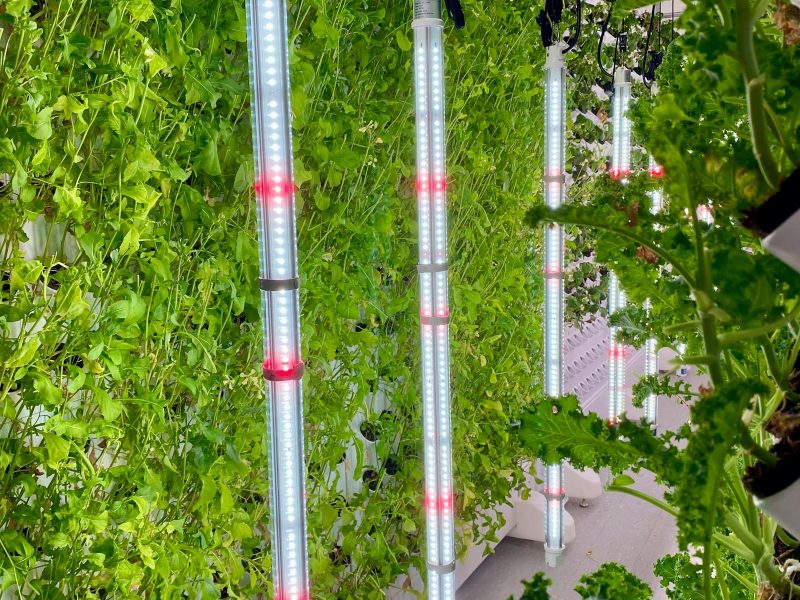
If you take one thing from this piece, take this. Colocasia will not thrive on ambient window light in most homes north of the 35th parallel from October through March. I use a 45-watt full-spectrum LED bar mounted 14 inches above the plant, running 12 hours a day on a timer. That gives me a measured photosynthetic photon flux density of around 250 micromoles at the leaf surface, which is roughly the floor for keeping these plants pushing new growth.
The University of Minnesota Extension guide on indoor light lays out the general logic well, and it maps directly onto colocasia: what looks bright to human eyes is usually dim to a tropical wetland plant. A cheap lux meter app on a phone is not accurate enough for real decisions, but it will at least tell you whether you are in the 500 or the 5000 range.
The water and substrate combination that finally worked
I killed two corms before I stopped trying to grow colocasia like a philodendron. The breakthrough was a two-pot system. Inner nursery pot filled with a peat-heavy mix (roughly 60% coco peat, 20% perlite, 20% composted bark), sitting inside a decorative cachepot with an inch of standing water in the bottom at all times. The nursery pot wicks moisture up into the root zone, so the mix stays saturated but the top inch still exchanges air.
Ordinary houseplant advice about letting the top inch dry between waterings does not apply here. Let the substrate dry and the fine feeder roots die back within days, then the next full watering triggers rot in the damaged tissue. Consistency matters more than any single watering event.
| Growing phase | Water level in cachepot | Fertilizer | Expected new leaves per month |
|---|---|---|---|
| Active growth (Apr-Sep) | 1 inch, topped up weekly | Balanced 20-20-20 at half strength, every 2 weeks | 2 to 3 |
| Slowdown (Oct-Nov) | Half inch, refill when empty | Stop feeding | 0 to 1 |
| Dormancy (Dec-Feb) | Barely moist, no standing water | None | 0 |
| Wake-up (Mar) | Reintroduce quarter inch | Weak feed at first new spear | 1 |
Accepting dormancy instead of fighting it
The single biggest mindset shift is accepting that a healthy indoor colocasia will lose most or all of its leaves in winter. The first time this happened to me I panicked, moved the plant closer to the light, watered more, and rotted the corm. Now I let it happen. Around late October the plant tells me it is done: new leaves emerge smaller, older leaves yellow in sequence rather than sporadically, and the petioles get thinner.
When I see three of those signals together, I move the pot to a cooler spot (about 60°F, an unheated back room works), cut water to the barest trickle, and leave it alone until March. The corm shrinks and firms up. Then when day length returns and I resume watering, a new spear appears within two to three weeks. Skipping this rest for two winters in a row is what killed my original Black Magic. Skipping it once seems survivable; skipping it twice is not.
Pests that actually show up indoors
Outdoors colocasia gets aphids and the occasional caterpillar. Indoors the pest that will find you is the two-spotted spider mite, and it will find you fast if humidity drops below 45%. The undersides of colocasia leaves are broad, flat, and thin-cuticled, which is essentially a five-star hotel for mites. I check weekly with a jeweler’s loupe, looking for the fine stippling on the upper leaf surface and the pinprick specks moving on the underside.
- Keep ambient humidity above 55% during heating season, using a room humidifier rather than misting (misting wets leaves and invites bacterial spotting)
- Shower the whole plant under lukewarm water every two to three weeks, paying attention to leaf undersides
- At the first sign of stippling, spray both leaf surfaces with a 1% horticultural oil solution weekly for three weeks
- Quarantine any new arrival for at least three weeks before it joins the collection
- Remove yellowing leaves promptly; mites migrate off dying tissue onto healthy leaves
Choosing a cultivar that suits indoor life
Not all colocasia are equal candidates for a house. The giants bred for landscape use (Thailand Giant, Jack’s Giant) will hate you. The compact and colored-leaf cultivars adapt much better. My working ranking after four years:
- Colocasia esculenta ‘Mojito’, most forgiving of variable light, splashed leaves stay compact around 24 inches
- Colocasia esculenta ‘Illustris’, black-green leaves with green veins, tolerates slightly drier conditions than most
- Colocasia esculenta ‘Black Magic’, the classic dark cultivar, needs the strongest light or it reverts toward green
- Colocasia ‘Pink China’, the coldest hardy option, useful if your home runs cool
The Missouri Botanical Garden plant finder entry for Colocasia esculenta is a useful reference for expected mature dimensions, though remember indoor growth is typically 60 to 70% of outdoor size in comparable conditions.
What a realistic first year looks like
Month one, the corm produces two or three small leaves as it establishes. Month three, if light is adequate, leaves reach roughly 60% of their potential size. Month six, mature leaves appear (mine reach about 14 inches long on Mojito, 18 inches on Black Magic under good conditions). Month eight through eleven, growth slows and older leaves cycle out. Month twelve, the plant enters dormancy and looks nearly dead. This is the arc. If your first-year plant follows it, you have done well. If it never slows down and keeps pushing leaves through December, you are almost certainly overheating it and will pay for it the following summer with a weakened corm.
Frequently asked questions
Can I grow colocasia in leca or semi-hydroponics?
Yes, and it works surprisingly well because leca handles the constant moisture requirement without rotting. The catch is that colocasia is a heavy feeder, so you need to keep nutrient solution EC around 1.2 to 1.4 during active growth, higher than most aroids tolerate. Flush the substrate monthly to prevent salt buildup, which shows up as brown crispy leaf margins.
Why are my colocasia leaves developing brown edges?
Three likely causes in order of frequency: low humidity (below 40%), fertilizer salt accumulation, or tap water high in chloramine. Try flushing the pot with distilled water for three consecutive waterings, then reassess. If edges keep browning despite flushing, add a small humidifier within four feet of the plant.
Is it safe to keep colocasia around cats and dogs?
No. All parts of colocasia contain calcium oxalate crystals that cause intense oral pain and swelling if chewed. The ASPCA lists it as toxic to both cats and dogs. If you have pets that chew, place the plant on a high shelf they cannot reach or choose a different dramatic-leaf option like a large Alocasia zebrina placed similarly out of reach.
Should I bury the corm deep or leave the top exposed?
Bury it so the top of the corm sits about half an inch below the substrate surface. Deeper than an inch delays emergence and increases rot risk. Shallower and the corm can dry out or topple as leaves develop. Once the plant is established the corm will often push itself slightly upward, which is normal and does not need correcting.
My corm went completely soft over winter. Is it salvageable?
Slice into it with a clean knife. If any portion is still firm and creamy white inside, cut away all the soft brown tissue, dust the cut surfaces with cinnamon or sulfur powder, let the piece callus for 48 hours on a paper towel, then replant in barely damp fresh substrate. Recovery is possible from as little as a walnut-sized firm remnant, though the first season back will produce only small leaves.
Frequently asked questions
How much humidity does the Milsbo hold?
With proper sealing and a small humidifier, the Milsbo holds sixty to seventy-five percent humidity reliably. Without sealing, it drops to ambient room humidity within hours.
Can I keep cacti and tropicals together in the Milsbo?
No — cacti and tropicals have incompatible humidity needs. The cabinet is designed for high-humidity species. Keep cacti in dry conditions outside the cabinet.
Does the Milsbo need to be opened daily?
Not strictly. Many growers open it briefly to inspect plants and refresh air, but the fan and ventilation built into the setup should handle most circulation needs without daily intervention.
Is the Milsbo big enough for a serious collection?
For 10-15 small to medium plants, yes. For a larger collection, consider multiple Milsbos or a larger custom cabinet. Some collectors use two side-by-side Milsbos for a expanded environment.