My first Pilea peperomioides arrived in a shoebox from a friend in Copenhagen, wrapped in newspaper with three pups already crowding the base. That was long enough ago that the plant was still whispered about in trade forums as the “friendship plant” you could not buy, only be given. Now it sits on every third windowsill on Instagram, and the honest care information has somehow gotten worse, not better, in the noise. So I want to write down what I have actually learned keeping this species happy through winters, moves, and one memorable overwatering incident that cost me the mother plant.
The short version: Pilea peperomioides is neither fussy nor a beginner plant in the way people sell it. It is a plant with opinions, and it tells you exactly what it thinks of your care within about ten days. Learn to read the leaves and you will never need another guide.
Why the round leaves cup, tilt, and lean
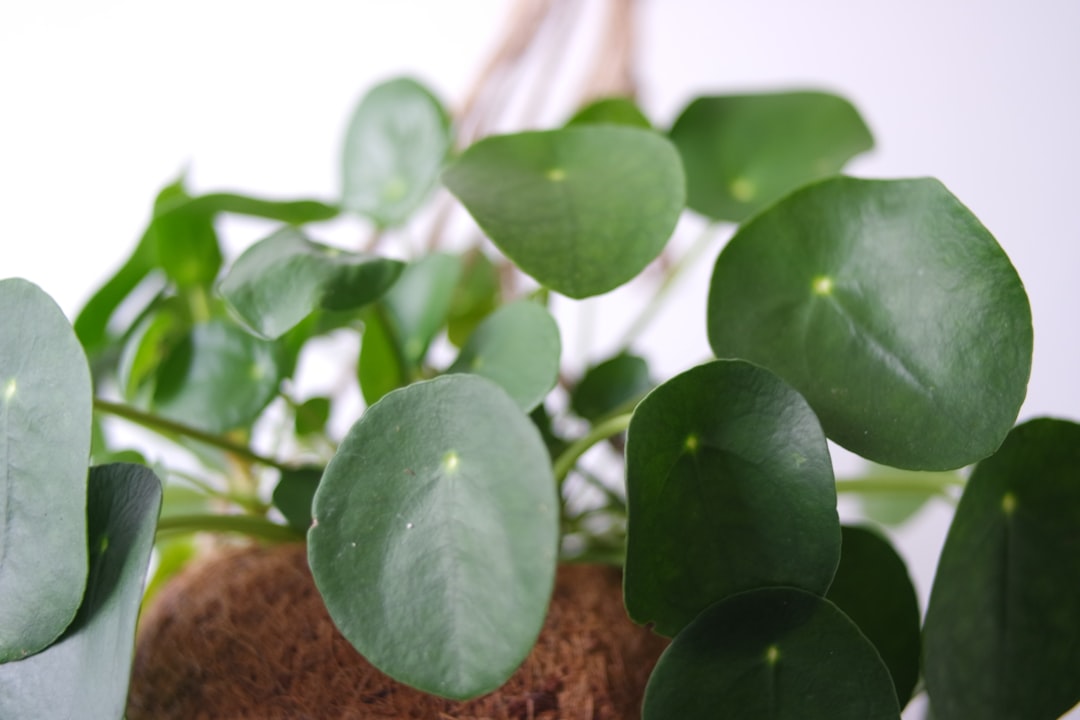
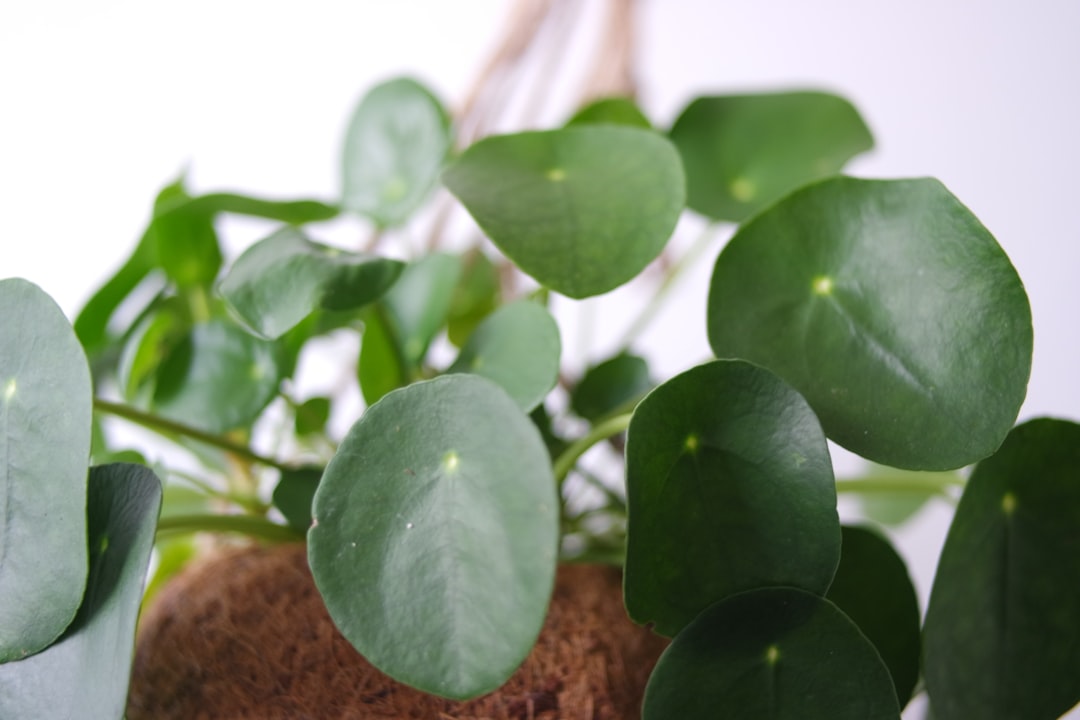
Almost every question I get about this species is really a lighting question in disguise. The classic saucer-shaped leaf, held flat and slightly domed, only forms in bright indirect light of roughly 200 to 400 foot-candles. In dimmer conditions the plant does something clever and quietly desperate: it tilts every leaf toward the strongest light source, elongates the petioles, and eventually the stem itself curves like a shepherd’s crook toward the window.
I rotate mine a quarter turn every time I water, which works out to roughly once a week. That is enough to keep the stem plumb without confusing the plant. If you forget for a month, the lean becomes permanent, because Pilea stems lignify (turn woody) as they age and will not straighten again.
Cupping is the other constant question. Leaves that dome upward like tiny bowls almost always mean too much direct light or the soil dried past the plant’s comfort zone. Leaves that cup downward, curling under at the edges, usually mean the opposite: overwatering, cold roots, or a pot that has held moisture too long. I keep a small notebook where I jot the leaf posture each Sunday, and after a season you start to see the pattern before the plant does.
Light, water, and the numbers that actually matter
Every generic care article says “bright indirect light” and moves on. Here is what that means in a real apartment. An east window, unobstructed, gives you a happy Pilea year-round in most climates. A south window works if you pull the plant back 3 to 4 feet from the glass, or filter with a sheer curtain. A north window will keep it alive but the leaves shrink and the stem stretches. Under a grow light I run mine at about 150 PPFD for 12 hours, which is modest for the collection but perfect for this species.
Water is where beginners lose plants. Pilea peperomioides has a shallow, brittle root system that hates sitting wet but also hates being bone dry for more than a day or two. My rule: water when the top inch of substrate is dry to a wooden skewer, then water thoroughly until it runs from the drainage holes, and never let the pot sit in a saucer of water for more than 20 minutes. In a 4-inch nursery pot that usually works out to every 6 to 8 days in summer and every 12 to 14 in winter.
Temperature range is wider than people think. Mine has shrugged off nights down to 55°F on a drafty windowsill and afternoons at 82°F in July without complaint. The real killer is cold, wet roots. If your winter windowsill runs below 60°F, move the plant a foot into the room and water half as often.
A symptom table I actually use
| What the leaf is doing | What it usually means | What I do about it |
|---|---|---|
| Cupping upward like a bowl | Light too intense or soil dried too far | Move 2 feet back from window, check moisture weekly |
| Cupping downward, edges curling under | Overwatered or root chill | Skip a watering, warm the root zone, check drainage |
| Yellow lower leaves, one at a time | Normal aging, usually fine | Snap off at the stem, no action needed |
| Yellow leaves in clusters, mushy stem base | Root rot in progress | Unpot, trim black roots, repot in fresh gritty mix |
| Small leaves, long petioles, leaning | Insufficient light | Move closer to window or add supplemental light |
| Brown crispy edges | Low humidity plus fertilizer buildup | Flush pot, hold fertilizer for a month |
| Pale, washed-out green | Nitrogen deficiency or too much sun | Diagnose by moving plant first, then feed if no change |
The substrate question, settled
I have grown Pilea in everything from straight peat to pure LECA, and the sweet spot is unglamorous: a chunky, well-draining mix that stays evenly moist for about a week. My current recipe is 50 percent quality peat-based potting soil, 30 percent perlite, 15 percent orchid bark, and 5 percent horticultural charcoal. It drains fast, holds enough moisture, and resists compaction for two full years before I need to repot.
Avoid the ready-made “succulent and cactus” mixes some articles recommend. They drain too fast and force you to water every three days, which is where fungus gnat problems start. The RHS houseplant guidance is a useful cross-check if you want a second opinion, though it stays more general than what I have found works here.
Propagating pups, the way that actually works
The reason this plant became the friendship plant is that a healthy mother throws two kinds of babies. Stolon pups pop up from the soil a few inches from the main stem, connected by a shallow rhizome. Stem pups emerge from leaf axils along the main trunk. Both propagate reliably if you do not rush.
- Wait until the pup has at least 3 leaves and stands about 2 inches tall. Smaller pups will root, but the failure rate doubles.
- For soil pups, use a clean serrated knife and cut the rhizome about half an inch from the pup, going down at least 2 inches into the soil.
- Lift the pup with its roots intact. If you damaged the roots, let the cut callus in open air for 24 hours before potting.
- Pot into a 2-inch nursery pot with the same mix as the mother. Water lightly and place out of direct sun for 10 days.
- For stem pups, cut just below the base of the pup with a clean blade, root in water for 2 to 3 weeks until roots reach an inch long, then pot up.
- Do not fertilize for at least 6 weeks. New roots burn easily.
I keep a small colony of pups in 2-inch pots on a heat mat set to 72°F for the first month. Callused stem cuttings root at nearly 100 percent this way, versus roughly 70 percent at room temperature.
Fertilizer, dormancy, and the year in review
Pilea grows in obvious flushes, mostly March through September in the northern hemisphere. During that stretch I feed at quarter strength with a balanced liquid fertilizer every third watering. From October through February I stop feeding entirely and cut watering by roughly a third. Skipping this seasonal shift is why many people report their plant “stopped growing” over winter and then looks sickly by spring: it was still being pushed to eat while its metabolism had slowed.
Once a year, usually in early April, I unpot the plant, brush off the old substrate, trim any dead roots, and repot into the same size pot with fresh mix. Pilea prefers being slightly root-bound; jumping up a pot size too aggressively often triggers a sulking phase where new leaves shrink for months. Missouri Botanical Garden has a useful species profile for Pilea peperomioides if you want the botanical context.
A pre-purchase checklist
If you are buying one this season rather than being gifted one, here is what I check at the nursery before the plant comes home:
- Stem is upright and lignified at the base, not floppy or green all the way down
- At least one visible pup, either at the soil line or in a leaf axil
- Leaves are flat, saucer-shaped, roughly the size of a large coin
- No brown mush at the soil line and no fungus gnats hovering
- Roots visible at the drainage holes look pale and firm, not black
- Newest leaf at the top is at least as large as older leaves, indicating recent good conditions
- Grower’s tag names the species correctly (some sellers still confuse it with Peperomia polybotrya)
Frequently asked questions
Why is my Pilea peperomioides dropping leaves suddenly?
Sudden leaf drop, where several leaves fall in a day or two, almost always traces to a temperature shock or a watering swing. A plant moved from a warm shop to a cold car ride, or one that went a month without water and then got soaked, will shed to protect the roots. Give it a stable spot, water on a normal cadence, and expect it to look sparse for four to six weeks before pushing new growth from the crown.
Can Pilea peperomioides live in low light long term?
It can survive in low light for a year or two, but it will not thrive. Leaves shrink noticeably within three months, petioles stretch to twice their normal length, and pup production stops almost entirely. If a bright window is not an option, a modest 20-watt LED grow light on a 12-hour timer restores normal growth within one season.
Is Pilea peperomioides toxic to cats and dogs?
Pilea peperomioides is listed as non-toxic to cats and dogs by the ASPCA, which is one of the reasons it moved into so many households in the first place. That said, any plant can cause mild stomach upset if a pet eats a lot of it, and the crisp leaves are unfortunately quite appealing to curious cats. I still keep mine on a shelf my animals cannot reach.
How fast should a healthy Pilea grow?
In good conditions, expect one new leaf every 10 to 14 days during the growing season and a pup or two every couple of months once the mother is established. A plant that produces one leaf per month for a year is telling you the light is marginal. A plant that produces nothing for a year is telling you something is actively wrong, usually at the roots.
Should I mist my Pilea peperomioides?
No. Misting does very little for humidity and quite a lot for fungal problems on the flat, cupped leaves that hold water in their centers. If your home runs below 40 percent relative humidity in winter, a small room humidifier a few feet from the plant will do more good than any amount of misting, and the leaves will stay clean.
Frequently asked questions
Should I water a plant immediately after it arrives?
Only if the substrate is dry. Many plants arrive with adequately moist substrate. Watering a moist plant immediately can cause root rot. Check substrate by feel first.
How long does shipping recovery take?
Typically 2-4 weeks for visible recovery, longer for severely stressed plants. The first new leaf — usually within 4-8 weeks — is the clearest sign that recovery has been successful.
Should I repot my new plant right away?
Generally no. Wait 3-4 weeks at minimum unless the substrate is clearly compromised. Repotting adds stress to a plant that is already stressed from transit.
Why is my new plant losing leaves?
Some leaf loss after shipping is normal as the plant sheds what it cannot support during recovery. Worry only if new growth also shows distress or if the root system is compromised.