Every rot I have caused in twelve years of keeping aroids traces back, eventually, to the pot. Not the substrate, not the watering schedule, not the room humidity. The pot. A four inch nursery cup holding a chunky bark mix will behave completely differently from a four inch glazed ceramic holding the same mix, and until I accepted that, I kept losing anthuriums to a soggy layer I could not see.
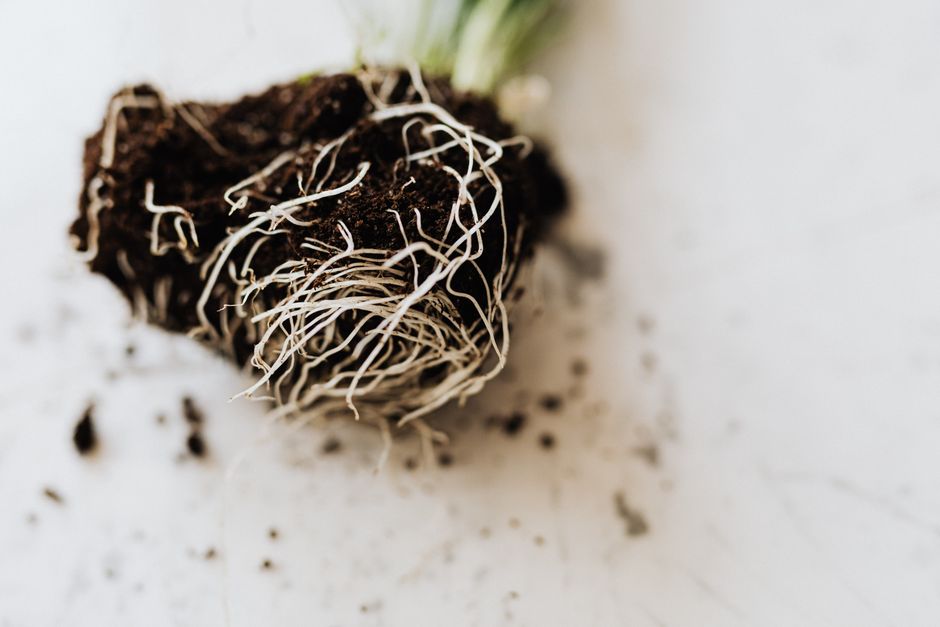
Aroid roots are unusual. They want oxygen the way ferns want moisture, and they will happily climb out of a container looking for it. So the pot is not just a holder. It is part of the root environment, and picking the wrong one quietly undoes every other good decision you make.
Why aroid roots are picky about their container
Most aroids in cultivation are hemi-epiphytes. In the wild they anchor to bark or moss, sending thick aerial roots into a thin skin of decomposing debris. That habitat is loose, airy, and drains within seconds of a rainfall. Then, crucially, it stays humid without staying wet.
A closed plastic pot with dense soil recreates almost none of that. The center stays saturated for days, oxygen drops, and the fine feeder roots suffocate before you notice anything above the substrate line. By the time a leaf yellows, you are already three weeks into a slow collapse.
I learned this the hard way with a Philodendron gloriosum in a glazed cachepot. The top inch of soil dried between waterings and I felt clever. Two months later I unpotted it to find the bottom third was a black, sour mush. The rim of the pot had told me nothing.
Material matters more than shape
There are only four pot materials I keep in rotation, and each solves a different problem. I stopped buying anything else because the trade-offs are not worth managing.
Terracotta. Unglazed clay wicks moisture out through its walls. A four inch terracotta pot in my apartment (55% ambient humidity, 68 to 72 degrees Fahrenheit) dries roughly 40% faster than the same size in plastic. This is a gift for anthuriums and any philodendron I have been overwatering. The downside is mineral crust on the outside within a few months, and terracotta shatters if you drop it on tile.
Plastic nursery pots. Cheap, light, and honest. They hold moisture longer, which suits monsteras and thirsty climbers. I like the ones with side slits, sometimes called aroid pots or slotted orchid pots, because the extra aeration mimics epiphytic conditions without me having to think about it.
Net pots for semi-hydroponics. When I converted a batch of anthuriums to LECA in 2019, I never went back for that group. Net pots sit inside an outer reservoir and roots grow through the mesh into the air gap. They breathe constantly.
Glazed ceramic as an outer sleeve only. The pretty pot on the shelf almost never touches the roots directly. I keep the plant in a plastic or terracotta grower pot and drop it inside the ceramic. This lets me lift it out to check weight, empty runoff, and swap seasonally without disturbing the root ball.
Drainage holes are non-negotiable
I have read every workaround: a layer of pebbles, activated charcoal, a piece of coffee filter. None of them create drainage. They create a perched water table, which is a saturated zone sitting above dry substrate, and it is exactly where aroid roots go to die.
If a pot has no drainage hole, it is a decorative object. Either drill it (a diamond-tipped bit and slow, wet pressure works on ceramic), or use it as a cover pot with a properly holed grower inside. There is no third option that I trust.
How I match pot to plant
The chart below is what actually lives on the inside of my potting cabinet door. It is not a rulebook, but it is where I start when I am repotting something new.
| Plant | Pot I reach for | Why |
|---|---|---|
| Anthurium (thin-leaf species) | Slotted plastic or net pot in LECA | Roots rot fast; maximum air, minimum stagnation |
| Anthurium clarinervium and velvets | Terracotta with chunky mix | Wants moisture but hates wet feet |
| Philodendron gloriosum, mamei (crawlers) | Wide, shallow plastic tray with drainage | Rhizome runs horizontally; deep pots waste substrate |
| Philodendron climbers | Plastic nursery pot with pole | Weight and moisture retention support fast growth |
| Monstera deliciosa | Heavy plastic or terracotta, generous size | Vigorous roots; needs stability more than restraint |
| Rhaphidophora tetrasperma | Standard plastic, one size up yearly | Grows fast, forgives most things |
| Anthurium warocqueanum | Net pot in sphagnum, hung or mounted | Epiphytic; drainage and airflow beat everything else |
Sizing: the two-finger rule
I size up by one inch of diameter at a time, no more. A plant sitting in a pot three sizes too large is surrounded by substrate that stays wet long after the root ball has drained, and that unused moisture is the perfect anaerobic starter culture.
My rough test: when I lift the plant out of its current pot, I want to see roots circling the outside of the root ball but still some soil visible between them. If the root ball is a solid mat with no soil showing, I was late. If I see mostly soil and few roots, the plant does not need a larger pot yet, only fresh mix.
- Water the plant the day before repotting so the root ball slides out intact.
- Choose a new pot no more than one inch wider in diameter.
- Add a shallow base of fresh mix, roughly 15 to 20% of the pot’s depth.
- Center the plant so the crown sits about half an inch below the rim.
- Backfill by tapping the pot on the bench, not by pressing down with your fingers.
- Water thoroughly, let it drain fully, and do not water again until the top inch dries.
The invisible variable: your home
Container choice is not universal advice, because your pot has to work in your climate. My apartment runs 55 to 65% humidity in summer and drops to 35% in winter with the radiator on. In winter I move a couple of my terracotta anthuriums into plastic sleeves because the wicking becomes too aggressive and I was watering them every three days.
A friend in Seattle keeps the same species in plastic year round because her ambient humidity rarely falls below 60% and terracotta would never dry enough. Neither of us is wrong. We are matching pot behavior to the room, not to a rule from a care card.
If you do nothing else, weigh your pots. I put a small kitchen scale on the potting bench and note the weight of each plant right after watering, then again when it is time to water. Over a month you learn the actual drying curve of every pot on your shelf, and you stop guessing. The Missouri Botanical Garden has a plain guide to watering container plants that echoes the same idea in less nerdy terms.
Repotting frequency and when to leave things alone
I used to repot everything every spring. I stopped because most aroids do not want it. Now I only repot when one of three things is true: roots are pushing hard against the drainage holes, the substrate has broken down into fines that no longer drain, or I see the plant declining and I need to inspect the roots.
Otherwise I top-dress with fresh bark mix in March, flush the pot with plain water once a season to clear salt buildup, and leave the plant to get on with its life. The University of Florida IFAS extension has useful notes on indoor plant care basics for those who want a more clinical framing.
A checklist I actually use
- Drainage hole present and not clogged
- Pot no more than one inch wider than the current root ball
- Material chosen for the plant’s moisture preference and my home’s humidity
- Substrate refreshed if it has been more than 18 months
- Weight of freshly watered pot noted, so I know when it is dry
- Cachepot has no standing water in the bottom
- Aerial roots have somewhere to go: pole, moss, or open air
Frequently asked questions
Are terracotta pots always better for aroids?
No. Terracotta is better for aroids you tend to overwater, or for species that specifically resent wet feet like Anthurium clarinervium. In a dry home, or for thirsty climbers like Monstera deliciosa, terracotta can wick moisture out faster than you can keep up with, which stresses the plant just as much as overwatering.
Can I use a pot without drainage if I only water lightly?
Not reliably. Even small amounts of water accumulate at the bottom of a sealed pot and create an anaerobic zone within a week or two. The plant looks fine until the day it does not. If you love a particular decorative pot, use it as an outer sleeve with a drilled inner pot inside, and empty any runoff after each watering.
Why do my aroid roots grow up and out of the pot?
Aerial roots are normal for climbing philodendrons, monsteras, and rhaphidophora. They are seeking humidity and something to grip. This is a signal your plant is healthy and would appreciate a moss pole or a slightly more humid corner, not a bigger pot.
How do I know if my pot is too big?
Water the plant thoroughly, then check the substrate a week later. If more than the top third is still wet, the pot is holding water the roots cannot use. Downsize at the next repot, and in the meantime water less often. Oversized pots are one of the most common causes of stalled growth in otherwise healthy collections.
Is semi-hydroponics with LECA worth the switch?
For some plants, yes. My thin-leaf anthuriums have been more stable in LECA than in any bark mix I have tried, because the constant airflow around the roots suits them. For crawlers with a horizontal rhizome, or for plants that anchor with fine feeder roots, I have had less success and I keep them in traditional substrate.
Frequently asked questions
Can plant viruses spread to humans?
No. Plant viruses only affect plants. They don't infect humans, pets, or other animals.
Is there a cure for plant viruses?
No. Once a plant is infected, the virus is usually present in all plant tissue. The plant cannot be cured. Options are isolation, disposal, or limited continued care.
How can I tell variegation from a virus?
Variegation is stable and the plant grows normally. Viruses often progress over time, accompanied by distortion, stunted growth, and decline. Patterns may be irregular and unique to each leaf with viruses.
Should I dispose of a virus-affected plant?
Possibly, especially if it's mixing with healthy plants. Isolation, separate tools, and accepting decline are alternatives. Each grower decides based on plant value and collection risk.