My first grow shelf was a wobbling wire rack from a hardware store, three clip lights, and a lot of optimism. Within six weeks the top shelf was scorched, the bottom shelf was leggy, and the whole thing sagged in the middle because a saturated 6-inch pot of moss weighs a lot more than a bag of pasta. I have rebuilt that setup four times since. What follows is what I have kept, what I have thrown out, and the small measurements that separate a shelf that grows plants from a shelf that just stores them.
Most of the shelf advice online is written for a single tier of pothos and a screw-in bulb. Collectors need something else. If you are running variegated aroids, small anthuriums, or a stack of moss-poled climbers, the shelf itself is part of the growing equipment, not just furniture. Every choice, from the depth of the wire grid to where the fan clips, changes what your plants do.
Why a shelf, and not a cabinet or a tent
People ask me this constantly. An IKEA Milsbo cabinet is beautiful and it holds humidity around 75 to 85 percent without much effort. A grow tent is a light-sealed workhorse for propagation. A shelf sits between the two: open air, ambient household humidity of roughly 40 to 55 percent depending on the season, and unrestricted access from every side. That last part matters more than people admit. I water faster, spot pests sooner, and repot without dismantling anything. For the majority of my mature collection, the tradeoff is worth it.
A shelf is also the honest starting point. If a plant cannot hold form on an open shelf under decent light with a small fan running, I know I have a species that genuinely needs a cabinet, and I can budget for one deliberately instead of buying three at once.
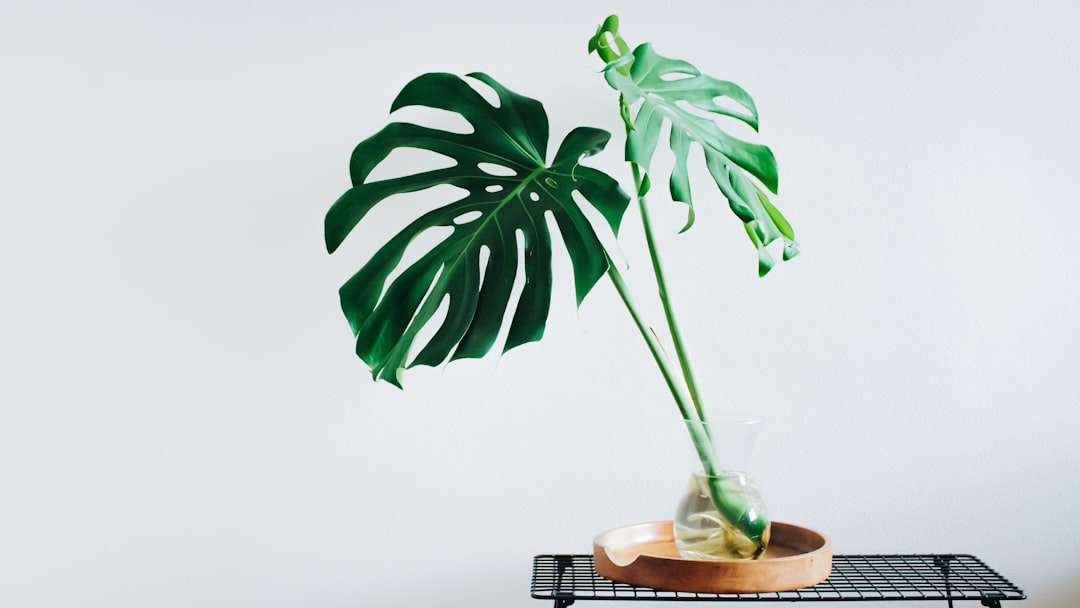
Sizing the frame for real plant weight
The single most common mistake is undersizing the shelving unit. A 4-inch nursery pot with soaked substrate weighs about 1.5 pounds. A 6-inch pot with a moss pole and a climbing philodendron can hit 8 to 10 pounds. Stack fifteen of those on a shelf and you are asking a lot of the frame.
I now use commercial chrome wire shelving rated for at least 350 pounds per shelf, with 18-inch deep shelves and 24 to 36 inches between tiers. That vertical spacing sounds generous, but climbers add height weekly, and you need clearance for a light fixture plus 6 to 10 inches of headroom above the canopy. If shelves sit closer than 20 inches apart, you will burn leaves within a season.
- Measure the tallest plant you own, add the light fixture depth (usually 2 to 3 inches), then add 8 inches of growing room. That is your minimum tier spacing.
- Confirm the shelf’s per-shelf weight rating, not just the total unit rating. Cheap racks advertise a total capacity and quietly cap each shelf at 40 pounds.
- Level the unit on furniture pads. A shelf that leans 1 degree pools water on one side of every saucer.
- Anchor the top corners to a stud if the unit is taller than 60 inches. A climbing monstera catching a fan draft has surprising leverage.
Lights: what actually reaches the leaves
I spent two years chasing marketing wattage before I bought a cheap quantum PAR meter and learned what my plants were actually receiving. Aroids and most tropical foliage are happy in the 100 to 250 PPFD range at leaf level, measured for 12 to 14 hours a day. Anything below 80 PPFD produces the stretched, pale growth people mistake for a nitrogen problem.
For open shelves my current default is a 24-inch or 48-inch LED bar rated around 40 to 60 actual watts, mounted 10 to 14 inches above the canopy. Full-spectrum white bars in the 3500K to 4000K range look natural in a living room and read close to daylight in photos. Purple blurple panels grow plants fine, but they will make your plant room look like a nightclub and they hide chlorosis until it is severe.
| Shelf depth | Light length | Mounting height | Approx PPFD at canopy |
|---|---|---|---|
| 14 in | 24 in bar, 30W | 10 in | 140-180 |
| 18 in | 24 in bar, 45W | 12 in | 160-220 |
| 18 in | 48 in bar, 60W | 14 in | 180-240 |
| 24 in | Two 24 in bars, 45W each | 12 in | 200-260 |
Numbers vary by fixture, but the pattern holds: a single bar in the center of an 18-inch shelf leaves the front and back edges dim. If your shelf is deeper than 16 inches, plan for two parallel bars or accept that the outer rows are for low-light plants.
Humidity without turning your room into a swamp
Open shelves lose humidity constantly. That is the point, and it is also the problem. In winter my apartment drops to 28 percent relative humidity, which is fine for a pothos and miserable for an anthurium clarinervium. A single ultrasonic humidifier aimed near, not at, the shelf can lift the immediate microclimate to 55 to 65 percent without soaking the walls.
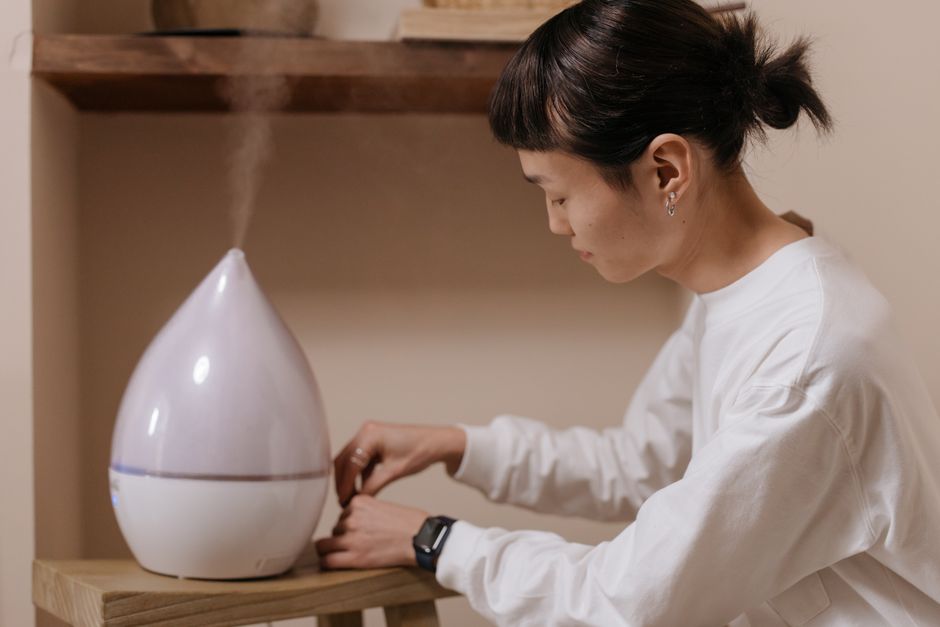
Two things I learned the hard way. First, never point a humidifier plume directly at foliage. The cool fog condenses on leaves and creates the exact stagnant film that invites bacterial spotting. Aim it at empty air a foot away from the nearest plant and let it drift. Second, buy a real hygrometer, ideally one with a probe you can move around the shelf. Ambient room readings from a wall unit are almost useless because humidity stratifies vertically by 10 to 20 percent between the bottom tier and the top.
Airflow: the piece people always skip
Airflow is the difference between a shelf that grows plants and a shelf that grows mildew. I run one small clip fan per two tiers, set to the lowest speed that keeps leaves moving gently. You want a light flutter on the newest growth, not a steady bend. Continuous, low airflow strengthens petioles, reduces fungus gnat pressure by drying the top substrate layer, and dramatically cuts the risk of pseudomonas leaf spot on anthuriums and alocasias.
A cheap USB fan drawing 2 to 4 watts is enough for a 4-foot shelf. I leave mine running 24 hours a day. The electricity cost is trivial and the plant response is immediate: within two weeks of adding airflow to my first serious shelf, three chronic yellowing issues resolved on their own.
Water, drainage, and the floor underneath
Wire shelves drip. Even careful watering leaves a rim of moisture on the underside of every pot. I put a shallow boot tray on every tier, lined with a thin layer of expanded clay pebbles. The pebbles keep pots from sitting in standing water, add a small amount of local humidity as they dry, and make it obvious when I have overwatered because the tray fills.
Under the whole unit I put a waterproof mat, the kind sold for under washing machines. Two years in, that mat has caught three separate small floods that would otherwise have soaked into hardwood. The mat costs about 20 dollars. Refinishing a floor does not.
A build checklist I actually use
- Chrome wire unit rated 350+ pounds per shelf, 18 inches deep minimum
- Tier spacing of 24 inches or more, wall-anchored if over 60 inches tall
- LED bars in 3500K to 4000K, 40 to 60 actual watts per 24 inches of shelf
- Timer set for 12 to 14 hours, ramping if the fixture supports it
- One small clip fan per two tiers, running continuously on low
- Ultrasonic humidifier aimed at empty air, not at plants
- Digital hygrometer with a movable probe
- Boot trays lined with expanded clay on every tier
- Waterproof mat under the entire unit
Troubleshooting the first six weeks
Something will go wrong in the first month. It is almost always one of four things.
| Symptom | Likely cause | What I do |
|---|---|---|
| Pale, stretched new leaves | Light too weak or too high | Lower fixture 2 in, verify with PAR meter or free phone lux app (rough) |
| Crispy leaf edges on top tier | Light too close or humidity crash | Raise fixture 2 in, check probe humidity at that tier specifically |
| Sudden fungus gnat bloom | Top substrate staying wet | Add or increase fan, top-dress with 1/4 in of pumice, water less often |
| Yellowing on lower leaves of climbers | Root zone too cold from floor draft | Move bottom tier plants up, or set unit away from exterior wall |
The University of Maryland Extension has a useful overview of general houseplant physiology that pairs well with anything you read about grow lights, and the RHS houseplant growing guide is worth bookmarking for baseline care numbers when you are cross-checking a species.
Frequently asked questions
Can I use a bookshelf instead of a wire rack?
You can, and it looks better in a living room, but solid shelves trap heat under the fixtures and block airflow between tiers. If you go that route, drill a few 1-inch vent holes in the back panel per shelf and add a small fan to each tier rather than one for the whole unit. Expect to run humidity 5 to 10 percent higher to compensate for stagnation.
How many watts of light do I actually need per shelf?
For general tropical foliage on an 18-inch deep, 48-inch wide shelf, aim for 45 to 60 actual wattage of quality LED at 12 inches above the canopy. Ignore the “equivalent” wattage on the box. Look for the draw in watts at the plug, and match against the PPFD table above. High-light plants like variegated monsteras want the upper end of that range.
Do I need a dedicated circuit for a plant shelf?
Almost never. A four-tier shelf with LED bars, a humidifier, and fans typically pulls 150 to 250 watts total, well under any standard 15-amp household circuit. What you should do is put everything on a single surge-protected power strip with a mechanical timer for the lights, so a nudge from a cat cannot silently reset a digital timer at 3 a.m.
Is a grow shelf loud?
The lights are silent. Small fans on low produce roughly the sound of a laptop fan, around 25 to 30 decibels at three feet. An ultrasonic humidifier gurgles softly every few minutes when it refills the atomizer. In a bedroom this can be noticeable at night; in a living room or dedicated plant room, most people stop hearing it within a week.
How long before I see results after building the shelf?
New root growth on most tropical foliage begins within 10 to 14 days if conditions are right. Visible new leaves usually appear at the 3 to 6 week mark, depending on species and season. If nothing has changed at 8 weeks, the issue is almost always light intensity or root health, not the shelf itself.
Frequently asked questions
Will the brown edges on my leaves heal?
No, existing damage is permanent. The recovery is in new leaves emerging cleaner if you fix the underlying issue. Damaged leaves can be removed once new healthy growth is established.
What causes brown leaf edges?
Most commonly humidity below 45%, chlorinated or hard tap water, fertilizer salt buildup, or inconsistent watering. Each cause has a specific fix.
How can I tell if it's humidity or water quality?
Get a hygrometer to verify humidity. If humidity is over 55% and edges still develop, it's likely water quality. Try switching to filtered water for 30 days and compare new leaves.
Can I trim brown edges off?
Yes, for aesthetic reasons. Trim with clean scissors to mimic the natural leaf shape. This is cosmetic and doesn't prevent future edge browning if conditions are unchanged.