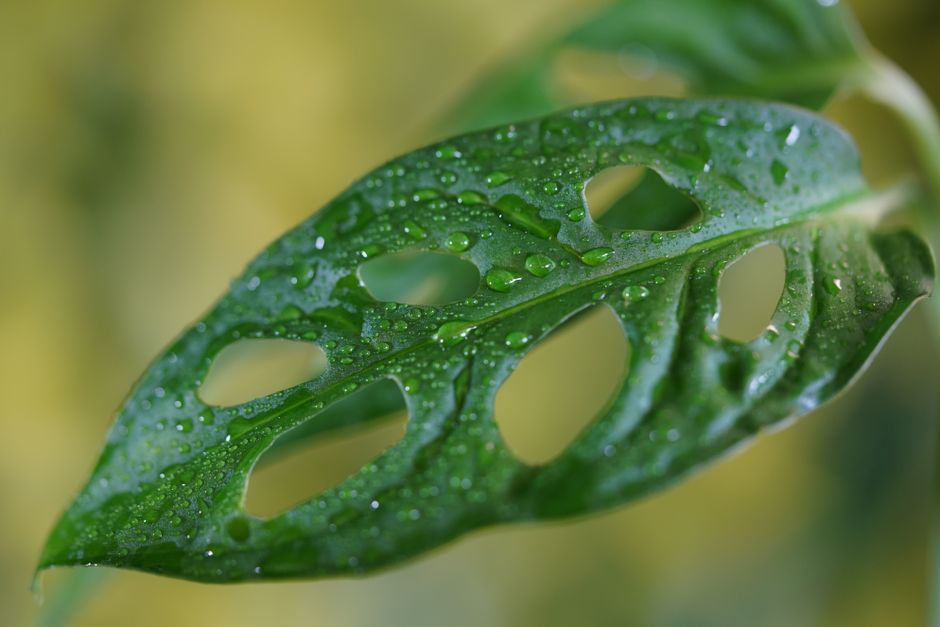
My first Rhaphidophora tetrasperma arrived in a 4 inch nursery pot, three leaves tall, marketed under the nickname “mini-monstera.” Within six weeks it had climbed 40 cm up a coir pole and pushed out its first fenestrated leaf. Within six months it had also given me two crispy tips, one yellowed lower leaf, and a very firm opinion about watering intervals. This is the plant that taught me to stop treating aroids as a monolith.
It is neither a Monstera nor a Philodendron, though it borrows visual cues from both. Native to southern Thailand and Malaysia, it is a slender epiphytic climber that in cultivation behaves like a well-mannered but hungry vine. Below is the care I have actually used, across three specimens and two apartments, to keep it producing fenestrated leaves rather than sad juvenile ones.
What you are actually buying
Rhaphidophora tetrasperma belongs to a genus of roughly 20 species in the Araceae family. The plant you see on sale is almost always the plain green form. Variegated cultivars (the mint, the aurea, the albo) exist and behave similarly, though variegated tissue burns faster and grows about 30 to 40 percent slower in my experience.
A few honest notes before you commit:
- Mature leaves fenestrate reliably once the vine climbs. Unstaked plants often stay in a juvenile, unsplit form for years.
- Growth is fast for an aroid. A healthy specimen puts out a leaf every 14 to 21 days in the warm months.
- It is toxic to cats and dogs due to calcium oxalate crystals, per the ASPCA toxic plant list. Keep it out of reach.
- It is not a rare plant anymore. Prices for the green form sit between 8 and 25 USD in most markets.
Light: the single variable that decides everything
This plant reads light the way a musician reads tempo. Too little and the internodes stretch to 15 cm or more, leaves shrink, and fenestrations disappear. Too much direct sun and the thin leaves scorch within days.
My working targets, measured with a cheap lux meter at leaf height:
| Light level | Lux at leaf | What you get |
|---|---|---|
| Too low | Under 800 | Leggy stems, no splits, slow decline |
| Acceptable | 1,000 to 2,500 | Steady growth, some fenestration |
| Ideal | 2,500 to 10,000 | Compact nodes, reliable splits |
| Risky | Over 20,000 direct | Bleaching, brown patches within a week |
An east window, an unobstructed north window in summer, or a spot 60 to 90 cm back from a south or west window with a sheer curtain will all work. Under LEDs I run mine at roughly 150 to 200 PPFD for 12 hours and get identical results.
Water: the mistake I made twice
Rhaphidophora tetrasperma looks like it should love moisture. It does, at the roots, in short bursts, with air. What it does not love is a chronically wet pot. I lost my second plant to root rot after keeping the substrate evenly damp for three weeks during a cool spell. The stem base turned brown and mushy from the soil up, and by the time I noticed the smell, only the top 20 cm was salvageable.
My current rule: water thoroughly when the top 3 to 4 cm of substrate feels dry and the pot has lost noticeable weight. In a chunky aroid mix in a 15 cm pot, that usually falls every 5 to 8 days in summer and every 10 to 14 days in winter. Always water until it runs freely from the drainage holes, then tip out anything that pools in the saucer within 10 minutes.
Substrate and pot: build for air, not moisture retention
The mix I use for every specimen in my collection right now:
- 40 percent orchid bark, small to medium grade
- 20 percent perlite or pumice
- 20 percent coco coir or peat-free potting mix
- 15 percent horticultural charcoal
- 5 percent worm castings for a slow nutrient trickle
This drains within seconds when you water and dries evenly. Terracotta pots suit this plant well because they pull water out of the substrate faster than plastic, which forgives the occasional heavy hand. If you prefer plastic or ceramic for aesthetics, size down by one pot diameter to compensate.
Support: the difference between a houseplant and a hedge
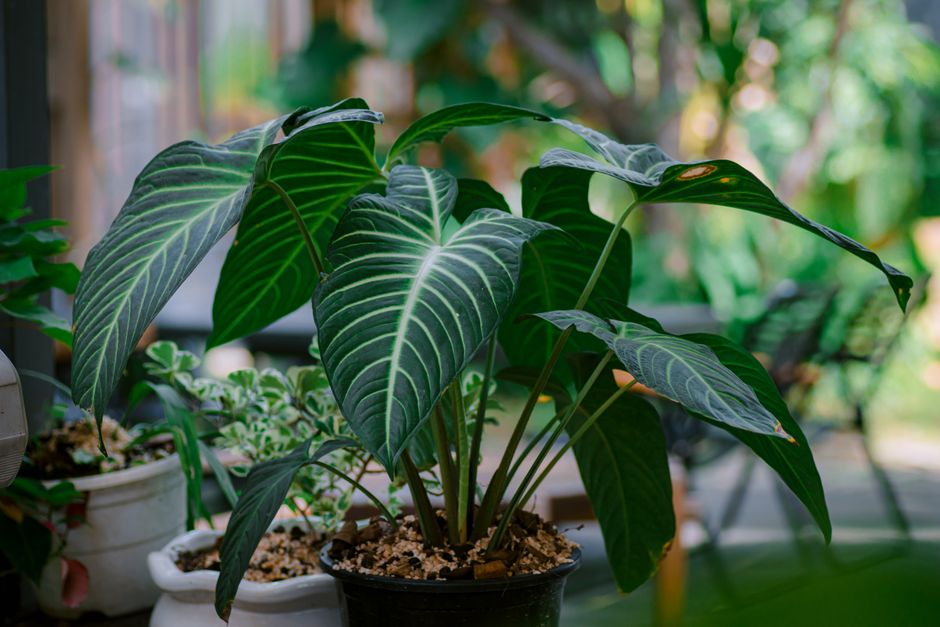
Without a climbing surface, Rhaphidophora tetrasperma will either flop, twist toward the nearest light source, or produce leaves that shrink with each node. Aerial roots need something to grip, and grip triggers the plant to invest in bigger, fenestrated leaves.
I have tested three supports across my specimens:
| Support | Cost | What I noticed |
|---|---|---|
| Coir pole | 10 to 20 USD | Easy, dries fast, needs replacing every 2 years |
| Sphagnum-stuffed mesh pole | 15 to 30 USD | Best root attachment, largest new leaves |
| Wooden plank | Free to 15 USD | Stable but slower attachment |
A moss pole kept lightly moist gave me the fastest jump in leaf size, from 8 cm juvenile leaves to 18 cm fenestrated ones within four months. If you do not want to mist a pole daily, a coir pole works fine and asks less of you.
Temperature, humidity, and airflow
Comfortable indoor conditions suit this plant. I aim for 20 to 28 C during the day and no colder than 15 C at night. Below 12 C growth stalls and cold roots invite rot. Humidity between 50 and 70 percent produces the best leaves, but I have grown healthy specimens at 40 percent with no visible penalty beyond slightly slower unfurling.
Airflow matters more than most guides admit. A small clip fan on low, aimed near but not at the plant, has done more to prevent fungal spots on my tetrasperma than any humidifier. Stagnant humid air is where problems begin.
Feeding: little and often beats big and rare
This is a hungry vine in growth mode. I use a balanced liquid fertilizer at roughly 1/4 to 1/2 the label rate every second watering from March through October. In winter I drop to once a month or skip entirely if the plant is not pushing new growth. Slow-release pellets on top of the substrate work equally well if you dislike measuring; a pinch of a 14-14-14 formula lasts about three months.
Watch the newest leaves. Pale new growth with green veins usually points to iron or manganese lockout from a substrate that has drifted alkaline. A flush with plain water and a return to a slightly acidic feed corrects it within two to three new leaves.
Propagation: almost too easy
Rhaphidophora tetrasperma roots from stem cuttings with a success rate close to 95 percent in my records. My method:
- Cut just below a node that has an aerial root, using clean shears.
- Leave one or two leaves on the cutting, remove the rest.
- Place the node in a small jar of room-temperature water, or in damp sphagnum inside a clear cup.
- Keep in bright indirect light at 22 to 26 C.
- Change the water every 5 days if using water propagation.
- Pot up once new roots reach 4 to 6 cm, usually within 2 to 4 weeks.
Water-rooted cuttings sometimes sulk for a few weeks after transfer to substrate. Sphagnum-rooted cuttings transition without a pause. If you plan to grow the cutting on quickly, use moss.
Problems I have actually run into
A quick reference from my own notebook. Every entry here has happened to one of my plants.
- Yellow lower leaf every few weeks: normal shedding, do nothing if new growth looks healthy.
- Brown crispy tips: usually low humidity plus fertilizer buildup. Flush the pot and cut back feeding.
- Small new leaves with no splits: light too low or no support. Move brighter, add a pole.
- Black stem base and sour smell: root rot. Cut back to firm green tissue and re-propagate.
- Silvery stippling on leaves: thrips or spider mites. Wipe leaves, rinse in the shower, treat with insecticidal soap weekly for three weeks.
- Long gaps between leaves (over 8 cm): stretch from low light or a missed feeding cycle.
How this plant compares to what people think it is
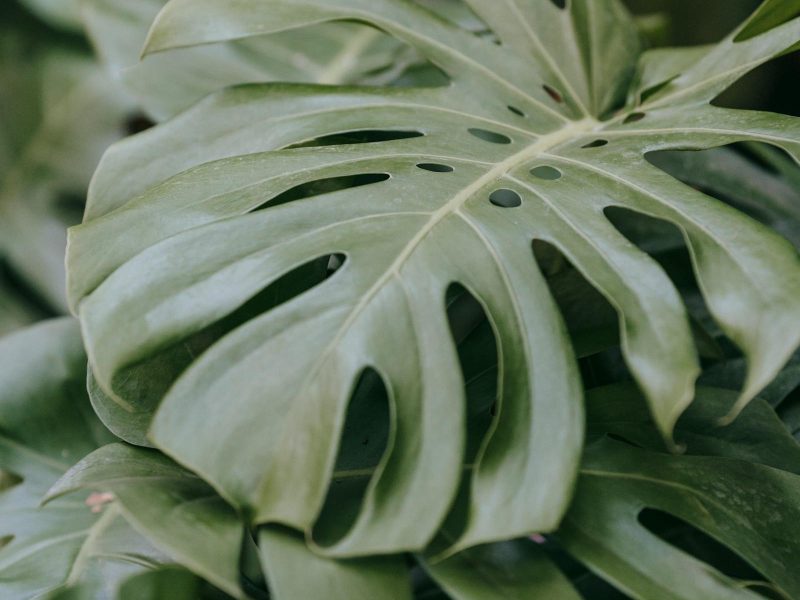
Buyers often approach Rhaphidophora tetrasperma expecting a small Monstera deliciosa. It is not. Leaves top out around 20 to 25 cm in typical indoor conditions, the vine stays slender, and fenestrations are simpler holes rather than the deep lobes of a mature Monstera. For a broader look at the genus and its relatives, the RHS plant database is a useful starting point, and detailed taxonomy sits in the International Aroid Society archives.
If you want a compact, fast climber that fills a corner within a year and forgives a missed watering, this is the right plant. If you want big cheese-hole leaves, buy a Monstera.
My one-year care calendar
| Month | What I do |
|---|---|
| January to February | Water sparingly, no fertilizer, watch for pests near heaters |
| March | Repot if roots circle the pot, resume feeding at half strength |
| April to June | Peak growth, feed every 2 weeks, train onto pole |
| July to August | Increase watering frequency, mist pole if using sphagnum |
| September | Take cuttings for winter insurance |
| October to December | Taper feeding, reduce water, hold temperature above 15 C |
Frequently asked questions
Why is my Rhaphidophora tetrasperma not producing split leaves?
Two reasons account for nearly every case I have seen: light below 1,000 lux at leaf height, or no vertical support for aerial roots to grip. Fix either and splits usually appear within three to five new leaves.
Can I grow it in pure LECA or semi-hydroponics?
Yes, and it does well. Transition a rooted cutting straight from water into LECA rather than converting a soil-grown plant. Use a dilute hydroponic nutrient at every top-up and empty the reservoir fully every 3 weeks to prevent salt buildup.
How often should I repot?
Every 12 to 18 months for a healthy plant, or when roots have wrapped the pot at least twice. Go up one size only. Oversized pots hold too much wet substrate and slow the plant down.
Is it safe around children or pets?
No. Like most aroids, it contains calcium oxalate crystals that cause oral irritation, drooling, and stomach upset if chewed. Place it out of reach and wear gloves if you have sensitive skin when pruning.
Why do the aerial roots look dry and brown?
Aerial roots exposed to dry room air often go firm and brown on the outside. This is normal and does not harm the plant. If you want them to attach and thicken, redirect them into a moss pole or a small pot of substrate beside the plant.
Rhaphidophora tetrasperma rewards attention to the basics more than any exotic technique. Give it light it can actually work with, a pole to climb, a chunky mix, and water on its own schedule rather than yours. Within a year you will have a vine that looks nothing like the shy nursery starter you brought home.