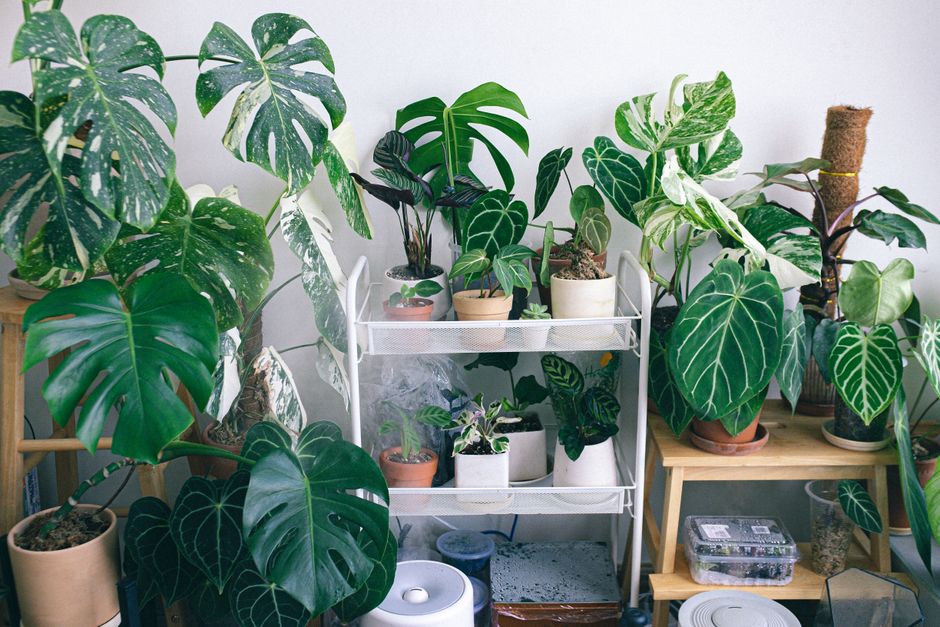
The first time I ran a lighting audit on my plant room I found a shelf running at 40 lux at 8 in the morning and a Philodendron gloriosum sulking on it for six months. The plant was not sick. It was underlit by a factor of roughly 200. I had assumed the shelf was fine because the room felt bright to my eyes, and eyes are terrible instruments for measuring photons. That afternoon I bought a $22 lux meter, spent two hours crouching at various plant heights, and rewrote almost every position in the room. Half my slow-growth complaints resolved within a month.
An audit is not glamorous. It is a clipboard, a cheap meter, and a willingness to admit that the pretty corner near the window is actually the dimmest spot in the house at 3 p.m. What follows is the protocol I now run every February and September, when the sun angle shifts enough to redraw the map.
Why eyeballing light does not work
Human vision adapts logarithmically. A room that feels comfortably bright to us can be sitting at 200 lux, which is roughly what an office corridor puts out and nowhere near what a variegated Monstera needs to hold its white sectors. Meanwhile a spot two feet from a south window in winter can peak at 8,000 lux for an hour and then drop to 300 by 4 p.m. Our brains average all of this into “bright enough.” Plants integrate photons over the day, which is a different measurement entirely, and they are ruthless about the daily total.
The unit that matters for growth is Daily Light Integral, or DLI, expressed in moles of photons per square meter per day. Most hobbyists cannot afford a quantum sensor, so we approximate. Lux is a proxy. It measures light weighted for human vision, which is heavy on green, but for white-spectrum LEDs and daylight the conversion is stable enough for practical decisions.
The gear I use for a home audit
You do not need a $400 Apogee sensor to start. Mine is still a $22 Dr.meter LX1330B that I calibrated once against a friend’s Apogee MQ-500 and found accurate within about 12 percent for both daylight and warm-white LED. That is close enough to make every decision I actually need to make.
- A lux meter with a rotating sensor head (rigid meters make it awkward to read at shelf height).
- A phone with a stopwatch and notes app, or a paper clipboard.
- Painter’s tape and a marker to label measurement points.
- A tape measure for fixture-to-leaf distance.
- The manufacturer PAR chart for each grow light, if you have one.
The conversion math you actually need
PPFD, measured in micromoles per square meter per second, is what horticulture papers use. For sunlight the conversion is roughly 54 lux per 1 PPFD. For a typical 3500K to 5000K white LED it is closer to 65 to 75 lux per PPFD, depending on phosphor mix. I use 70 as a working constant for LED fixtures and 54 for window light. It is not precise. It is directionally correct, which is what audits need.
To get from PPFD to DLI: multiply PPFD by the photoperiod in seconds, then divide by 1,000,000. A shelf reading 200 PPFD for 12 hours gives (200 x 43200) / 1000000 = 8.64 mol per square meter per day. That number tells you whether your Anthurium warocqueanum is going to hold its velvet or slowly etiolate.
Target DLI by plant type
These are the ranges I actually design around, pulled from years of notes and cross-checked against extension research. The University of Wisconsin extension has a good primer if you want the underlying horticulture.
| Plant group | Minimum DLI | Target DLI | Rough lux for 12 hr |
|---|---|---|---|
| Deep-shade aroids (velvet Anthurium, Philodendron gloriosum) | 4 | 6-8 | 4,000-8,000 |
| Medium-light aroids (most Philodendron, Monstera deliciosa) | 6 | 10-14 | 8,000-14,000 |
| Variegated Monstera, Syngonium albo | 10 | 14-18 | 14,000-18,000 |
| Calathea, Maranta | 4 | 6-10 | 4,000-10,000 |
| Alocasia (jewel types) | 8 | 12-16 | 10,000-14,000 |
| Hoya (bloom-capable) | 12 | 18-25 | 16,000-22,000 |
Lux numbers assume a 12 hour photoperiod and a white LED spectrum. Shorten the day and the required intensity climbs.
The walkthrough, step by step
I run the audit twice on the same day: once around 10 a.m. and once around 3 p.m., because window light shifts dramatically and grow-light-only shelves need only one reading.
- Map the room on paper. Sketch every shelf, cabinet, and windowsill. Number the positions. I currently have 34 numbered spots across two IKEA Milsbo cabinets, three shelves, and two windowsills.
- Set the meter at leaf height, not shelf height. A 20 inch Alocasia has its canopy 20 inches above the pot rim. Measure where the light actually lands on the leaves.
- Face the sensor at the primary light source. For overhead LEDs, sensor up. For window-lit shelves, sensor toward the window.
- Log the raw lux, the time, the fixture, and the fixture distance. Do not convert on the fly. Convert later at the kitchen table with a spreadsheet.
- Take one reading with the fixture off if you have any ambient light contribution. Subtract this from the on-reading to isolate the fixture output. My cabinets contribute about 300 to 900 lux of ambient depending on the hour.
- Note any leaf shadow on the sensor. If a taller plant is casting shade on the reading spot, that is real data. Log it.
- After the two passes, calculate a rough DLI using average lux times photoperiod, converted with 70 lux per PPFD for LED zones and blended for window zones.
What I found in my own room, and what I changed
My last audit produced 34 rows of numbers. Here are the three that mattered.
Position 12, second shelf of the north cabinet, held a Philodendron verrucosum. The Barrina T8 above it was rated 20 watts and sat 14 inches from the leaves. Reading: 3,200 lux at leaf level. DLI at 14 hours: about 2.3 mol. That plant had been pushing pale leaves and stretched petioles for three months. I moved the fixture down to 8 inches, added a second Barrina strip, and the next reading was 11,400 lux. Six weeks later the new leaf came in fully colored and half again the size of the previous one.
Position 4, the top of a bookshelf near a west window, held a Hoya carnosa I was trying to bloom. Peak reading at 3 p.m.: 18,000 lux. Morning reading: 900 lux. Average across a 10 hour day: roughly 6,500 lux, or a DLI near 4.3. Nowhere near bloom territory. I moved the Hoya to a spot with a 20 watt full-spectrum panel supplementing the window and doubled the average. It set peduncles the following spring.
Position 27, the sunniest windowsill, was hosting a Calathea orbifolia. Peak reading: 24,000 lux with direct afternoon sun. The leaves were bleaching at the edges. I swapped it with a Hoya that wanted the light. Both plants recovered within a month.
Fixture wattage does not equal plant light
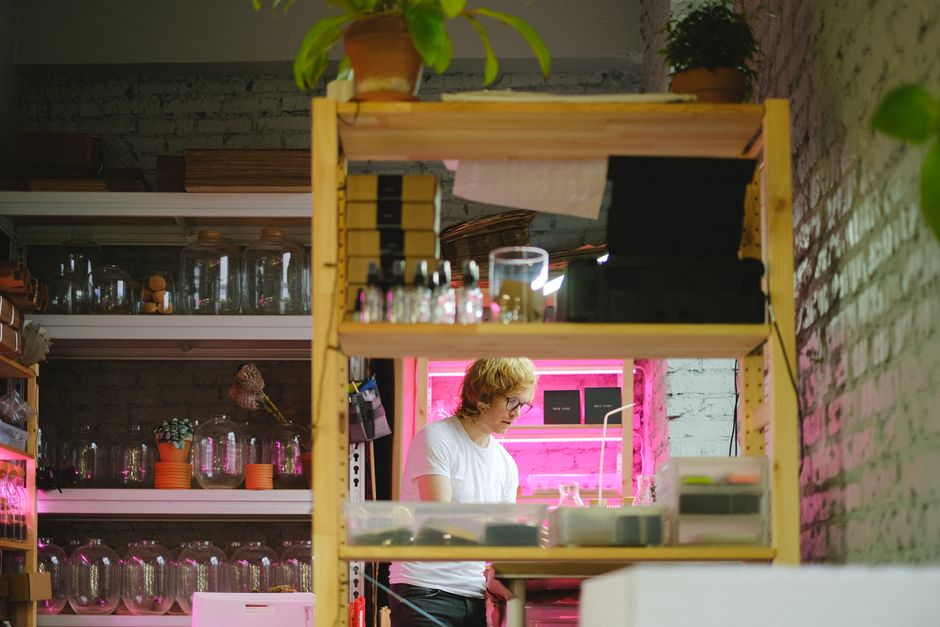
A 60 watt fixture at 24 inches often delivers less usable light than a 20 watt fixture at 8 inches. Inverse square law is unforgiving. When I audit fixtures, I care about three things: PPFD at leaf distance, spectrum (I prefer 3000K to 4000K with a red boost for most foliage), and beam angle. A narrow-beam spotlight can hit 400 PPFD in a 6 inch circle and 40 PPFD six inches to either side. That is why I run linear strips for shelves and reserve spot fixtures for a single specimen plant.
The Royal Horticultural Society has a plain-language overview of grow light types if you are still choosing hardware.
How often to re-audit
Twice a year at minimum, on solstice-adjacent dates. Also anytime you add a plant taller than 12 inches to a shelf (it shades its neighbors), rearrange the room, change a bulb, or notice a plant declining without obvious pest or watering cause. I keep the numbered map taped inside a cabinet door and pencil in the current occupant of each position. When something moves, the map moves. When the sun shifts in March, I run the passes again.
A note on burnout, mine not the plants’
The first audit takes two or three hours and feels tedious. The second one, six months later with the map already drawn, takes forty minutes. The third one is fast enough that I do it while listening to a podcast. The payoff is that you stop guessing. You know why the Anthurium is stalling. You know the shelf can host a Hoya. You stop buying plants for spots that cannot support them, which is the most expensive habit in this hobby.
Frequently asked questions
Can I use a phone lux meter app instead of a real meter?
You can, but the readings drift wildly between phone models and are usually 20 to 40 percent off in either direction. I tested three apps against my Dr.meter and one Apogee sensor. The best app was within 25 percent in daylight and off by more than 50 percent under warm LED. If you only ever have one light source and you are comparing spots to each other, a phone app is passable. For deciding whether a spot supports a $200 plant, spend the $22 on a real meter.
What lux number counts as “bright indirect light” from a plant tag?
Roughly 10,000 to 20,000 lux at leaf level for most of the day, which corresponds to a DLI of about 6 to 12. That range covers the vast majority of common houseplants labeled “bright indirect.” Anything below 5,000 lux average is low light, not bright indirect, no matter how bright the room looks.
Do I need a PAR or PPFD meter if I already have a lux meter?
Not for hobby decisions. The lux to PPFD conversion is stable within about 15 percent for a given spectrum, and 15 percent almost never changes which plant belongs on which shelf. A PAR meter becomes worth it if you are running mixed spectra (heavy red LEDs, magenta blurple panels) where the human-eye weighting of lux breaks down. For neutral white LEDs and daylight, lux is fine.
How do I measure light under a dense canopy plant?
Hold the sensor at the lowest leaf level and take multiple readings around the plant, then average. Understory leaves in a mature Philodendron gloriosum can be getting 20 percent of the light hitting the top leaf. If the lower leaves are yellowing and it is not overwatering, canopy shading is often the cause and thinning or repositioning solves it.
Should photoperiod match the plant’s native day length?
Not for foliage plants. Twelve to fourteen hours is a good default for tropical understory species regardless of hemisphere. Shorter periods (10 to 11 hours) can trigger flowering in day-length-sensitive plants like some Hoya, but for pure foliage growth, a stable 12 to 14 hour cycle year round is what I run and what most of my plants respond to.
Frequently asked questions
How long does transplant shock last?
Most plants recover within 2-4 weeks. Sensitive plants may take 6-8 weeks. Severe cases or off-season repots can take longer.
Why is my plant drooping after repotting?
Initial drooping is normal as the plant adjusts. It should recover within 24-48 hours with proper watering. If drooping continues for over a week, something may be wrong.
Should I fertilize after repotting?
No, wait at least 4-6 weeks. Fresh substrate often has adequate nutrients, and stressed roots can't use fertilizer efficiently. Salt buildup can damage recovering roots.
Can I repot in winter?
Avoid it unless necessary. Winter repots have higher failure rates due to slower root recovery in cooler temperatures. Emergency repots (for root rot or severe pests) are exceptions.