My first Peperomia argyreia arrived in a 3.5 inch nursery pot with two chewed leaves and a price tag that felt generous for something so small. Six years on, I have divided that original plant four times, gifted rooted cuttings to at least a dozen friends, and lost exactly one to a winter that got away from me. This piece is the guide I wish someone had handed me back then, written from the pot rim down.
The watermelon peperomia is often sold as easy, and it mostly is, but the failures I see in collector groups follow a pattern. Too much water, too little light, and a heavy peat brick of a substrate. Fix those three, and the striped foliage does the rest.
What you are actually growing
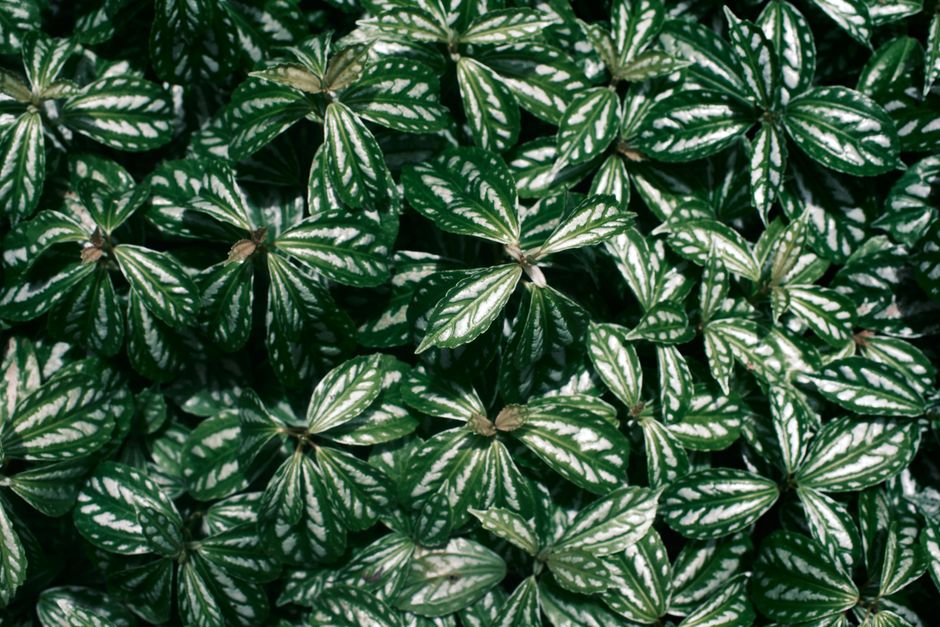
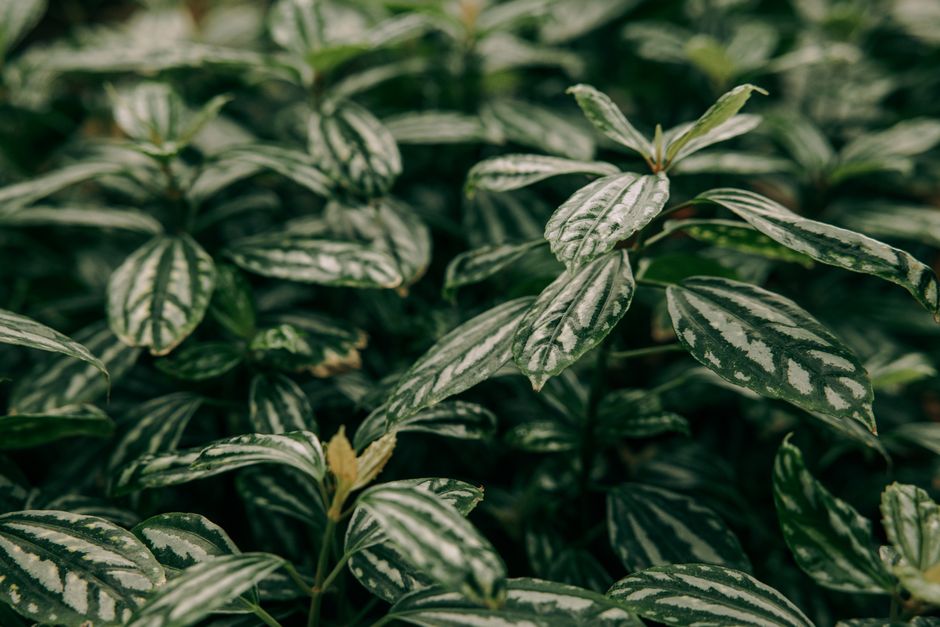
Peperomia argyreia is a small, semi-succulent perennial native to the understory of northern South American rainforests, from Brazil into Bolivia and Venezuela. In its home range it grows on humus-rich pockets over rock and rotting wood, catching filtered light through the canopy. The leaves are the point: rounded, slightly dished, with silver bands radiating from a red-tinged petiole. The whole plant tops out at about 20 to 30 cm in a household setting.
The genus sits in the pepper family, Piperaceae, which surprises people who assume anything succulent-looking must be a Crassulaceae relative. That family placement matters for one practical reason: peperomias produce those rat-tail flower spikes rather than the showy blooms of echeverias, and they store water in leaves and petioles rather than in a taproot. You are growing a shallow-rooted forest plant that pretends to be a succulent. If you can hold that dual personality in mind, the care sorts itself out. For a solid botanical overview I sometimes point people to the Missouri Botanical Garden entry.
Light: bright, indirect, and honest about it
The single most common cause of a stretched, sad watermelon peperomia is a room the owner calls “bright” that is, in fact, dim. I use a cheap lux meter app as a sanity check. Anything reading below 400 foot-candles at the leaf during the brightest part of the day is going to disappoint you.
My working targets, measured at leaf height on a clear day:
- Ideal: 800 to 1500 foot-candles of filtered light
- Tolerated: 400 to 800 foot-candles, with slower growth
- Too low: below 300 foot-candles, expect long petioles and faded stripes
- Too high: above 2500 foot-candles of direct sun, expect bleached patches
An east window one meter back is my default recommendation. A north window in summer works in the tropics but rarely elsewhere. If you are relying on grow lights, a 20 watt full spectrum bar at about 30 cm above the canopy on a 12 hour timer keeps the pattern crisp through winter.
Watering by weight, not by calendar
I stopped watering peperomias on a schedule the year I killed three in a row. Now I lift the pot. A freshly watered 4 inch plastic pot of watermelon peperomia weighs roughly 220 to 260 grams in my standard mix. When it drops to about 130 grams, I water thoroughly until it runs from the drainage holes. That usually lands somewhere between 8 and 14 days depending on season and room humidity.
A watering routine that has kept mine alive
- Lift the pot. If it feels noticeably light, proceed. If it still has weight, wait 48 hours and check again.
- Push a wooden skewer 4 cm into the mix. If it comes out with dark, damp particles clinging, wait.
- Water in the sink with room temperature water until at least 20 percent of the volume drains out.
- Let the pot drain fully for 10 minutes before returning it to its saucer. Never let it sit in standing water.
- Note the date on a small tag pushed into the substrate. Three data points reveal your home’s true watering rhythm.
The leaves themselves will tell you if you are late. A slight softening or a barely visible cupping means the plant is drawing on stored water. That is a fine cue, not an emergency. Crispy edges or collapsed petioles mean you overshot.
The substrate that changed everything for me
I used to buy bagged houseplant mix and wonder why my peperomias sulked. The problem was air. Watermelon peperomia roots want moisture around them for a short window, then oxygen for a long one. My current mix, by volume:
| Component | Proportion | What it does |
|---|---|---|
| Coco coir or fine bark | 40 percent | Holds moisture without compacting |
| Perlite, medium grade | 30 percent | Creates air pockets, drains fast |
| Pumice, 3 to 6 mm | 20 percent | Weight, structure, slow water release |
| Worm castings | 10 percent | Slow nutrients, microbial life |
Repot every 18 to 24 months, or when the mix has broken down into a dense, dark paste. Go up one pot size only, and only if the roots have filled the current container. Watermelon peperomia flowers and colors better when slightly root-bound, and an oversized pot is a fast route to rot.
Humidity, temperature, and the winter problem
People overrate humidity for this species and underrate temperature stability. Mine thrive at 45 to 60 percent relative humidity, which is what most homes hover around anyway. Below 35 percent for weeks on end, the leaf edges brown; a small pebble tray or a nearby humidifier fixes that without turning the room into a swamp.
Temperature is where winter losses happen. Watermelon peperomia sulks below 15 C and suffers real damage below 10 C. A cold windowsill on a January night can drop 8 degrees below the room reading. I keep mine at least 20 cm from the glass from November through March, and I never water a chilled plant. Cold roots plus wet substrate is the exact recipe for the black petiole collapse that shows up in emergency posts every February.
Feeding: less than you think
Peperomias are light feeders. I use a balanced liquid fertilizer at quarter strength, roughly 1 ml per liter of a 3-1-2 formulation, every third watering from March through September. Nothing at all from October through February. The worm castings in the mix carry the plant through winter.
If the newest leaves come in small and pale, I do a single foliar feed with the same dilute solution and let the plant tell me whether it wanted it. If the answer is yes, I add a fourth feeding to the season the following year. This is the least glamorous part of the hobby and by far the most reliable route to a plant that actually looks like the catalog photo.
Propagation: three methods that actually work
Watermelon peperomia is one of the most forgiving plants to propagate, which is why it circulates so widely in trade groups. My hit rates over the last three years:
- Whole leaf with petiole in water: about 85 percent success in 4 to 6 weeks
- Whole leaf with petiole in damp sphagnum: about 90 percent success in 3 to 5 weeks
- Leaf cut in half across the veins, pressed into moist mix: about 60 percent success in 6 to 10 weeks, but multiple plantlets per leaf
- Division of a mature clump at repotting: about 95 percent success, immediate mature plants
For beginners I recommend the sphagnum method. Take a healthy mature leaf with 2 to 3 cm of petiole, let the cut callus for two hours, then insert the petiole into pre-moistened long-fibered sphagnum in a clear deli cup with a few pin holes in the lid. Bright indirect light, no direct sun, no fussing. Check weekly. Pot up when you see white roots at least 2 cm long and the first pinhead of a new leaf.
Pests and problems I have actually seen
In six years I have dealt with three real pest issues on watermelon peperomia. Fungus gnats when I over-watered, mealybugs that hitched in on a new acquisition, and a single episode of spider mites during a very dry heating season. Thrips and scale I have never encountered on this species, though both are theoretically possible.
| Symptom | Likely cause | My first move |
|---|---|---|
| Yellowing lower leaves, mushy petioles | Overwatering or cold roots | Unpot, inspect roots, cut rot, repot in dry mix |
| Small flying insects around the soil | Fungus gnats | Top-dress with 1 cm of pure sand, water less |
| White cotton in leaf joints | Mealybugs | Spot treat with 70 percent isopropyl on a cotton bud |
| Fine webbing, stippled leaves | Spider mites | Rinse thoroughly, raise humidity, insecticidal soap |
| Long petioles, faded stripes | Insufficient light | Move closer to window or add a grow light |
| Crispy brown leaf edges | Underwatering or salt buildup | Flush pot with plain water, resume weight-based watering |
One note that is worth its own line: Peperomia argyreia is considered non-toxic to cats and dogs according to the ASPCA plant database, which is one reason it earns a permanent shelf spot in households with curious pets.
Buying well and settling a new plant
Nursery stock is often overwatered and rootbound in peat. When I bring one home, I quarantine it away from the collection for two weeks, water it only when the pot is genuinely light, and repot at the end of that fortnight into my chunky mix. I resist the urge to fertilize for the first month. Roughly 9 out of 10 declining new-arrival stories I hear in forums come from skipping quarantine and repotting immediately into a larger pot with heavy soil.
Look for firm, upright petioles, no soft brown patches at the base, and pattern that is crisp rather than washed out. A single chewed leaf is fine; systemic softness is not.
Frequently asked questions
Why are the leaves on my watermelon peperomia curling?
Gentle downward cupping usually means the plant is thirsty and drawing on stored water. Water thoroughly and it will unfurl within 24 hours. Upward cupping or tight rolling suggests either cold stress or root damage from prolonged wet soil. Check root health before watering again.
How often should I really water this plant?
Every 8 to 14 days in a warm season, every 3 to 4 weeks in a cool winter, but only as a starting point. Weigh the pot. The rhythm depends on your specific room, pot type, and mix. A terracotta pot in a sunny kitchen dries in half the time of a plastic pot in a cool bedroom.
Does it need a grow light?
Not if you have a bright east-facing window within one meter. Yes, almost certainly, if you are trying to keep one on a bookshelf in an interior room or through a dark northern winter. A single 20 watt LED bar on a timer is enough for a shelf of three or four plants.
Can I put it in a terrarium?
I would not. The airflow inside a closed terrarium plus the plant’s dislike of persistently wet foliage tends to produce rot within a season. An open bowl arrangement works, provided the substrate drains freely and the container is not deeper than the root ball needs.
Why is my plant flowering, and should I cut the spikes?
Those pale green rat-tail spikes appear when the plant is happy and mature, usually in late spring. They are not showy, and they do draw some energy from foliage production. I cut them at the base once the novelty wears off, generally after a week of admiring them, and I have never seen the plant complain.
What six years has taught me
Peperomia argyreia is not a difficult plant, but it is a specific one. Give it the light of a forest edge, the water of a thoughtful cactus keeper, and the soil of a chunky aroid mix, and it will pay you back with those extraordinary silver-striped leaves for years. The Royal Horticultural Society’s species entry confirms most of what I have learned by trial and error, which was mildly humbling to discover.
If you take one thing from this piece, let it be the pot lift. A hand on the pot before a watering can beats every moisture meter I have owned, and it costs nothing but a moment of attention. The rest is repetition.