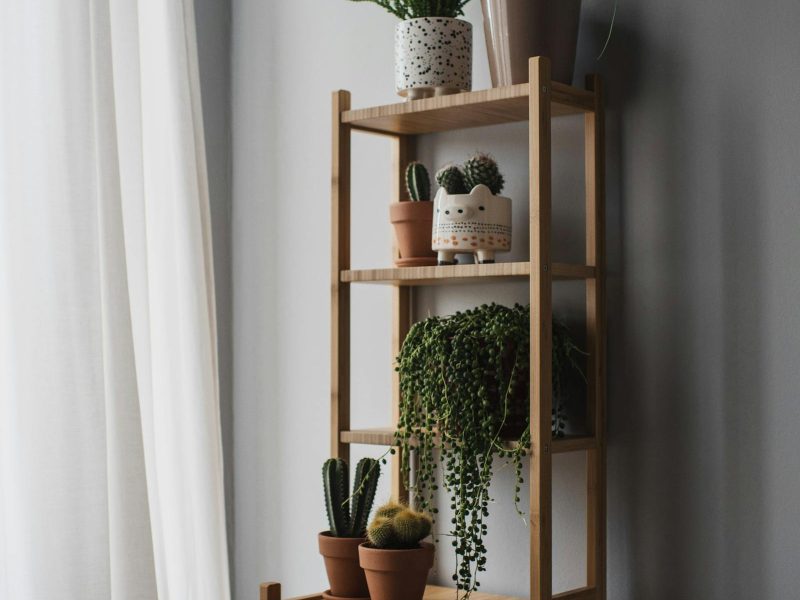
My first serious brush with powdery mildew came from a corner shelf holding three begonias, a variegated string of hearts, and a young Anthurium warocqueanum I had been coddling for months. Humidity in that room sat around 72%, temperature hovered near 70 F, and the ceiling fan was off because I did not want to stress the anthurium’s tender new leaf. Within about ten days I saw pale grey dust on a begonia leaf, dismissed it as water residue, and by day fourteen it had crossed to two other plants. Powdery mildew in humid rooms behaves very differently from the outdoor kind gardeners warn about, and once I understood that difference the problem became manageable rather than terrifying.
What follows is the working protocol I have used across two plant rooms and about forty specimens since that first outbreak. It is not a cure-all, and it does not eliminate the pathogen from the environment. It contains it, keeps it off susceptible collector plants, and buys time for the plants that were already infected to push out clean tissue.
Why humid indoor rooms are actually ideal for it
A common misconception, and one I held for years, is that powdery mildew needs wet leaves. It does not. Unlike most fungal leaf diseases, powdery mildew fungi (a family of obligate parasites in the order Erysiphales) germinate and grow best when the leaf surface is dry and the surrounding air is humid, roughly 60 to 90% relative humidity. Free water on the leaf actually suppresses spore germination. That is exactly why our humidity cabinets, IKEA greenhouse cabinets, and enclosed plant walls with poor airflow are such welcoming hosts.
The second factor is temperature. Powdery mildew thrives between 60 and 80 F, which is the exact band most of us keep our tropical rooms at year round. According to the Missouri Botanical Garden, still air and shade compound the risk further, both of which describe the interior of most enclosed grow setups.
Recognising it before it spreads
Early powdery mildew is easy to mistake for hard-water spotting, dust, or the light bloom on the underside of some Alocasia leaves. Three signs helped me tell them apart:
- Rub a soft cotton bud across the spot. Mineral residue smears; mildew lifts off as a fine powder and leaves the leaf tissue underneath looking slightly bleached.
- Check the leaf 24 hours later in raking light from a phone torch. New mildew colonies are almost circular and expand outward in a visible ring roughly 2 to 5 mm wider each day.
- Look at the underside. On thin leaves like begonias and peperomias the mycelium is visible on both surfaces within about a week; hard water only ever sits on top.
The 72 hour containment protocol
Once I confirm an outbreak, the first three days matter more than the next three weeks. Spores travel on air currents, on my sleeves, on the watering can spout. I run this sequence in the order below, and I do not skip steps even for one plant.
- Hour 0. Move the infected plant to a bathroom or garage, away from the rest of the collection. Do not carry it past other plants; take the long way.
- Hour 1. Prune every visibly affected leaf into a sealed plastic bag. I use a fresh razor blade per cut and wipe with 70% isopropyl between plants. Do not compost the trimmings.
- Hour 2. Drop room humidity from wherever it is down to 55%. On my Govee sensor this usually takes three to four hours with the dehumidifier on medium.
- Hour 3. Start airflow. A single small clip fan on low, aimed to move air across the leaves rather than at them, is enough for a 40 square foot cabinet.
- Hour 24. Spray remaining plants (not just the infected one) with a preventive treatment. I rotate between potassium bicarbonate at 1 teaspoon per quart and a milk solution of 40% whole milk to 60% water.
- Hour 48. Re-inspect every plant in the room with a jeweler’s loupe. Anything suspicious goes to isolation.
- Hour 72. Repeat the spray. Wipe down shelves, humidity trays, and the inside cabinet walls with a dilute hydrogen peroxide solution (3% straight from the bottle diluted 1:4 with water).
Treatments I have tried, ranked by what actually worked
I have tested most of the widely circulated home remedies, some more than once. Results below are what I observed on begonias, peperomias, and one unfortunate Philodendron gloriosum that caught it from a nearby Rex.
| Treatment | Concentration | Effect on active mildew | Notes |
|---|---|---|---|
| Potassium bicarbonate | 1 tsp per quart + drop of soap | Strong, visible in 48 hours | My default. Cheap, food safe. |
| Milk solution | 40% milk, 60% water | Moderate, works as prevention | Smells for a day. Fine on thick leaves. |
| Neem oil | 0.5% cold-pressed | Weak on active, decent prevention | Can burn thin foliage under lights. |
| Sulfur spray | Per label | Very effective outdoors, harsh indoors | Skip in enclosed rooms; residue and odor persist. |
| Baking soda | 1 tsp per quart | Works but leaves sodium residue | Potassium bicarbonate is safer long term. |
The UC IPM guidance on powdery mildews confirms what I found in practice: bicarbonate-based sprays and horticultural oils are the most reliable non-fungicidal options for small collections, and coverage matters more than concentration. Spray until the leaf glistens on both sides, let it dry with airflow on, and repeat every 7 to 10 days for at least three cycles.
Environmental settings I now hold to
The real fix was not a spray. It was rewriting my ambient defaults so the fungus never gets comfortable in the first place. My humid plant room now runs on the following ranges, verified with two calibrated sensors placed at plant level rather than near the floor.
- Daytime humidity: 60 to 68%, never above 72% for more than two hours
- Nighttime humidity: allowed to drop to 55%, which mimics natural cycles
- Air movement: at least one fan running 18 hours per day, positioned to gently sway the lowest leaves
- Temperature swing: minimum 8 F difference between day and night to condense moisture out of the air
- Plant spacing: leaves should not touch neighbouring leaves, even at full extension
- Quarantine window: 21 days for every new arrival, in a separate room with its own tools
Since I adopted the 21 day quarantine, I have not had a single outbreak trace back to a nursery plant, and the two I have had came from cuttings a friend passed along in a plastic bag. Those bags are now off limits at my door.
Plants I have found especially susceptible
Not every collector plant is equally at risk. In my rooms the persistent offenders are Rex begonias, cane begonias, Peperomia caperata, and any Philodendron in a growth pause. Anthuriums, monsteras with hardened leaves, and most Alocasias have shrugged it off entirely, even sitting inches from an infected plant. The pattern seems to align with leaf cuticle thickness and rate of growth: soft, slow, textured leaves are the buffet.
Powdery mildew is not a hygiene failure. It is a signal that your room has drifted into a microclimate the fungus prefers. Fix the room and the plants recover.
Frequently asked questions
Can I keep humidity high for my anthuriums and still prevent powdery mildew?
Yes, but you must add airflow proportional to the humidity. I run my anthurium cabinet at 75% humidity with two 120 mm PC fans on a low-speed controller pushing air continuously. Still air at 75% is a mildew invitation. Moving air at 75% is a rainforest floor. The difference is measurable within a week of setup.
Is the mildew on my begonia the same species as the one on my roses outdoors?
Almost certainly not. Powdery mildews are largely host-specific at the genus level, so the Erysiphe on your roses will not infect your begonias, and vice versa. That said, spores travel indoors on clothing, so an outbreak outdoors near open windows can seed indoor infections on genetically compatible hosts. This is why I close windows for 30 minutes after gardening.
Do UV lights or ozone generators actually kill it in the air?
UV-C at the intensity used in HVAC sterilisers does damage fungal spores, but the exposure time in a residential room is far too short to matter unless the air passes very slowly through the unit. Ozone works but is unsafe for plants and pets at effective concentrations. Skip both. Invest in airflow and a dehumidifier instead.
Should I throw out a severely infected plant?
Only if the crown or growing point is affected and the plant has fewer than four healthy leaves left. In every other case I cut hard, drop humidity, and wait. I have brought back a Begonia luxurians that lost 80% of its foliage; it took about ten weeks and looked ridiculous for most of that time, but it recovered fully and has not shown mildew since.
How long does the fungus stay viable in an empty cabinet?
Resting spores can survive several weeks on smooth surfaces and considerably longer in organic debris. Before I return a cleaned plant to a previously infected cabinet, I wipe every surface with peroxide solution, leave the doors open with a fan running for 48 hours, and only then move plants back in. Skipping this step is how I turned one outbreak into three, back when I did not know better.
Frequently asked questions
How long does it take to develop a personal plant styling aesthetic?
Typically 2-5 years of active collecting and styling. Initial choices reflect external influences; over time, your own preferences emerge through experience and trial.
Should I follow specific styling rules?
Use principles, not rules. Rules are rigid; principles are flexible. Pay attention to what works in your space and adjust accordingly.
How can I tell if my plant arrangement is working?
Visual harmony, plant health, ease of care, and your own enjoyment of the space. If all four are positive, the arrangement is working.
Can plant styling improve my home's overall feel?
Yes, significantly. Plants add life, color, texture, and presence to spaces. Thoughtfully styled plants can transform how a home feels to live in.