My first serious aphid outbreak arrived on a variegated Hoya carnosa that had spent a summer on a shaded balcony. Within a week the fresh growth was tacky, the new leaves were puckered, and a colony of pale green bodies had settled along every soft stem. I did what most panicked collectors do the first time: I sprayed everything in sight, twice, with a strong soap solution. Half the flush of new leaves burned off, the aphids came back, and I promised myself I would learn to do this properly.
The method I use now is slower, quieter, and far more effective. It treats an infestation as a two-week project rather than a Saturday afternoon emergency, and it assumes from the start that a single blast of anything will not fix the problem. If you are staring at a plant with sticky leaves and a fringe of tiny insects, this is the sequence I would run.
What aphids actually are, and why houseplants get them
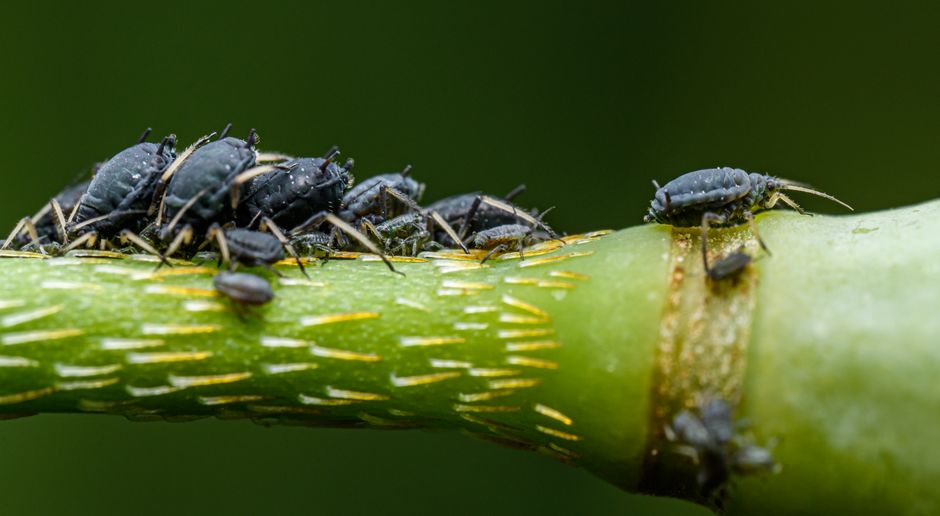
Aphids are soft-bodied sap-feeding insects, usually 1 to 4 mm long, that reproduce in warm, sheltered conditions by giving live birth to already-pregnant clones. That last part is what makes them feel unstoppable. A single female can produce 40 to 80 offspring in her lifetime, and those offspring can reproduce within roughly seven to ten days at room temperature. On outdoor plants a population is checked by weather, predators, and dispersal. Indoors, with steady heat and no ladybirds, one overlooked female can seed a full colony inside a fortnight.
Most indoor infestations arrive on a new plant, on cut flowers, on herbs from the supermarket, or on a plant that summered outside. Green peach aphid and cotton aphid are the two I see most often on my shelves, but the treatment does not really change with species. What changes is your patience.
How I decide whether to treat, isolate, or compost
Not every affected plant is worth saving. Before I open any bottle, I sit with the plant for five minutes and answer three questions honestly.
- How rare and how healthy is this plant? A struggling supermarket pothos with a heavy infestation goes in the compost. A mature variegated Monstera does not.
- How soft is the new growth? Plants pushing tender flushes (Hoyas in bloom, young Philodendrons, Fittonia) will keep feeding the colony no matter what I spray. I plan a longer treatment window.
- Can I actually reach every stem? A dense, twiggy plant with hundreds of hiding places is a harder job than a broad-leaved Alocasia. If I cannot reach it, I prune first.
Once I have my answer, the affected plant leaves the collection immediately. I move it to a bathroom, a spare bedroom, or a shelf at the far end of the house, and I do not put it back for at least three weeks. Ninety percent of the outbreaks I have seen spread across a shelf simply because the owner kept treating the plant in its usual spot.
The quiet method, step by step
This is the sequence I actually run. It takes about 18 to 21 days from start to finish and involves no exotic products.
Day 1: physical removal and a real shower
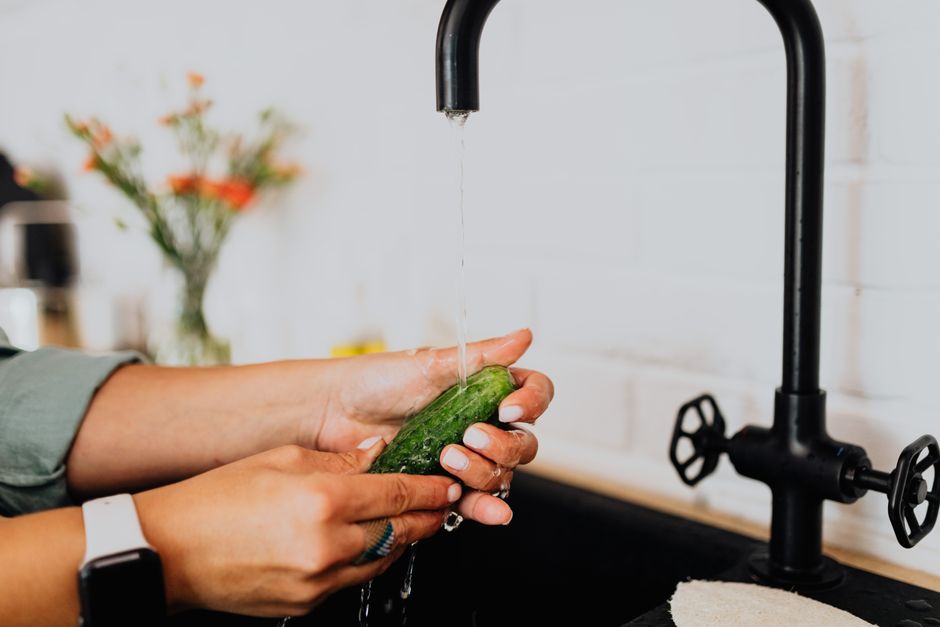
I take the plant to a sink or shower and rinse it thoroughly with lukewarm water, around 20 to 25 C, for a good three or four minutes. The goal is not to drown the aphids but to knock the visible colony off the plant. I turn the pot on its side so water does not saturate the root ball, and I aim the stream at leaf undersides, stem joints, and the base of every petiole. For heavy clusters I use a soft artist’s brush dipped in the water to physically wipe them away. This single step can remove 70 to 90 percent of the population before any product touches the plant.
Day 1, evening: the first soap application
Once the plant has dripped dry for a few hours, I mix a mild insecticidal soap solution. My default is 5 ml of pure potassium salt insecticidal soap per litre of soft, room-temperature water, which is roughly half the label rate for most concentrates. A dilute solution applied thoroughly beats a strong one applied in a hurry, and it is much kinder to sensitive leaves like Calathea or Begonia.
I spray until the solution runs off every surface, top and underside, and I get right into the leaf axils where aphids tuck themselves in. Then I leave the plant somewhere out of direct sun for the night so the soap can do its work without burning wet foliage.
Days 2 to 4: rinse and observe
The morning after, I rinse the plant again with plain water to remove soap residue. Then I leave it alone for two or three days and simply watch. Aphids that survived the first round will regroup on the softest new growth, which makes them easy to spot and target next.
Day 5 and Day 10: two more targeted rounds
I repeat the soap application on Day 5 and again on Day 10. Two rounds spaced this way catch the next generation before those juveniles mature and reproduce, which is the whole point of the seven-to-ten-day rhythm. If the plant tolerates it, I alternate soap with a 70 percent neem seed oil solution at 5 ml per litre plus a drop of mild dish soap as an emulsifier. Neem’s residual effect on new hatchlings is genuinely useful, but I never apply it in direct sun or on plants with fuzzy leaves.
Day 14 to 21: the boring, decisive part
This is where most people quit and where the treatment is actually won. I keep the plant in isolation, inspect the new growth every other day with a hand lens, and do one more targeted spot-treatment if I find so much as two aphids together. Only when I have gone a full seven days with zero sightings does the plant rejoin the collection.
Product choices, ranked by how often I reach for them
| Product | Dilution I use | Best for | Watch out for |
|---|---|---|---|
| Plain water rinse | N/A | First knockdown, sensitive plants | Root saturation if pot is not tipped |
| Potassium soap (insecticidal) | 5 ml per litre | Most smooth-leaved plants | Calathea, Begonia, fuzzy foliage |
| Cold-pressed neem oil | 5 ml per litre + emulsifier | Residual control between soap rounds | Sun exposure, strong smell indoors |
| 70 percent isopropyl alcohol on a cotton bud | Undiluted, spot only | Individual aphids in tight crevices | Never spray full plants at this strength |
| Systemic imidacloprid granules | Per label | Persistent outbreaks on tough foliage | Avoid on any plant near pollinators or edible herbs |
I keep systemic insecticides as a genuine last resort. They work, but they linger in plant tissue for weeks, they are not appropriate for anything you might snip and add to a salad, and they should never be used casually near a window a bee might reach. The University of Maryland Extension has a clear overview of aphid control on houseplants that I recommend reading before committing to that route.
A checklist for the isolation shelf
While the affected plant is in quarantine, this is what I actually keep on hand. Nothing fancy, nothing expensive.
- A 500 ml spray bottle labeled for soap solution only
- A soft, clean artist’s brush (size 6 or 8) for physical removal
- A 10x jeweller’s loupe for inspecting new growth
- Cotton buds and a small bottle of 70 percent isopropyl alcohol
- A pair of clean pruners, wiped between plants
- A dated note taped to the pot listing every spray so I do not lose track
- Sticky yellow cards to monitor for winged aphids leaving the plant
Preventing the next outbreak
Prevention is genuinely more useful than any spray schedule. Three habits have cut my aphid incidents to roughly one plant a year across a collection of about 120.
Quarantine every new arrival for 21 days. This is the single biggest change I have made. A new plant sits on a dedicated shelf, gets a preventative rinse on arrival, and does not touch the main collection until three weeks have passed with no signs of anything. Almost every serious infestation I have traced back has come from a plant that skipped this step.
Inspect soft new growth weekly. Aphids always show up on the youngest, tenderest tissue first. A 30 second look with a loupe at every plant that is actively pushing new leaves catches problems when they are still five or ten insects rather than five hundred.
Rinse any plant that summered outdoors before bringing it back in. A firm shower, an inspection, and 10 to 14 days of isolation on a porch or spare room is the difference between a smooth autumn and a January full of spray bottles. The Royal Horticultural Society keeps a useful reference on aphid biology and management that is worth bookmarking.
What I no longer do
A few things I used to try and have since dropped, in case you are tempted by any of them.
I do not use dish soap as a substitute for insecticidal soap. Detergents strip the waxy cuticle on many houseplant leaves and cause silver blotching that takes months to grow out. I do not spray full-strength alcohol over an entire plant, ever. And I do not release ladybirds indoors. They fly to the brightest window, starve within a week, and die on the sill. Biocontrol is a beautiful idea in a greenhouse and a mess in a living room.
Frequently asked questions
Are aphids on my houseplant a sign of poor care?
Usually no. Aphids arrive from outside, on new plants, or on cut flowers, and they thrive on the soft new growth that a healthy, well-fed plant produces. If anything, a plant pushing lots of tender leaves is more attractive to them than a stressed one. What matters is catching them early and running the full treatment cycle, not blaming your care routine.
Can aphids spread from one houseplant to another?
Yes, easily. Wingless aphids walk between touching leaves, and when a colony gets crowded, winged forms develop specifically to disperse. Any plant within about 30 cm of an infested one should be inspected weekly for at least a month, even if you moved the affected plant to isolation on day one.
How long until my plant looks normal again after aphids?
The insects can be gone in two to three weeks, but the cosmetic damage takes longer. Leaves that were curled or puckered while the colony was feeding will stay that way for life, because the tissue was deformed as it expanded. New growth that emerges after treatment should be completely normal. On a slow grower like a Hoya, that might mean six months before the plant looks tidy again.
Is neem oil safe on all houseplants?
Not quite. Neem is generally well tolerated on smooth-leaved aroids, Hoyas, Ficus, and succulents, but it can spot fuzzy or thin foliage such as African violets, Begonia rex, Calathea, and Fittonia. Test a single leaf, wait 48 hours, and check for browning before treating the whole plant. Always apply in the evening or in a shaded spot, never in direct sun.
Do I need to change the soil after an aphid infestation?
Almost never. Aphids feed on above-ground tissue and do not live in the substrate the way fungus gnats do. Unless you see root aphids specifically (a different pest with a waxy white coating on the roots), the existing soil is fine. Save the repotting energy for the plant’s next scheduled spring refresh.
The mindset shift that matters most
The single most useful thing I can tell you about aphids is that the treatment is a schedule, not an event. Three gentle applications spaced across two weeks will out-perform one aggressive spray every time, and the plant will thank you for the restraint. Put the date on the pot, keep the plant in isolation until you have gone a full week without a single sighting, and treat the whole exercise as an opportunity to slow down and actually look at your plants. Most of us discover, along the way, half a dozen other small problems we had been walking past for months.