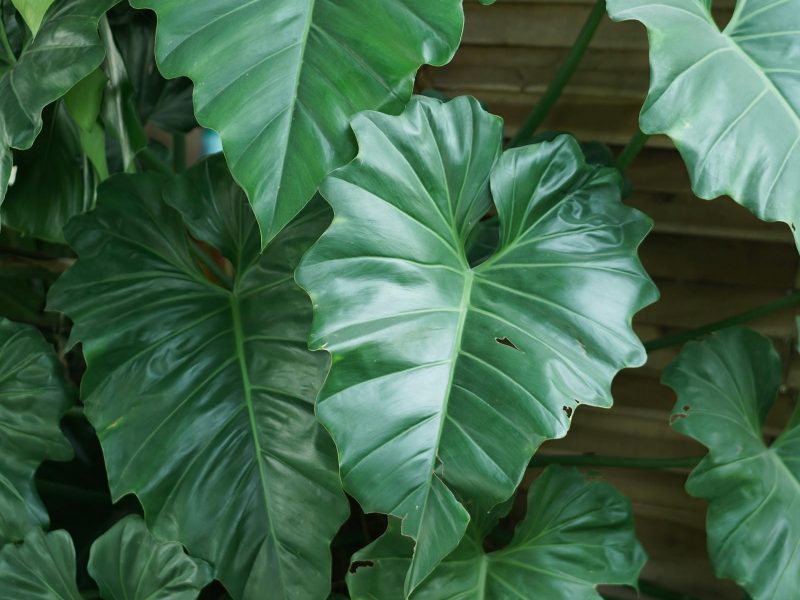
I bought my first proper grow light because a Philodendron gloriosum kept pushing out leaves the size of a bottle cap and then sulking. The window was north-facing, the room was busy, and moving the plant closer to glass meant moving a bookshelf. A cheap clip-on LED went up over the pot, and within six weeks the next leaf was the size of my palm. That was the moment supplemental lighting stopped feeling like a hobbyist gimmick and started feeling like plumbing. If you keep rare aroids, calatheas, or anything that came out of an understory, the light you give them is doing most of the work you think fertilizer is doing.
What follows is what I wish someone had told me before I spent money on the wrong fixtures. It is not a shopping list. It is the small set of numbers and habits that will let you buy once, hang it at the right height, and stop guessing.
Why “bright indirect” is a useless instruction
Nursery tags and care apps love the phrase “bright indirect light.” It means almost nothing indoors. A north window in Seattle in February and a south-facing bay in Phoenix in June both technically count. The measurement that matters is PPFD, photosynthetic photon flux density, expressed in micromoles per square meter per second. It counts only the wavelengths a leaf can actually use for photosynthesis, roughly 400 to 700 nanometers.
Rough targets I use for the plants in my rotation:
- Low-light tolerant aroids (Philodendron hederaceum, pothos, ZZ): 50 to 150 umol/m2/s
- Most calatheas, marantas, ferns: 100 to 200 umol/m2/s
- Anthuriums, gloriosum, most hybrid philodendrons: 150 to 300 umol/m2/s
- Alocasia, variegated monstera, sun-tolerant hoyas: 250 to 400 umol/m2/s
A $40 par meter or a decent phone-based lux meter (multiply lux by roughly 0.015 for white LED to approximate PPFD) will change how you place plants faster than any book will. I measured my “bright” north wall once and got 8 umol/m2/s at noon. That is a dying plant reading, not a bright one.
The number that actually matters: DLI
PPFD is an instant snapshot. Daily Light Integral, DLI, is what the plant lived through. It is measured in moles per square meter per day, and the formula is simple:
DLI = PPFD x hours of light x 0.0036
So a shelf running at 150 umol/m2/s for 12 hours delivers about 6.5 mol/m2/day. That is a solid maintenance number for most rare aroids. Under 4 is survival mode. Above 15 you are pushing into greenhouse territory and probably burning anything without waxy leaves. When someone posts a picture of a stalled gloriosum, I ask for their DLI before I ask about anything else. Nine times out of ten, they are running a bright fixture for only 6 hours because they forgot to buy a timer.
Fixture types, honestly compared
There are four categories worth considering. The rest are marketing.
| Fixture | Efficiency (umol/J) | Best for | Watch out for |
|---|---|---|---|
| White LED bar (Samsung LM301 chips) | 2.5 to 2.9 | Shelves, cabinets, whole plant rooms | Cheap knockoffs claim these chips and lie |
| Blurple LED panel | 1.8 to 2.4 | Nothing I would recommend in a home | Colors your room purple, hides pest issues |
| Compact fluorescent T5 | 1.0 to 1.4 | Seedlings, small propagation trays | Bulbs degrade fast, replace yearly |
| Screw-in “grow bulb” A19 | 0.8 to 1.5 | A single specimen on a plant stand | Marketing wattage vs actual draw |
For any collector-grade setup, a full-spectrum white LED bar is the honest answer. I run 24 inch and 48 inch bars from a company that publishes real photometric reports. If a manufacturer will not send you a PPFD map, assume the numbers on the box are inflated by 40 to 60 percent. I have measured this.
Mounting height, the boring part that decides everything
Light falls off with the inverse square of distance. Double the distance, quarter the intensity. This is why the same bar can toast an alocasia at 8 inches and starve one at 24 inches. Here is a mounting table I keep taped inside my cabinet door, based on a typical 30 watt LED bar rated around 60 umol/m2/s at 12 inches directly below.
| Distance from canopy | Approx PPFD | Suitable for |
|---|---|---|
| 6 inches | 240 umol/m2/s | High-light hoyas, sun-hardened alocasia |
| 12 inches | 60 umol/m2/s | Most philodendrons, anthuriums |
| 18 inches | 27 umol/m2/s | Calatheas, ferns, low-light shelf |
| 24 inches | 15 umol/m2/s | Maintenance only, no active growth |
Numbers shift with fixture wattage and beam angle, but the shape of the curve does not. If you want an aroid to actually push new leaves, your fixture is almost certainly too high. Mine sit 10 to 14 inches above the tallest leaf and get lowered as the plant grows.
Spectrum, photoperiod, and the myth of “sunrise” cycles
Modern white LEDs at 3000K to 4000K contain enough blue, red, and far-red to grow anything a home collector keeps. You do not need separate “veg” and “bloom” switches for foliage plants. You do not need UV. You especially do not need a $300 fixture that fades in over an hour because “plants like a sunrise.” My plants do not know what a sunrise is. They know when the timer clicks on at 7 a.m. and they respond exactly the same way whether it is instant or a slow ramp.
Photoperiod is more useful to think about. I run 12 hours in winter, 14 in summer, purely to match the ambient light my plants also see through windows. Some growers push 16 hours to force growth. It works, but you pay for it in fertilizer demand and, in dry rooms, faster leaf edge crisping.
A five-step setup I would repeat
- Pick your target DLI based on your hardest-to-please plant, not your easiest.
- Buy one honest white LED bar with a published photometric report and a real efficacy number above 2.5 umol/J.
- Put it on a mechanical timer, not a smart plug that resets after a power blip.
- Measure PPFD at canopy height with a meter, or lux and convert, and adjust hanging height until you hit your target.
- Check every four weeks. Plants grow toward the light, which changes the distance, which changes the DLI.
That is the whole system. Everything else is refinement.
Signs your light is wrong
- New leaves smaller than the previous ones: light too low, or DLI too short.
- Long internodes and reaching stems: same problem, plant is stretching.
- Pale bleached patches on the highest leaves: light too close or too intense.
- Variegation reverting to solid green: chronically insufficient light.
- Crispy leaf edges without underwatering: often light plus low humidity together, not one or the other.
I keep a small notebook next to my shelf and write the date every time I raise or lower a fixture. Six months in, patterns show up that you would never notice from memory alone. If you want to go deeper into the horticultural side, the University of Minnesota Extension guide to indoor lighting and the RHS houseplant growing guide are both worth an hour.
Frequently asked questions
Can I just use regular LED bulbs from the hardware store?
You can, and for a single low-light plant it will keep it alive. A 100 watt equivalent daylight bulb at 6 inches gives roughly 40 to 80 umol/m2/s, enough to maintain a pothos or philodendron. It is not enough to push new growth on anything collector-grade, and the spectrum, while adequate, is optimized for human eyes rather than efficacy. For anything you paid real money for, buy a purpose-built fixture.
How long should I leave my grow lights on each day?
Twelve hours is the safe default for foliage plants and matches roughly what the plants would see near the equator, which is where most of them evolved. I run 12 hours from October through March and 14 from April through September. Anything over 16 hours risks stressing plants that need a night period for respiration, and you rarely see faster growth beyond that point per watt spent.
Do purple grow lights work better than white ones?
No. Purple, or “blurple,” fixtures pair red and blue diodes because those wavelengths drive photosynthesis efficiently on paper. In practice, modern white LEDs with a small red boost deliver similar photosynthetic output, let you actually see leaf color and spot pests, and do not make your living room feel like a nightclub. Purple made sense a decade ago and does not now.
Will a grow light replace a sunny window entirely?
Yes, and this is actually one of their best uses. I keep several rare anthuriums in an interior closet retrofitted with two LED bars and a humidifier, and they outgrow their windowsill siblings every year. The advantage is complete control over DLI, humidity, and airflow. The disadvantage is your electric bill and the need to check on plants that are out of your daily sightline.
How much should a decent starter fixture cost?
A 24 inch bar from a reputable maker with published specs runs $60 to $110. A 48 inch runs $110 to $180. Skip anything under $40 that promises Samsung chips and 300 watts. The wattage is nearly always the equivalent draw, not the actual, and the chips are usually generic clones. One good bar outperforms three cheap ones, and it will still be running in five years.
Frequently asked questions
Why is my plant's newest leaf turning yellow?
Most often a root problem (over-watering, under-watering, root rot) or a nutrient deficiency the plant is reallocating from. Check substrate moisture and root health first.
Should I remove yellow leaves?
Only once they are clearly dead or yellow throughout. Partial yellowing means the plant may still be using the leaf. Remove with clean scissors at the base of the petiole.
My older leaves are yellowing slowly — is that normal?
Usually yes. Plants shed older leaves as they age, redirecting energy to newer growth. If the rate is slow and new growth continues normally, no action needed.
How fast will yellow leaves recover?
Yellow leaves themselves do not recover — they will eventually drop. What matters is whether new leaves come in healthy. Recovery typically takes 2-3 growth cycles (1-3 months for most plants).