My verrucosum lives on the second shelf of a mid-sized IKEA cabinet, roughly 18 inches from a 24W bar light, and it took me almost a year to stop losing leaves on it. The plant is famous for velvet leaves the color of forest moss with pale green veins, and infamous for sulking the moment ambient humidity drops below 65 percent. Most of the care advice I read when I started was written for a greenhouse. This is what actually worked once I accepted that my apartment is not one.
I want to be specific here because verrucosum reacts to specifics. A five-degree temperature swing at night, a pole that dries out too fast, a fertilizer schedule copied from a monstera routine, any of these will show up on the next leaf. So this is a shelf log, not a checklist, and the numbers are the ones I measured on my own plant across roughly 14 months.
Why this plant is harder than it looks in photos
Verrucosum comes from cloud forest elevations in Ecuador and Colombia, generally between 1,000 and 2,000 meters, where nights are cool and mornings are wet with fog. That habitat is the tell. The plant is not asking for tropical heat. It is asking for consistent moisture in the air, cool nights around 62 to 68F, and a climbing surface it can grip with its aerial roots. When people tell me their verrucosum “just stopped growing,” almost every time it is a humidity problem stacked on top of a pole problem.
The leaves are the appeal and the vulnerability at once. That velvet texture comes from tiny epidermal cells that scatter light, and those cells lose water faster than a glossy leaf would. Which is why the same leaf that looks perfect in a humid cabinet can crisp at the tip within 48 hours of being moved to open air.
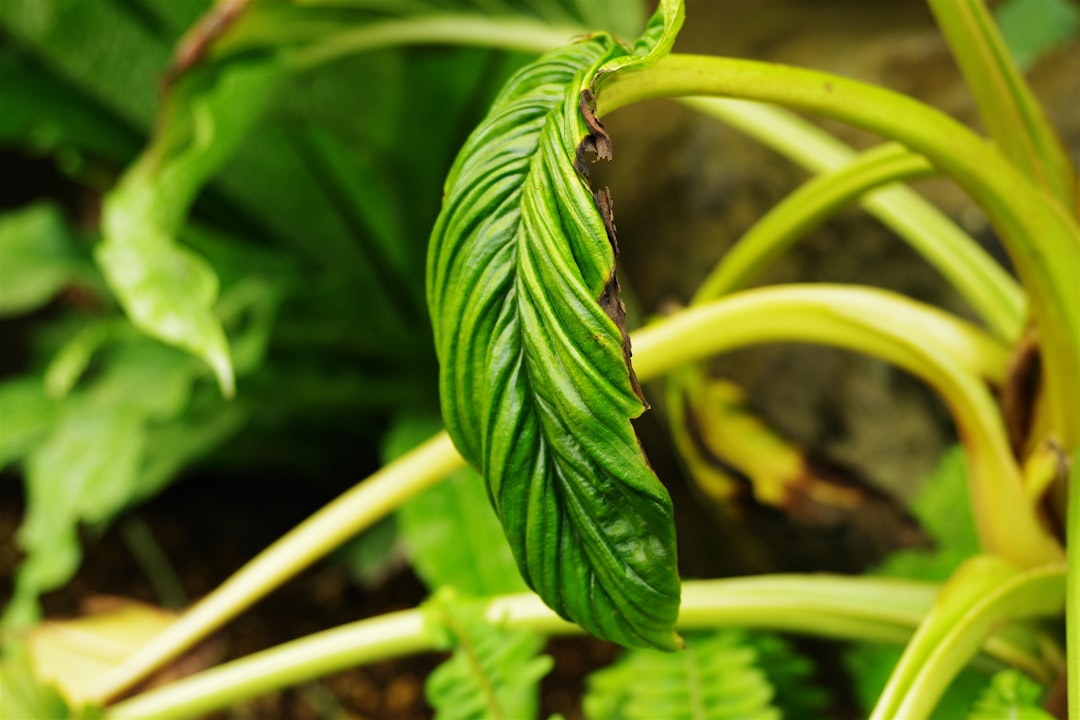
What my shelf actually looks like
I stopped pretending I could grow this plant in open room air. The current setup is a converted display cabinet, roughly 32 inches wide, with the glass doors kept closed except for a 20-minute airflow window in the morning. A small USB fan runs on low behind the pole. Here is what the sensors read on an average day in October:
- Daytime humidity: 72 to 78 percent
- Nighttime humidity: 80 to 85 percent
- Daytime temperature: 71 to 74F
- Nighttime temperature: 64 to 66F
- Light at leaf surface: around 180 to 220 PPFD for 11 hours
Before the cabinet, on an open shelf with a room humidifier, I was averaging 52 percent daytime humidity and losing the tip of every new leaf. The plant survived. It did not push a full-sized leaf. The move into enclosed conditions was the single change that turned my verrucosum from a survivor into a grower.
Light: brighter than you think, softer than you fear
Verrucosum is often described as a low-light plant because it grows on shaded trunks in the wild. That description misleads people. Cloud forest shade is still brighter than most living rooms, and the plant needs consistent light to keep those juvenile leaves coming in fully colored. What it does not want is direct sun on the leaf, which will bleach the velvet within an afternoon.
I aim for 150 to 250 PPFD at leaf height, which is a range the Penn State Extension guidance on indoor plant lighting broadly supports for medium-light tropicals. A cheap PPFD meter or the free Photone app calibrated with a diffuser is enough to check this. If you are relying on natural light, an east window with a sheer curtain is usually about right; a bare south window is not.
The pole is not optional
I tried a coir pole for the first six months and got small, misshapen leaves. Switching to a sphagnum-stuffed plastic mesh pole, kept damp but never sopping, roughly doubled the size of the next leaf. Verrucosum is a climber, and until the aerial roots find something moist to grip, the plant will not commit to bigger foliage.
My current pole is a 24-inch section of vinyl-coated hardware cloth rolled into a tube, stuffed with long-fiber sphagnum, and topped up with a small squeeze bottle every two or three days. I check moisture by squeezing the moss through the mesh; if a drop of water beads on my fingertip, it is right.
Substrate and watering rhythm
I use an aroid mix that leans chunky: about 40 percent orchid bark, 30 percent perlite, 20 percent coco chips, and 10 percent worm castings, with a handful of horticultural charcoal. In a 5-inch plastic pot with drainage, this mix dries top-down in roughly 4 to 6 days depending on cabinet humidity. I water when the top inch is dry to the finger and the pot feels noticeably lighter.
Root rot is the failure mode I see most often in other people’s verrucosums, and it is almost always a substrate problem masquerading as a watering problem. If the mix stays wet for more than a week between waterings, you will lose roots no matter how careful you are with the watering can.
Fertilizer and the slow-feed approach
I feed at a quarter of the label rate with every second watering, using a balanced synthetic (roughly 20-20-20 with micros). During the shorter days from November through February I cut this in half again. Verrucosum is a slow feeder compared to a fast-growing monstera, and overfeeding shows up as burnt leaf tips within about 10 days.
A diagnostic table for the common failures
| What you see | Most likely cause | What I do |
|---|---|---|
| Crispy brown leaf tips on new growth | Humidity dropped below 60% during unfurling | Move to enclosed space, add pebble tray under pot |
| Small, undersized new leaves | Pole too dry, or no pole at all | Switch to damp sphagnum pole, mist twice weekly |
| Yellow lower leaf, soft petiole | Root rot from soggy substrate | Unpot, trim mush, repot in chunkier mix |
| Bleached pale patches on leaf | Direct sun exposure | Move 12+ inches from window or add sheer curtain |
| Stalled growth for months | Night temperatures too warm, above 72F | Move to cooler room or crack cabinet at night |
A five-step setup if you are starting fresh
- Buy or build an enclosure that holds 70 percent humidity without you thinking about it. An IKEA Milsbo or Detolf conversion is the standard hobbyist answer.
- Install a bar light or two clip lights running 10 to 12 hours on a timer, aimed to hit the leaves at roughly 200 PPFD.
- Prepare a damp sphagnum pole and pot the plant so the aerial roots sit against, not inside, the moss.
- Mix a chunky aroid substrate and use a plastic pot with real drainage holes. Skip decorative pots without drainage for this species.
- Set a hygrometer with a min-max memory so you can see the overnight low, which is the number that actually matters.
Sourcing and acclimation
I bought my current plant from a small US grower who ships in wet moss inside an insulated box. Import plants, especially bare-root Ecuador imports, are cheaper but arrive stressed and often drop every leaf within two weeks. If you go that route, plan on a sealed acclimation setup at 90 percent humidity for the first month, and do not expect a new leaf for three months. The International Aroid Society has useful grower directories if you want to buy from someone who actually knows the species.
What I would tell my past self
- Stop trying to grow this plant in open room air below 60 percent humidity. It will not thank you for the effort.
- The pole matters more than the pot. Wet moss above ground beats fancy substrate below it.
- Cool nights are a feature, not a bug. If your apartment is 76F at 2am year-round, pick a different philodendron.
- New leaves take four to eight weeks to unfurl. Patience is part of the care routine.
- Photograph the newest leaf monthly. Real progress is easier to see over eight photos than in daily glances.
Frequently asked questions
Can I grow philodendron verrucosum without a cabinet?
Technically yes, if you live somewhere naturally humid, like a coastal climate where indoor humidity stays above 65 percent year-round. In a heated apartment during winter, when indoor humidity often drops to 30 percent, the plant will decline steadily. A cabinet or a corner with a strong evaporative humidifier is usually the difference between surviving and growing.
Why are my new leaves smaller than the ones I bought the plant with?
This almost always means the plant is not climbing. Verrucosum ramps up leaf size as it ascends a moist support, and a plant grown flat or on a dry pole will produce progressively smaller leaves. Attach the stem gently to a damp sphagnum pole with soft plant ties and give it 8 to 12 weeks. The next leaf after the aerial roots grip the moss is usually noticeably larger.
Is verrucosum toxic to pets?
Yes, like other philodendrons it contains insoluble calcium oxalate crystals that cause oral irritation, drooling, and vomiting if chewed. The ASPCA lists the genus as toxic to both cats and dogs. I keep mine in a closed cabinet, which solves the problem physically rather than relying on the plant being out of reach.
How often should I repot?
Every 12 to 18 months, or when I see roots circling the bottom of the pot through the drainage holes. I go up one pot size only, because oversized pots stay wet in the middle and invite rot. Spring, when the plant is actively pushing new roots, is the safest window.
What is the difference between verrucosum and the similar looking philodendron gigas or melanochrysum?
All three have velvet leaves, but verrucosum is the only one with hairy, bristly petioles, which is the fastest ID feature. Gigas leaves elongate dramatically with age and have a distinct pink-orange new leaf color. Melanochrysum stays narrower and darker with a more metallic sheen. Care is broadly similar across the three, though melanochrysum tolerates slightly lower humidity in my experience.
Frequently asked questions
Why is my Calathea curling even with high humidity?
Most often water quality. Try filtered, rainwater, or distilled water for a few weeks. If curling improves, your tap water was the culprit. Other possibilities: light has changed, substrate is compacted, or roots are stressed.
Should I cut off curled leaves?
Wait. If you fix the underlying cause, some curled leaves partially unfurl. Crisped or dead-tissue leaves can be trimmed once new healthy leaves are coming in. Don't remove all stressed leaves at once — the plant still uses them while it stabilizes.
Can Calatheas be grown without a humidifier?
In humid climates, yes. In dry homes or in winter, a humidifier is effectively required. Below fifty percent humidity, most Calatheas show visible distress within weeks.
Why does my Calathea curl only at night?
That is not curling — it is the natural nocturnal close called nyctinasty. Calatheas raise and slightly fold their leaves at night and open them in the morning. It is a sign of a healthy plant, not stress.